


Apple reported a record June quarter, with $109.4B of revenue and EPS up 29%, but dropped about 7% as investors focused on supply-constrained guidance and a Siri overhaul still in beta.
Amazon reported its first $200B quarter with AWS accelerating to 36.7%, its fastest in 18 quarters, and surged about 12%, once you set aside a $53B accounting gain that made headline EPS almost useless for judging operations.
Big-tech week ends with its rubric fully visible: the market isn’t for or against AI spending. It pays for delivered AI results, and charges everyone still promising them.

It was never about the spending. It’s about the receipts.
The last 2 reports of big-tech week landed Thursday after the close, and Friday’s trading graded them in opposite directions: Amazon up about 12%, Apple down about 7%, as reported by CNBC late morning on July 31.
They complete a 9-day arc in which the market paid Microsoft for Azure’s acceleration and charged Alphabet and Meta for their rising bills. Amazon and Apple finish the pattern from opposite ends: one paid for a visible AI engine, the other charged for lacking a comparable one. Prices below are based on the July 30, 2026 closes ($235.50 Amazon, $333.43 Apple); results are from both companies’ releases and calls.
Key Takeaways
Amazon: revenue of $200.61B grew 20%, the company’s first quarter above $200B (consensus $196.85B), AWS grew 36.7% to $42.2B, its fastest in 18 quarters, and advertising grew 26%. Free cash flow was negative $7.6B, the price of the buildout.
The Amazon asterisk is the season’s largest: GAAP EPS of $5.75 and net income of $62.6B include a roughly $53B non-operating gain on the Anthropic stake. Set it aside; the market did, and paid for AWS instead.
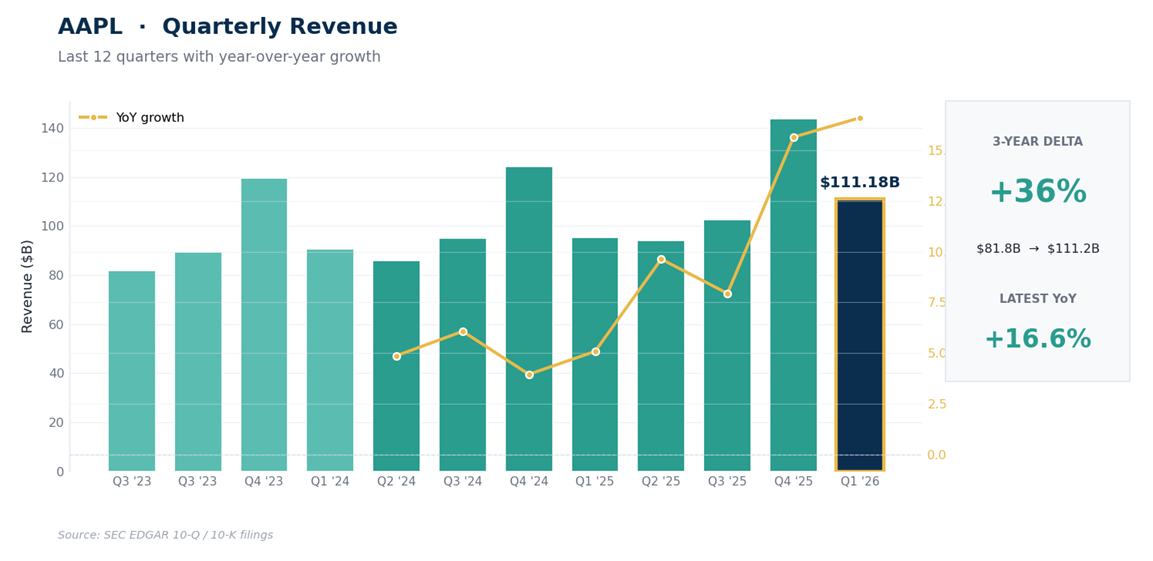
Apple: revenue of $109.4B and EPS of $2.02 (up 29%) both beat, a record June quarter, but the next-quarter guide leaned on supply-chain constraints, the same memory-cost squeeze our June piece flagged, and the Siri overhaul remains a beta with no ship date.
The reactions inverted each stock’s starting point: Amazon entered its print on its 200-day average, 15% below its May record, and gapped up. Apple entered 2 days off a $5 trillion record close and gapped down toward the zone around our first June target.
The maps: Amazon pullback zone 240 to 248, invalidation 226, breakout 259, references 278 and 313. Apple decision zone 306 to 315, invalidation 294, repair 325, references 344 and 400.
Amazon: The Quarter Under the Asterisk
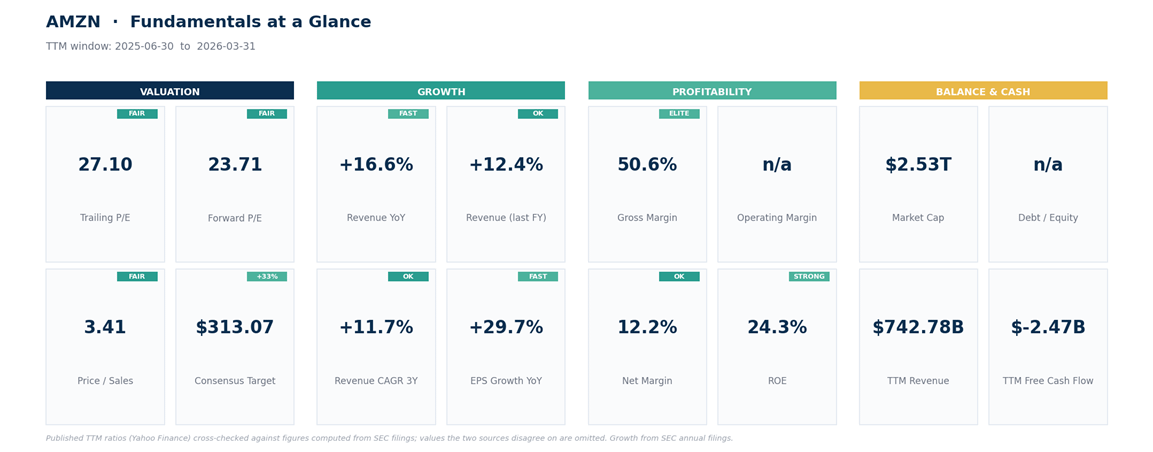
Start with the quarter’s least useful number, because it’s the one in every headline. GAAP EPS of $5.75 tripled the $1.83 consensus, and net income printed $62.6B, but roughly $53B of that is a non-operating revaluation gain on Amazon’s Anthropic investment, the same species of item as Microsoft’s $3.2B a night earlier, at 16 times the size. Readers of this letter know the protocol: strip the mark, and judge the quarter on what operations did.
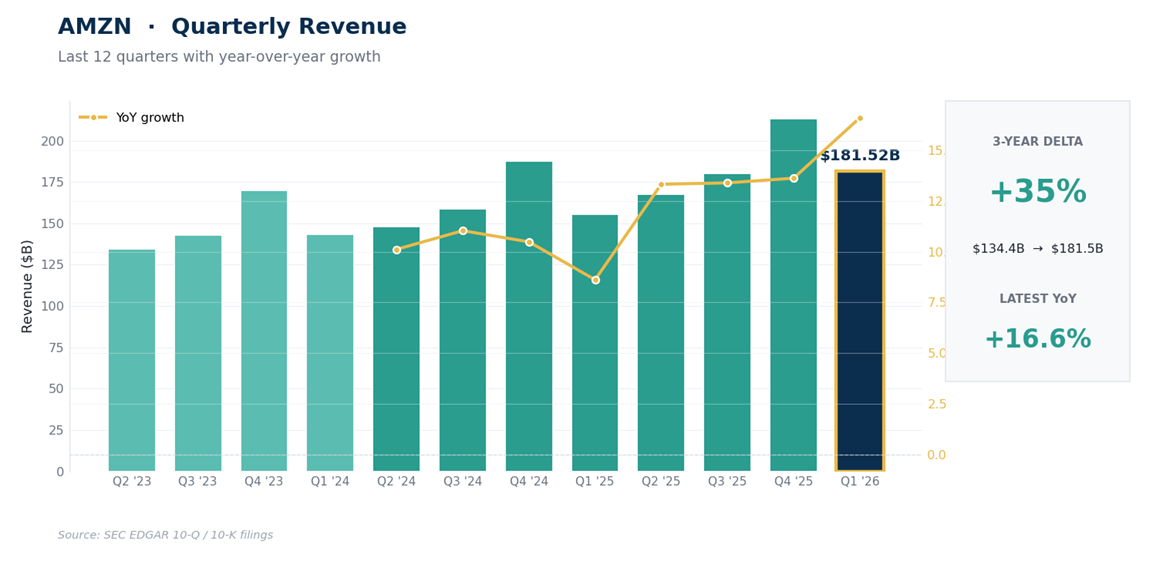
Operations did plenty. Revenue of $200.61B grew 20% and made Amazon the first of the group to print a $200B quarter, against a $196.85B consensus, helped by Prime Day moving into the period. AWS was the event: $42.2B of revenue, up 36.7%, the fastest growth in 18 quarters, exactly the receipt this market has been demanding.
Advertising grew 26%. The costs came with it, free cash flow of negative $7.6B says Amazon is spending the buildout in cash terms, and the next-quarter revenue guide came in soft, partly a Prime Day timing artifact. The cash number doesn’t invalidate the conversion story, but it raises how much operating leverage AWS must eventually deliver to justify it.
The market forgave both, because the thing it actually grades, cloud-AI conversion, accelerated. Worth noting the starting point too: Amazon entered the print sitting on its 200-day average, 15% below its May record of $278.56, the pre-punished setup this season keeps rewarding.
The Amazon Map
One possible framework, not a promise; every trigger is a daily close, and Friday’s quotes are still moving.
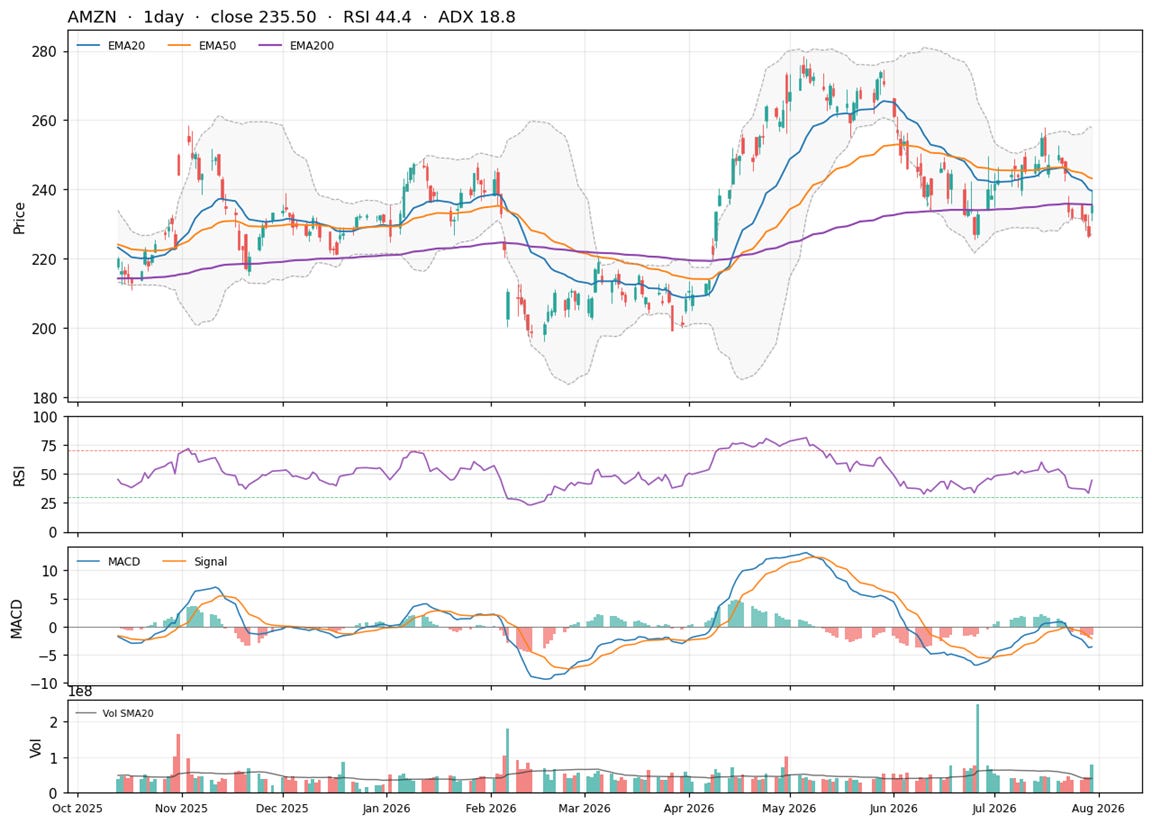
Pullback zone: 240 to 248, the cluster of the 20-day, 50-day, and 100-day averages (239.61 to 243.21) plus the 38.2% retracement of the May-to-July decline at $247.02. A retest of this zone that holds would strengthen the case that the gap marked a trend change.
Invalidation: a daily close below 226, under Wednesday’s $226.16 low and the lower volatility band. That would mean the reaction fully failed, strong quarter and all.
Breakout: a daily close above 259 clears the upper volatility band into the gap left by the May decline, with the structural reference at 278 (the record); beyond it there’s no price history, only the Street’s 313 mean as a valuation marker. Friday’s quotes sit above this line already; Friday’s closing print decides whether it confirms.
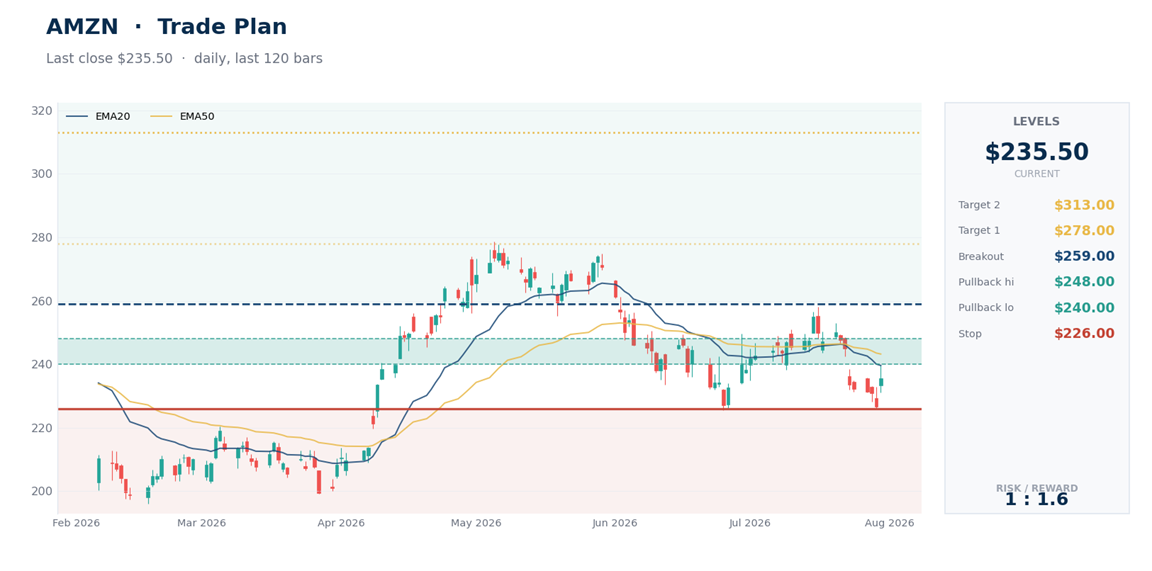
For fresh capital (illustrative): a fill near 244 against the 226 line risks about 7.4%. Size so a larger gap stays inside your portfolio risk budget; this name just moved 12% on its report.
Between now and the October report, the evidence is AWS workload commentary, whether the soft third-quarter guide proves to be Prime Day timing or something slower, and whether 240 to 248 holds its first retest.
Apple: A Record Quarter Wasn’t the Question
Apple’s numbers were good, and that’s precisely what makes the reaction informative. Revenue of $109.4B beat, EPS of $2.02 grew 29%, and management called it a record June quarter. The stock fell anyway, for 3 reasons, only some of them in the release.
The fourth-quarter sales guide of $111.7B to $113.7B fell short of the $114.8B consensus, and management blamed supply-chain constraints, the memory-chip cost squeeze we wrote about on June 26 arriving in the outlook. The Siri overhaul, now in beta with Gemini integration underneath, still has no firm date for reaching users at scale, which means Apple’s AI story remains a promise in a week when the market paid only for what had already shipped.
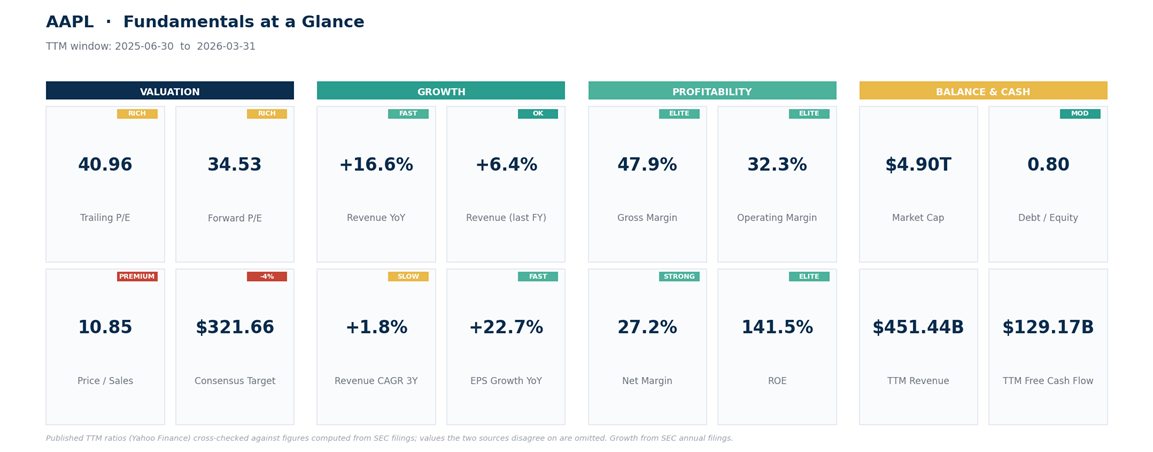
And the rotation cut against it: money that had parked in Apple as the safe way to avoid the capex race reconsidered, once Microsoft and Amazon showed the capex converting. At 41x trailing and 34.5x forward consensus earnings, Apple carries the richest multiple of the 5 names in this week’s arc with the least visible AI engine among them, 2 days after crossing $5 trillion.
Score the June framework honestly, because it did well: the 264 to 276 support zone held without a retest, the recovery targets at 315 and 340 both hit (the record reached $344.57 on Wednesday), and the Street-high 400 reference never came into play. The margin worry that motivated that piece is now the company’s own guidance language. Friday’s drop, near $310 on early quotes, lands the stock back inside the zone where our first target sat, which is where the new map starts.
The Apple Map
Same rules: daily closes only, on a reaction day.
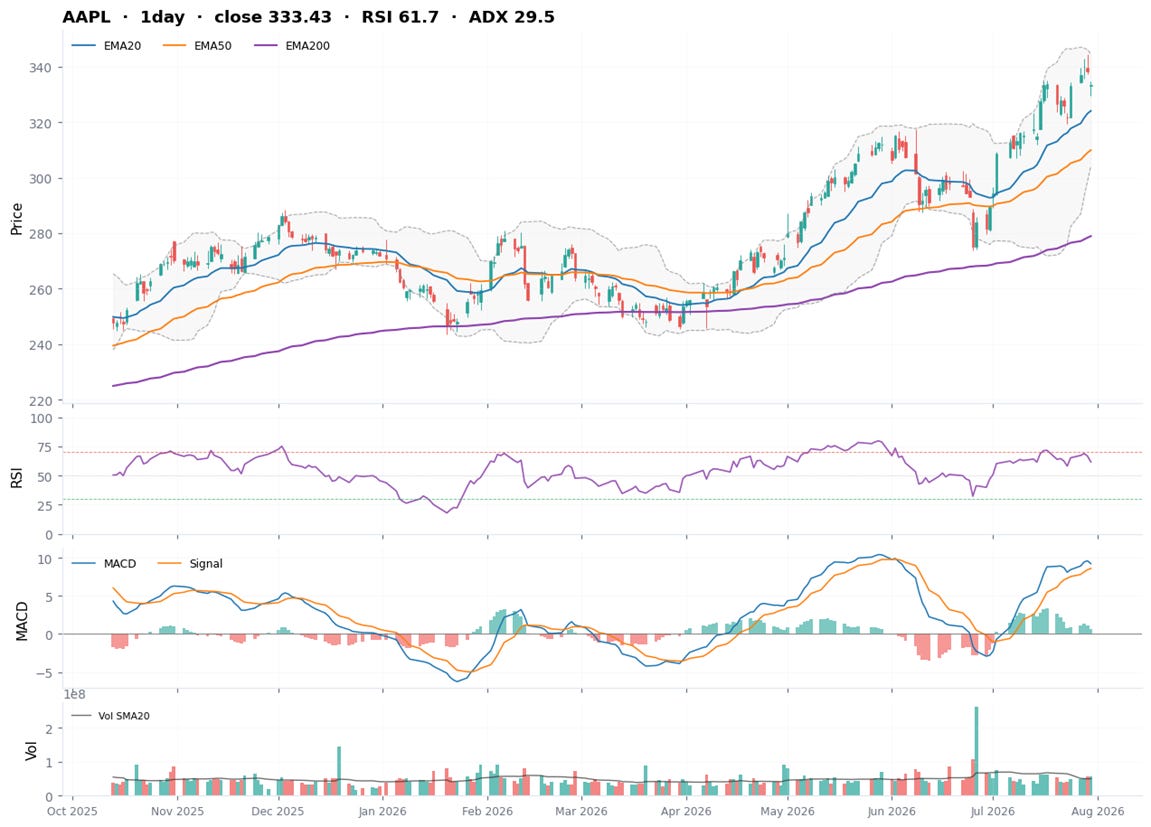
Decision zone: 306 to 315, the 38.2% retracement of the spring rally ($306.73), the 50-day average ($309.94), and our June piece’s first recovery target. Friday’s early quotes sit in it.
Invalidation: a daily close below 294, under the halfway retracement ($295.04) and the 100-day average. Below that, the record run has fully unwound into a downtrend question.
Repair: a daily close above 325 reclaims the 20-day average, with the structural reference at 344 (the record); the 400 Street-high that has anchored the bull case since June is a valuation marker, not a structural level.
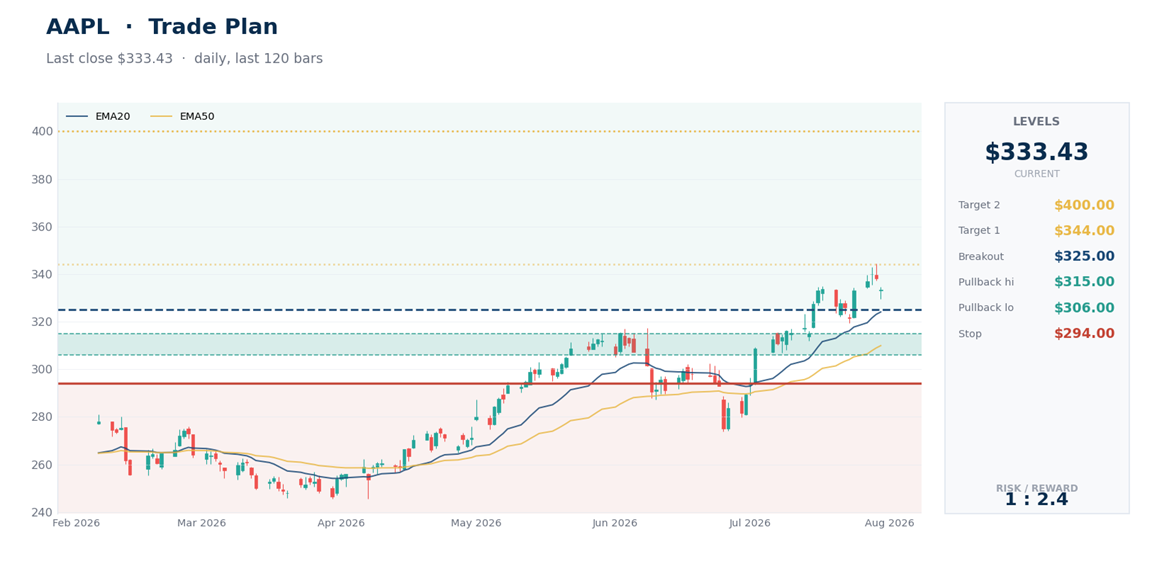
For fresh capital (illustrative): a fill near 310 against the 294 line risks about 5.2%, closing-basis caveats and gap risk included. The harder question isn’t the level; it’s whether you want the most expensive multiple of the week’s 5 names attached to its least visible monetized AI engine. That’s a thesis decision the map can’t make for you.
Bottom Line
Big-tech week ends with 5 verdicts and 1 rubric. Alphabet was charged for a bigger bill, Microsoft was paid for Azure at 43%, Meta was charged for costs arriving before returns, Amazon was paid for AWS at 36.7%, and Apple showed that avoiding the capex race is no longer enough when the market can’t see a comparable AI growth engine.
The market’s test this season was never spending versus discipline; it was receipts versus promises. AI conversion wasn’t the only variable behind these reactions. Positioning, valuation, and guidance all contributed, but it was the clearest dividing line.
For Amazon, the conversion evidence is now visible and 240 to 248 is where the re-rating gets its first test.
For Apple, a record quarter bought a 7% haircut, and the 306 to 315 zone now decides whether the market is repricing a margin problem or starting to question the franchise premium itself. We’d let the zones answer before the narratives do.
This is research and commentary, not personal investment advice. Levels and trade plans are illustrative; size positions to your own risk tolerance and time horizon. The author may hold positions in names discussed.