


The Federal Reserve is expected to raise interest rates by 25 basis points today. The obvious conclusion is that higher rates are bad for stocks, particularly technology. But that is not the trade in front of us.
After three rate cuts in late 2025 and a long pause in 2026, the target range now stands at 3.50%–3.75%. The Fed is considering its first increase since 2023 as renewed inflation pressure - amplified by higher energy prices, tests whether policy became too loose.
Markets have already had time to prepare. Treasury yields have moved sharply higher, the 10-year yield is around 5%, and the rate-sensitive parts of the market have absorbed a meaningful tightening in financial conditions. The quarter-point move matters, but it is no longer the main surprise.
The market will not trade the hike. It will trade the path that follows it.
Key Takeaways
A 25-basis-point hike is heavily expected and should not, by itself, break the market.
The best realistic outcome is a hike accompanied by a credible but noncommittal inflation warning.
The main risk is language or projections that force investors to price several additional hikes.
A pause is not automatically bullish. A credible pause should help stocks, but a weak pause that damages the Fed’s credibility could lift long-term yields and hurt technology.
The 10-year Treasury yield will probably provide a cleaner signal than the first move in the Nasdaq.
My Probability Weighted View
Futures markets currently imply roughly a 93% probability of a 25-basis-point hike. My tree assigns 92% to a quarter-point increase and 1% to a 50-basis-point increase. That is effectively the same headline view: there is little edge in predicting the decision itself. The useful disagreement lies in the message that accompanies it.
The probabilities below are judgment-based estimates designed to make that communication risk explicit. I assign a meaningful 25% probability to a hawkish hike, large enough that the guidance, projections and bond-market response matter more than the expected quarter point.
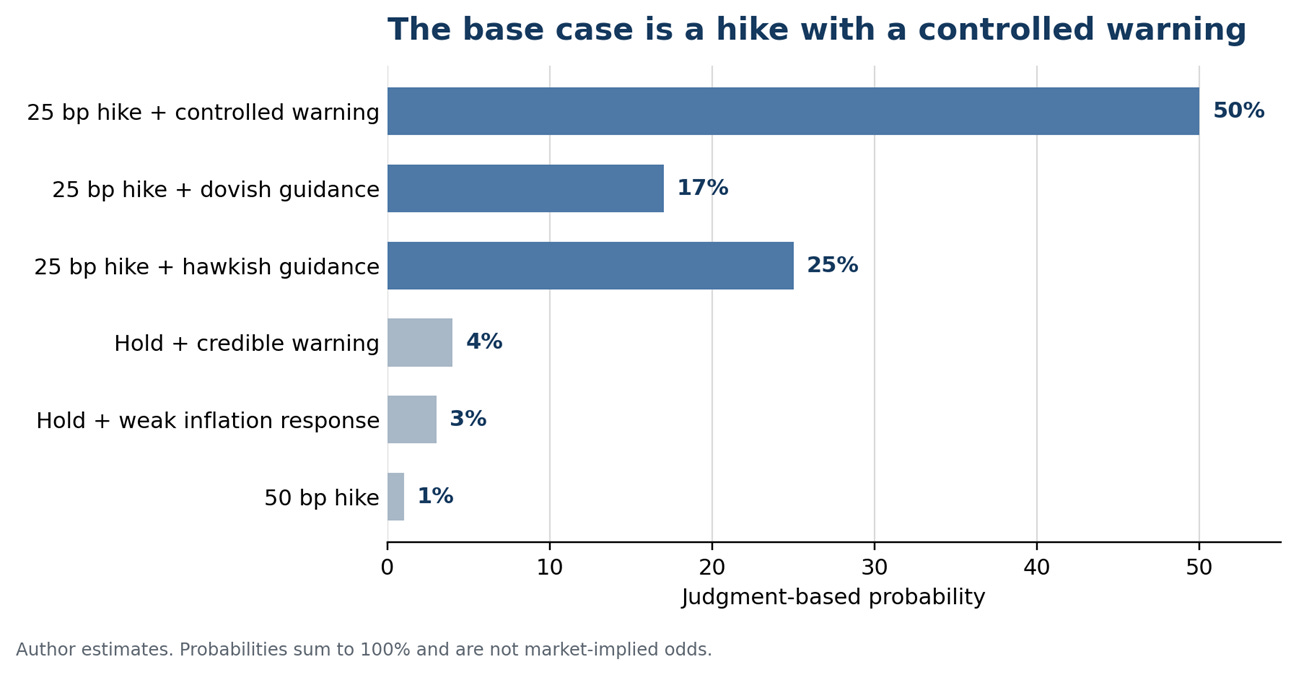
Figure 1 Estimated probability of each decision and communication scenario
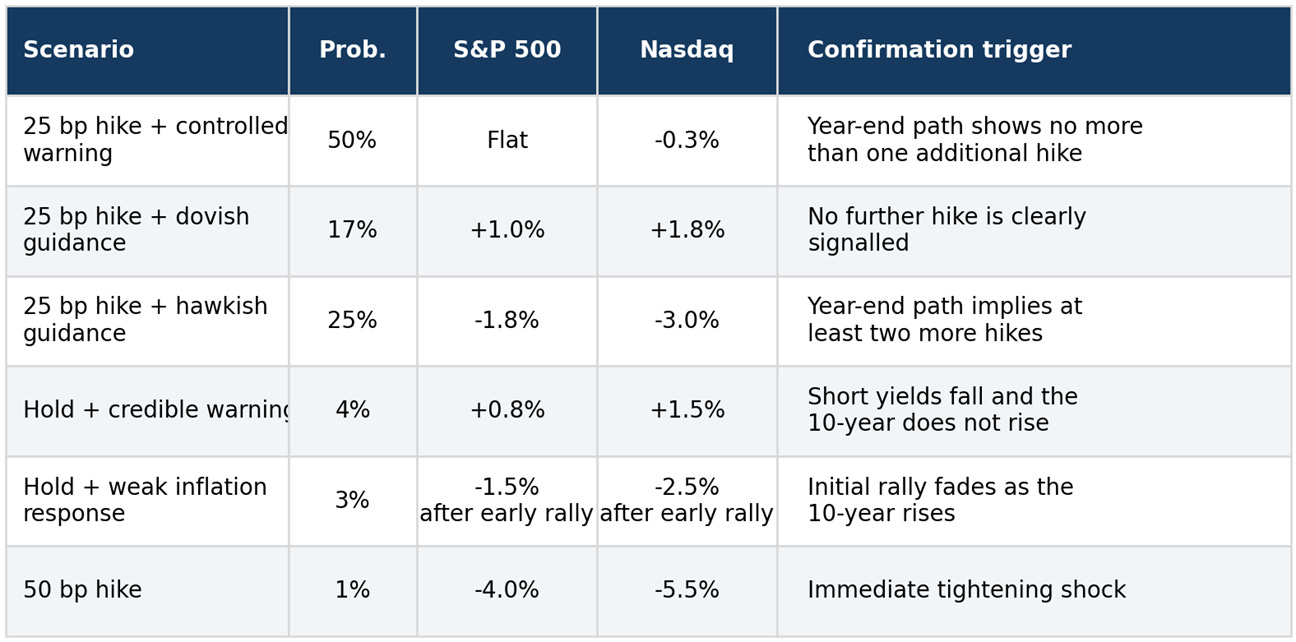
Central estimates for the immediate reaction, not price targets. Direction and confirmation matter more than decimal precision.
Why the Message Matters More Than the Move
Today’s decision is complicated by the source of inflation. If higher prices are being driven mainly by oil and geopolitical disruption, monetary policy cannot produce more energy or repair supply routes. It can only reduce demand elsewhere in the economy. That makes aggressive tightening a blunt response.
But doing nothing also carries a cost. If households, companies and bond investors conclude that the Fed will tolerate higher inflation, inflation expectations can rise. Long-term yields may then increase even without an official hike.
This is the counterintuitive part: a credible hike can be better for stocks than an unconvincing pause. A quarter-point increase may reassure the bond market and contain the inflation premium embedded in long-term yields. A weak pause may produce a short relief rally, followed by higher yields and lower equity valuations. A credible pause, by contrast, would probably remain the more bullish immediate outcome.
The Best Realistic Outcome
The cleanest result is a 25-basis-point hike paired with a firm but limited warning: inflation remains too high, the Fed is prepared to act again if necessary, and future decisions will depend on incoming data.
That would protect credibility without committing policymakers to a predetermined sequence of hikes. It would also preserve the ability to stop if energy prices stabilize, inflation expectations ease or growth deteriorates.
Markets can live with one hike. They will struggle with an open-ended tightening cycle while the 10-year Treasury yield is already near 5%.
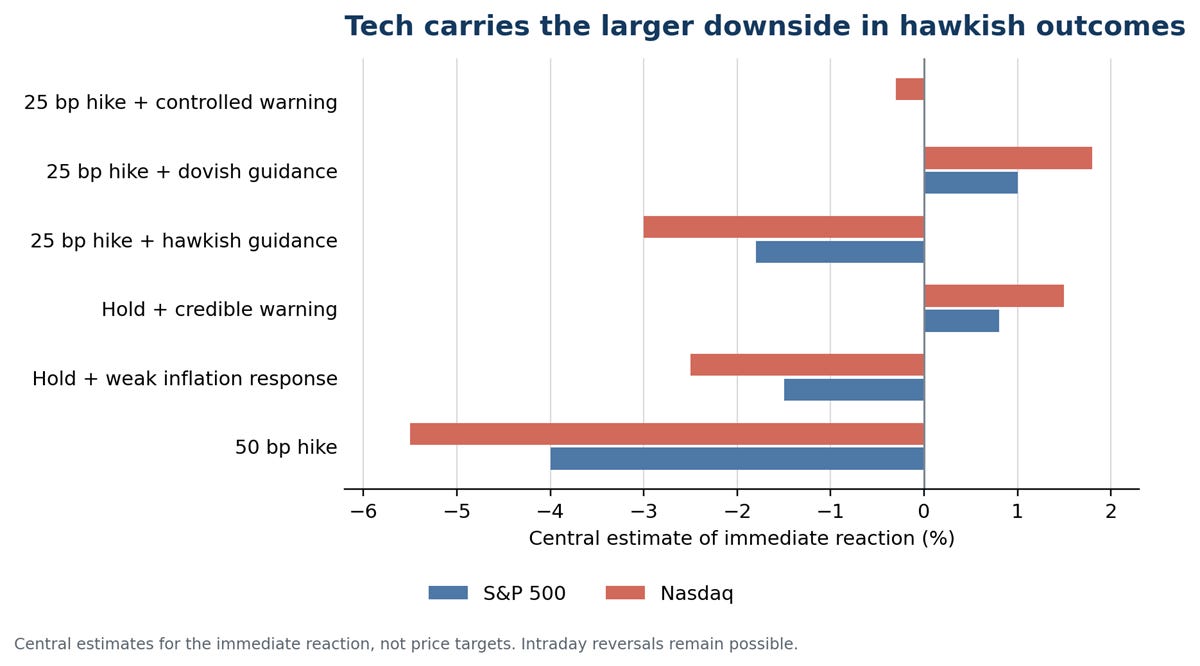
Figure 2 Central estimate of the immediate index reaction in each scenario
Why Technology Is the Pressure Point
Technology companies are not equally sensitive to interest rates. Profitable businesses with strong balance sheets can continue to grow through a modest increase in borrowing costs. Their valuations, however, still depend partly on earnings expected many years into the future.
When long-term yields rise, those distant earnings become less valuable today. The effect is strongest in high-multiple and speculative growth stocks. Profitable mega-cap technology should be more resilient; semiconductors and high-multiple growth will carry greater volatility; unprofitable companies dependent on external financing are the most vulnerable.
This is why investors should not treat technology as one trade. If the Fed delivers a controlled hike and the 10-year yield falls, quality technology could rally strongly. If yields break decisively higher, even excellent companies may face valuation compression.
Watch the Bond Market, Not the First Candle
The first move may be misleading. Algorithms will trade the headline, individual words in the statement and changes in the projections within seconds. The initial reaction can reverse during the press conference.
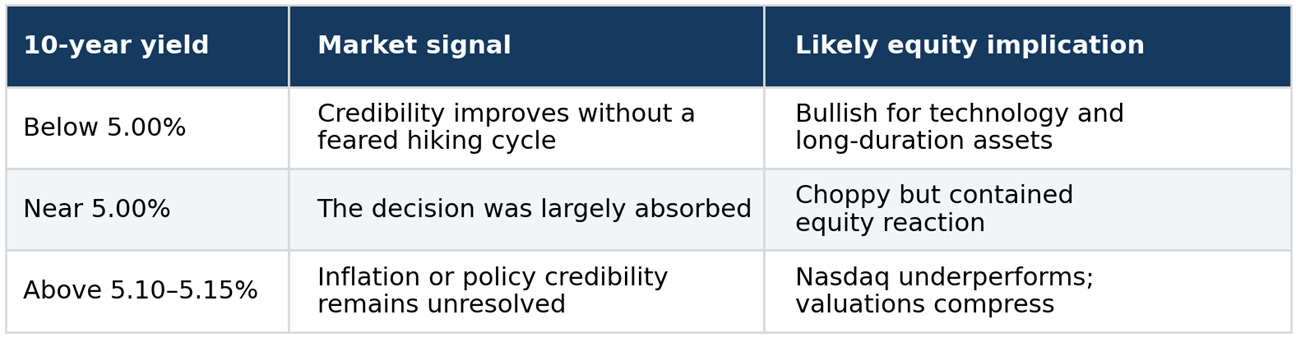
The two-year yield, the dollar and expectations for the next two meetings provide useful confirmation. Together, they reveal whether today is being treated as one adjustment or the start of something larger.
What Would Make the Decision Hawkish
Three signals would turn an expected hike into a genuinely bearish event:
The median year-end rate path moves to 4.25%–4.50% or higher, implying at least two additional quarter-point hikes after today.
The statement or press conference shifts from data dependence toward language that further tightening will likely be required.
The 10-year yield moves above roughly 5.10%–5.15% and holds there after the press conference.
The mirror image would be constructive: no more than one additional hike in the projected path, no commitment to further tightening, and a 10-year yield that remains contained near or below 5%.
My Base Case
I assign a 50% probability to a 25-basis-point hike accompanied by a credible inflation warning, without an explicit promise to hike again. Across all communication variants, I assign a 92% probability to a quarter-point increase; almost identical to the market’s roughly 93% pricing.
That base case may produce a noisy and mildly negative initial reaction, particularly in technology. It does not need to become a lasting selloff. If the Fed contains inflation expectations and prevents another surge in long-term yields, the market could stabilize quickly and potentially finish higher after the press conference.
The genuinely bearish branch is narrower: a hike combined with projections and language that force investors to price several additional increases. That would tighten financial conditions far beyond today’s quarter point and challenge the valuations supporting the technology market.
Bottom Line
Today is not simply a contest between a hike and a pause. It is a test of whether the Fed can address inflation without convincing investors that a new tightening cycle has begun.
A controlled quarter-point hike is uncomfortable but manageable. A credibility problem, or the prospect of several more hikes, would be far more damaging. The Fed does not need to sound dovish to support stocks. It needs to sound credible, measured and unwilling to overcommit.
The decisive question is whether investors leave believing that today’s hike may be sufficient, or merely the beginning.
This article is for informational and educational purposes only and does not constitute investment advice. Market scenarios and probabilities reflect the author’s judgment and may change as new information emerges. Investing involves risk, including the potential loss of capital.