


The market is asking the wrong question.
Will the Federal Reserve raise rates this week?
Probably.
But the decision itself is no longer the most important part of the story. With markets assigning close to a 90% probability to a hike, 25 basis points should surprise almost nobody.
The more important question is what happens after the announcement.
Does the Fed signal the beginning of another tightening cycle? Or does it deliver one cautious hike, protect its inflation credibility, and return to watching the data?
My view is that the second outcome is more likely.
But that does not mean the old bull market simply returns.
The Fed may be close to finishing before it begins. The real tightening is happening further out on the yield curve, where no central banker has complete control.
That is the thesis.
This is an oil shock, not an inflationary boom
Headline inflation is running at 3.4%. Core inflation is lower at 2.4%.
Gasoline prices are 27.4% higher than a year ago. Fuel oil is up 52%. Gasoline alone accounted for more than one-third of August’s monthly CPI increase.
That does not describe an economy overheating across every category. It describes an energy shock moving through the price data.
The source is physical.
Oil flows through the Strait of Hormuz have been severely disrupted. Saudi Arabia’s East-West pipeline, one of the main alternative routes around the strait, was then shut following drone attacks.
The result is a global economy paying more for less available energy.
At the same time, the IEA expects world oil demand to contract by 2.5 million barrels per day this year, the largest annual decline since the pandemic.
That is not evidence that the problem has solved itself. It is evidence that the price shock is already doing economic damage.
People drive less. Airlines reduce capacity. Factories use less fuel. Consumers redirect money from discretionary purchases toward transport and utilities.
Demand destruction eventually limits oil prices, but it does so by weakening the economy.
This is what makes the Fed’s position so uncomfortable. Higher rates cannot reopen Hormuz or repair a Saudi pipeline. They can only suppress demand elsewhere, hoping that the energy shock does not spread into wages, services, freight, and inflation expectations.
The Fed is not fighting an inflationary boom. It is trying to stop a supply shock from becoming a broader inflation problem.
Why a hike still makes sense
There is a respectable case for raising rates.
Energy shocks can leak into the rest of the economy. Once businesses and households begin expecting persistent inflation, they change their behavior. Workers demand higher wages. Companies raise prices preemptively. Investors demand more compensation for holding bonds.
Recovering lost credibility is much more expensive than protecting it.
The political setting also matters.
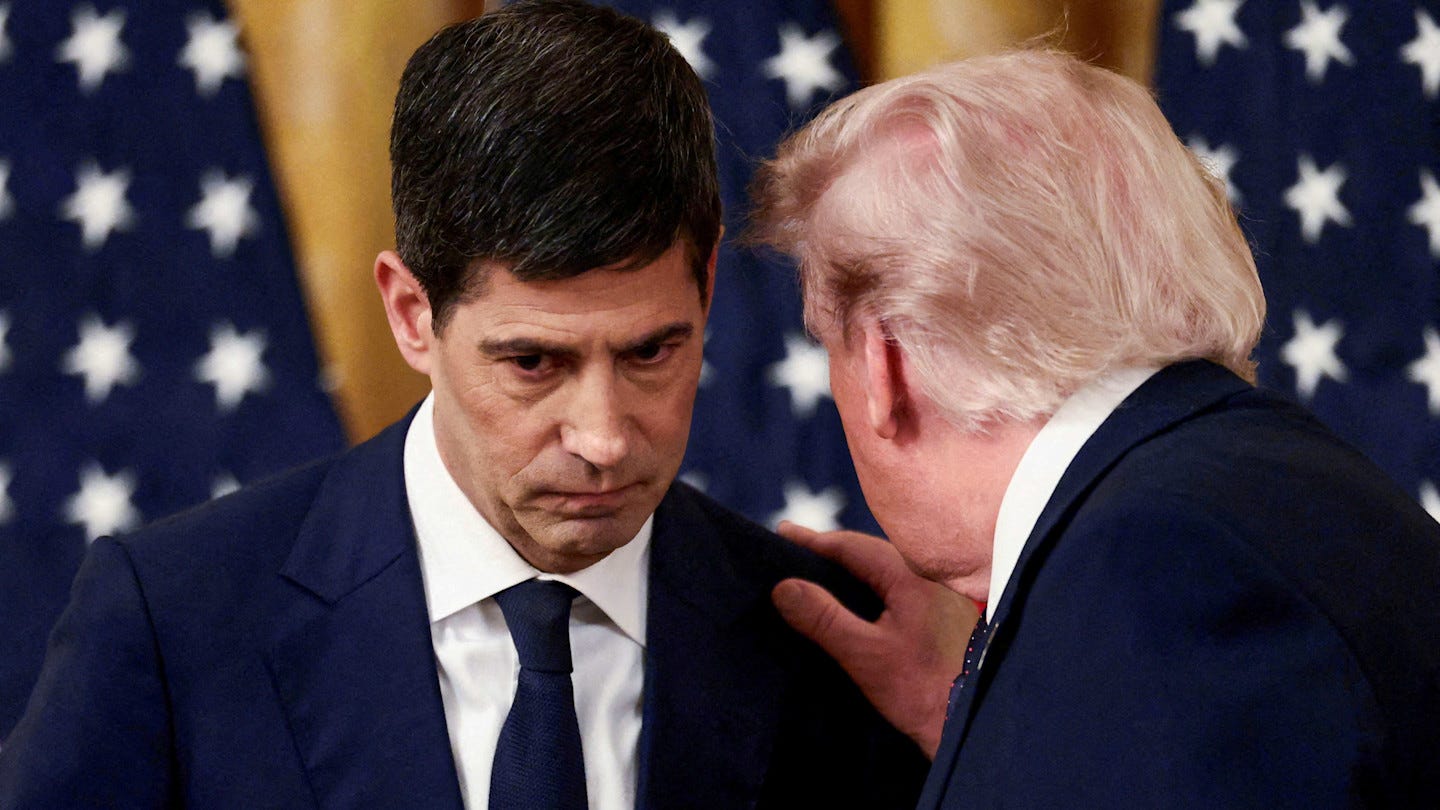
Kevin Warsh is leading the Fed while the administration is publicly arguing against higher rates. That does not prove he will hike to demonstrate independence. We cannot know his private motivation.
But it does raise the institutional cost of an unexplained hold.
A hike would show that the Fed remains prepared to act when inflation risks rise, regardless of political pressure. August’s inflation report provides enough economic justification to make that decision defensible.
The mistake would be assuming that one hike automatically means several more.
Employment remains healthy, but the economy is not accelerating uncontrollably. Core inflation has improved substantially. Oil is already destroying demand. Long-term market rates have tightened financial conditions without waiting for the Fed.
That is why I expect a hike accompanied by restraint.
The Fed can raise rates while avoiding a commitment to keep raising them.
If it does, the first market reaction could be a relief rally.
The hike is priced. A limited hiking path may not be.
A relief rally would not solve the real problem
It would be tempting to interpret dovish language as a return to easy financial conditions.
That would be a mistake.
The two-year Treasury largely reflects expectations for the Fed. The 10-year and 30-year reflect something broader:
Inflation uncertainty
Government borrowing
Fiscal deficits
Global sovereign issuance
Reduced central-bank balance-sheet support
Competition for long-term capital
And this is not just an American problem.
Long-term yields have risen across the UK, Europe, and Japan. That tells us the bond selloff is bigger than Kevin Warsh, bigger than one inflation report, and bigger than one Fed meeting.
The global price of duration is being reset.
The Fed can influence the overnight rate. It can heavily influence the two-year yield. It cannot dictate what investors demand to lend money for thirty years.
That means the Fed could deliver a relatively dovish hike, the two-year yield could fall, and the 30-year yield could remain stubbornly high.
Technology might rally while mortgages remain expensive.
The Nasdaq might bounce while commercial real estate continues struggling.
Rate expectations might improve while companies facing refinancing still pay much more for capital.
A dovish Fed is not the same thing as cheap money.
That distinction is the heart of this market.
AI is not broken, but the burden of proof has changed
The AI selloff began with calls to slow the development of advanced models.
What did not happen is just as important:
No major hyperscaler cut capital-expenditure guidance. No wave of data-center projects was cancelled. No semiconductor company announced that orders had collapsed.
The AI problem is still an expectations problem, not an order-book problem.
But expectations matter when technology represents more than one-third of the S&P 500.
At that weight, an AI de-rating is not merely a sector rotation. It is an index event.
The market has spent several years rewarding companies for announcing larger investments, more computing capacity, and more ambitious infrastructure plans. That phase may be ending.
Investors are beginning to ask a more difficult question:
Who can earn an adequate return on all this capital?
That is a healthier question, but not a comfortable one.
The winners will not simply be the companies spending the most. They will be the companies that can convert AI investment into durable revenue without damaging free cash flow or repeatedly returning to capital markets.
Companies with enormous cash generation have room to absorb mistakes.
Highly leveraged infrastructure operators do not.
The AI thesis is not invalidated because semiconductor stocks fall. It is invalidated when customers cut spending, utilization weakens, inventories rise, and revenue fails to keep pace with depreciation.
We are not there yet.
But the burden of proof has shifted from building AI to earning money from it.
Credit is where a correction becomes a crisis
Equities can fall because investors were paying too much. That is a valuation correction.
A crisis begins when borrowers cannot refinance, lenders pull back, defaults rise, and falling asset prices begin damaging the real economy.
That is why credit matters more than the VIX.
Private-credit borrowers are particularly exposed. Many have floating-rate debt. They are now facing the combination of higher interest costs and higher energy expenses.
Those pressures compound.
A company paying more on its debt while also paying more for transport, electricity, and materials does not need a recession to experience financial stress. It only needs margins to narrow far enough.
The most useful market distinction is simple:
If equities fall while credit spreads remain contained, this is probably a valuation correction. If equities fall while high-yield spreads widen rapidly, the market is moving toward an economic and financial event.
For now, the evidence supports caution rather than crisis.
But this is where I would look first for proof that the thesis is wrong.
What I expect next
My base case is a 25-basis-point hike followed by language that avoids promising another one.
That should be enough to protect the Fed’s inflation credibility without pretending monetary policy can solve an oil-supply disruption.
If that happens, technology and other rate-sensitive assets could rally.
But I would not expect a return to indiscriminate growth leadership.
The next phase should reward companies with:
Strong free cash flow
Low refinancing needs
Pricing power
Manageable capital intensity
Visible returns on AI spending
It should remain difficult for:
Highly leveraged small companies
Weak commercial real estate
Floating-rate borrowers
Businesses dependent on repeated capital raising
AI companies whose spending ambitions exceed their cash generation
Energy should remain supported while physical supply is constrained. But at current oil prices, the risk of a violent reversal is growing alongside the upside.
This is likely to remain a selective market, even if the indexes recover.
What would prove this thesis wrong
The thesis fails quickly if the Fed explicitly signals several additional hikes.
It weakens if core inflation broadens beyond energy and remains elevated across services, wages, and expectations.
The AI argument fails when hyperscalers begin reducing capex, not when executives publish cautionary essays.
And the no-crisis view fails if high-yield spreads widen aggressively, bank funding stress appears, or private-credit weakness begins spreading into public markets.
Those are the signals that would turn a difficult repricing into something more serious.
The bottom line
The Fed will probably hike.
That is not the surprise.
The potential surprise is that the hike may be less important than the market thinks, while the rise in long-term capital costs is more important than almost anyone wants to admit.
Oil is creating an inflation problem by restricting supply and destroying demand. AI is suffering an expectations shock before any confirmed collapse in spending. Neither is yet proof of a macro crisis.
The structural change is in the bond market.
The world is asking governments, companies, and investors to pay more for time, more for uncertainty, and more for borrowed capital.
A carefully framed Fed hike could produce a real relief rally. But it will not reverse that change.
The next market winner will not simply be the company promising the fastest growth. It will be the company that can finance that growth, convert it into cash, and survive without asking the market for permission.
That is not the end of the bull market.
It is the end of easy money being mistaken for a business model.
This article is for informational purposes only and does not constitute financial advice.