


The metals’ problem right now isn’t the story. It’s real rates.
Precious metals just had their roughest stretch of the cycle. Gold fell to about $4,160 an ounce, a 6-month low and 25% below its January peak near $5,589, dragging the big gold fund, GLD, down to roughly $375 a share. Silver fell harder, to about $64 an ounce, taking the silver fund, SLV, to roughly $58. Over the past week alone GLD lost about 8% and SLV about 13%.
The trigger wasn’t a collapse in the case for metals. It was rates: a strong jobs report and rising inflation pushed the Federal Reserve further from cutting and closer to hiking, lifting bond yields and making non-yielding gold and silver less attractive by comparison. Inflation rose and gold fell, which only seems strange until you remember what actually moves the metal.
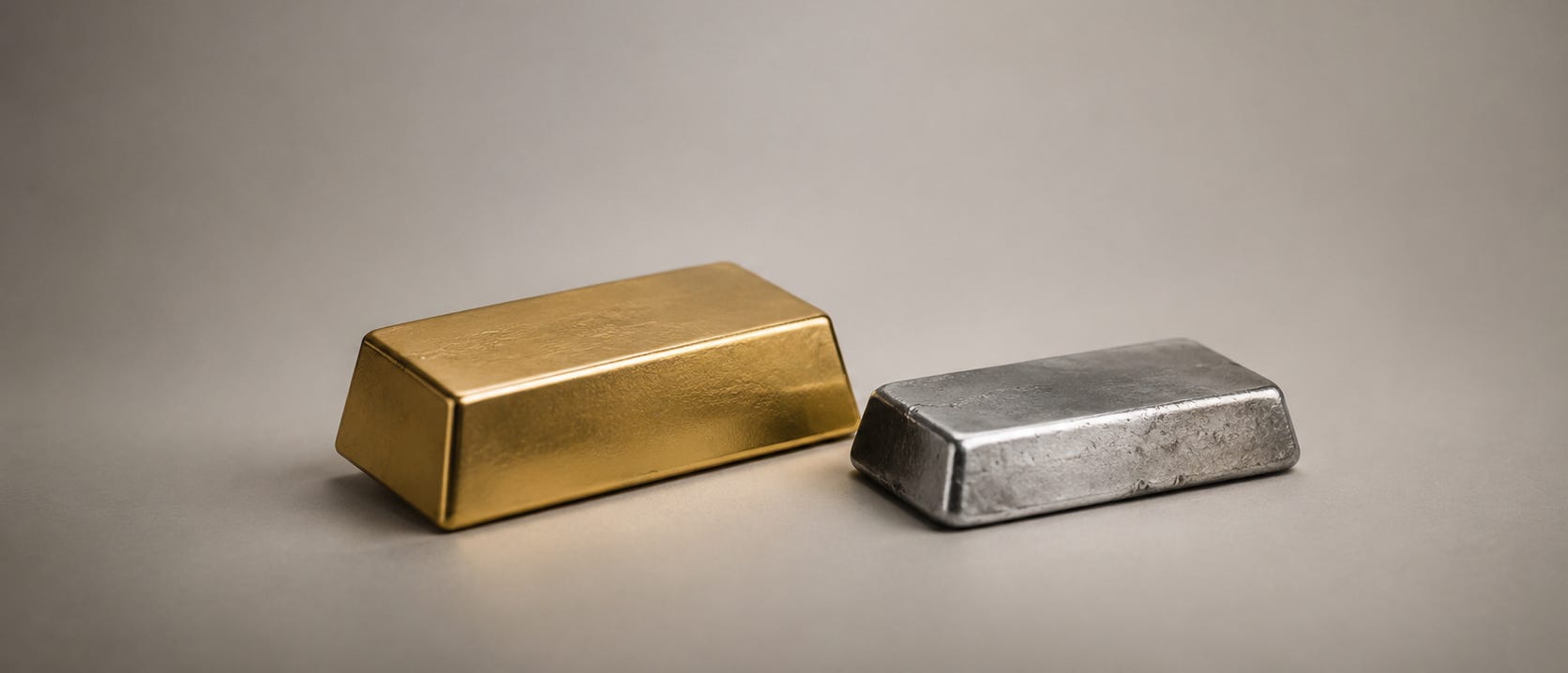
Key Takeaways
Gold fell to about $4,160 an ounce, a 6-month low and 25% below its January high near $5,589; GLD, the gold ETF, sits near $375. Silver dropped to about $64; SLV trades near $58.
It’s a rate story. A strong jobs report and rising inflation lifted yields, the 10-year above 4.5% and the 30-year above 5%, and higher real yields are the main enemy of metals that pay no income.
Silver fell harder for a reason. It’s half an industrial metal and far more volatile; over the past week SLV lost about 13% to GLD’s 8%.
The gold/silver ratio jumped to about 65 from 55 in May, meaning it now takes 65 ounces of silver to buy one ounce of gold. A ratio in the 60s has often come before silver catching up in a recovery.
Both are deeply oversold at multi-month lows, a correction within a longer uptrend, not a confirmed top. But the catalyst is the Fed, and that isn’t resolved, so patience beats heroics.
Start with what these funds actually are.
What GLD and SLV Are
GLD is the SPDR Gold Shares ETF, the largest and most liquid way to own gold without storing bars yourself. It holds physical gold in a vault, and each share represents a small slice, currently just under a tenth of an ounce, so the share price runs near a tenth of the spot gold price. With gold near $4,160 an ounce, GLD trades near $375. Its expense ratio is 0.40%, fine but not the cheapest; a near-identical fund, IAU, charges 0.25% for the same gold exposure.
SLV is the iShares Silver Trust, the silver equivalent. It holds physical silver, and each share tracks just under an ounce, so with silver near $64 an ounce, SLV trades near $58. Its fee is 0.50%. Both funds do one job: hold the metal and track its price, minus a small drag from fees over time. Neither pays a dividend, because metal generates no income.
Why Silver Fell Harder
Gold and silver rhyme, but they aren’t the same trade. Gold is mostly a monetary asset, a store of value that central banks and investors hold when they distrust paper money or want a hedge. Silver is a hybrid: part safe haven, part industrial input, with roughly half its demand coming from solar panels, electronics, and manufacturing.
That industrial side makes silver more economically sensitive and far more volatile. It tends to move like gold with the volume turned up, rising more in rallies and falling more in selloffs. This past week was the falling-more kind: SLV dropped about 13% (silver from about $73 to $64 an ounce) while GLD fell about 8% (gold from about $4,530 to $4,160).
The gauge that captures their relationship is the gold/silver ratio, simply the gold price divided by the silver price, or how many ounces of silver it takes to buy one ounce of gold. It just jumped to about 65 from 55 in May, meaning silver got cheaper relative to gold. That doesn’t mean silver has to rebound first. But it does show silver has quickly become cheaper relative to gold, and if the metals complex stabilizes, silver usually has more catch-up torque. For investors who think the selloff is a pause rather than an end, that tilts the higher-risk dollar toward silver, and SLV.
What Just Happened
The metals didn’t break on their own story. They broke on rates. A strong May jobs report landed first, with payrolls up 172,000 and unemployment steady at 4.3%, then inflation data showing prices still climbing: headline May inflation jumped to 4.2%, though core held lower at 2.9%.
Together they pushed the Fed away from cuts and toward the possibility of a hike, and the bond market repriced fast: the 10-year Treasury yield climbed above 4.5% and the 30-year above 5%. Here’s the key idea in plain terms. Gold and silver pay no interest, so when real yields (what bonds pay after inflation) rise, the opportunity cost of holding a lump of metal goes up, and money rotates out.
A flare-up in the Iran conflict, which would normally send gold higher as a haven, wasn’t enough to offset it. The result was gold’s deepest pullback of the cycle, 25% off its January high.
The Technical Picture
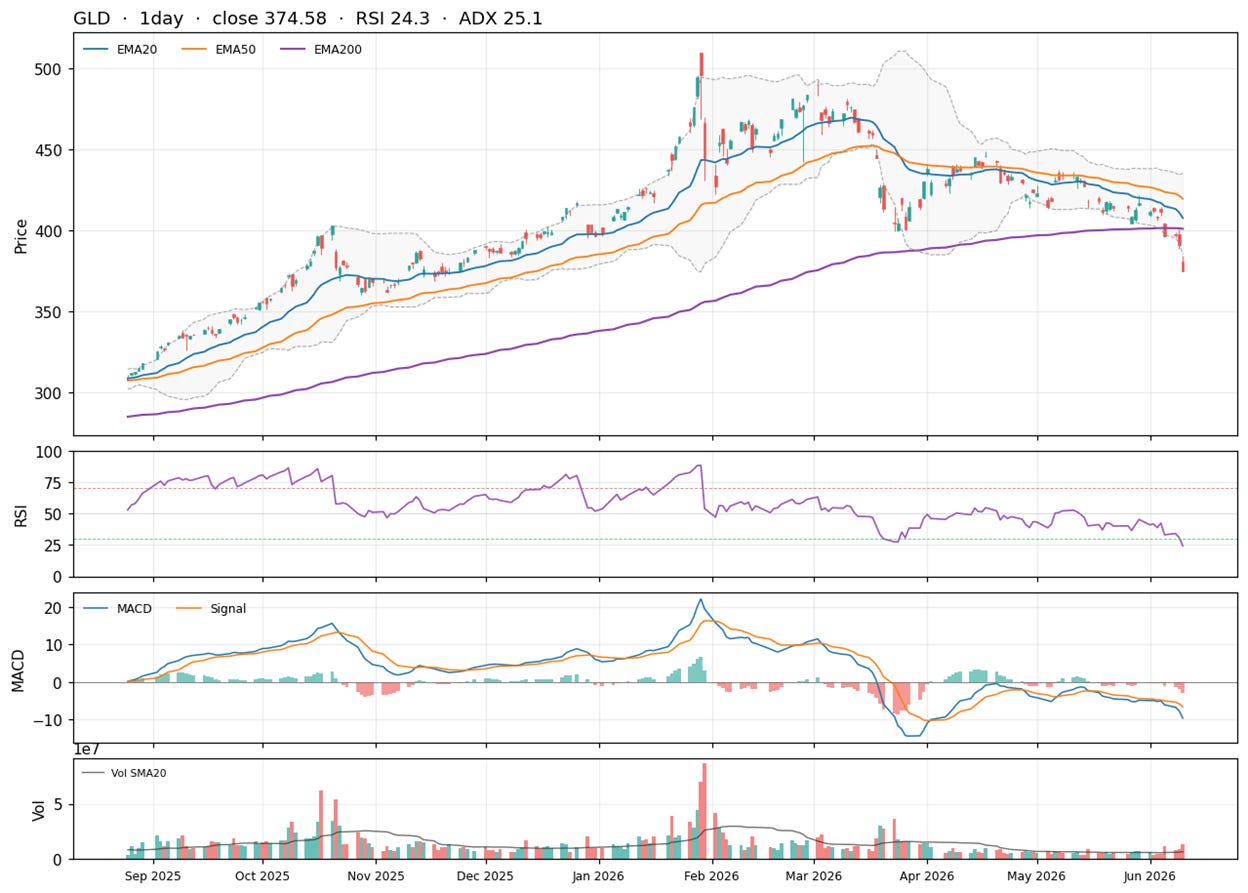
Both metals are stretched to the downside. GLD trades near $375 (gold about $4,160 an ounce), pinned to a fresh 6-month low, with its daily relative strength index, a 0-to-100 momentum gauge where under 30 signals oversold, down at 24. It sits below its 20-day, 50-day, and 200-day averages, the last of which is near $401 (gold about $4,455) and now the first overhead hurdle to win back.
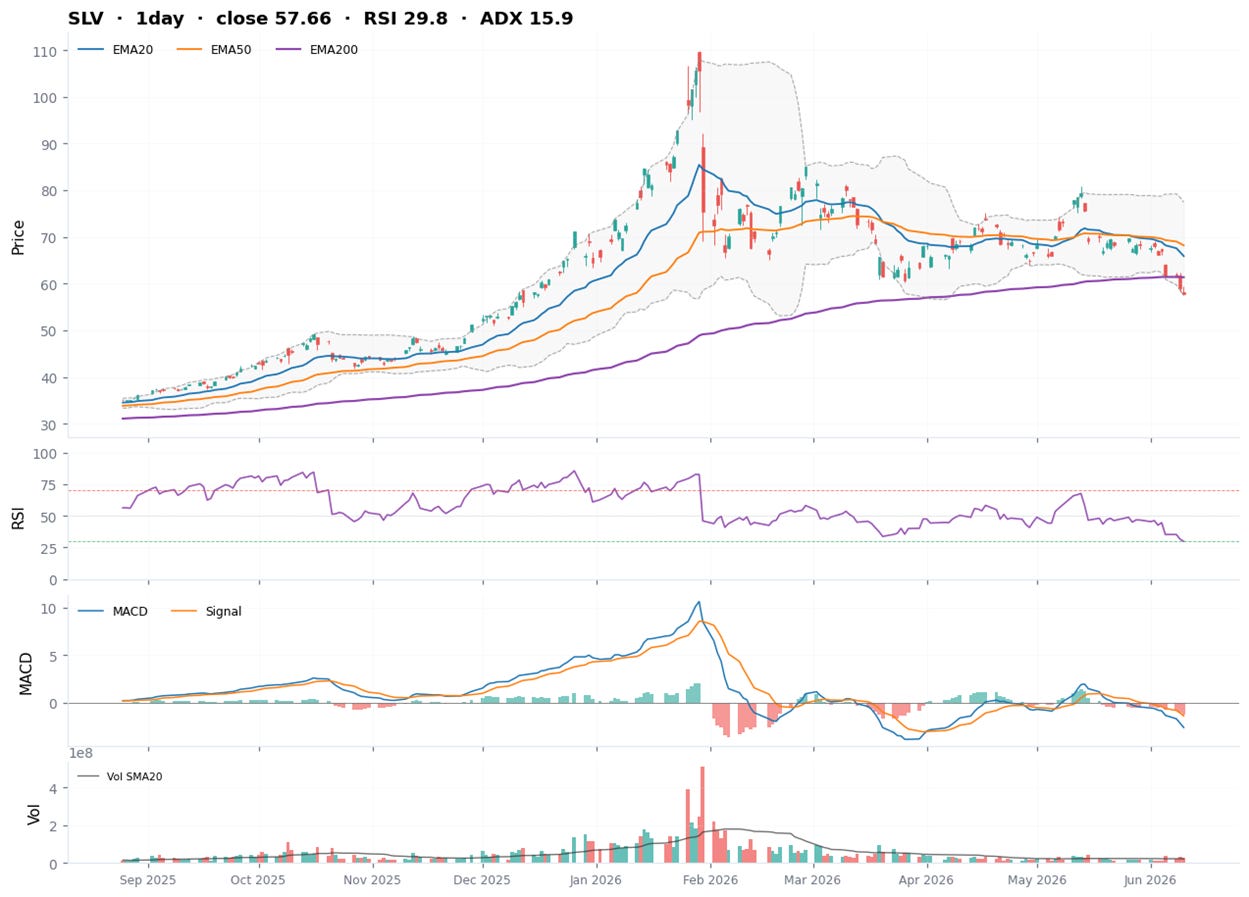
SLV near $58 (silver about $64) tells the same story, its momentum gauge down at 30 and price below its 200-day near $61 (silver about $68). Readings this washed out often precede a bounce, but a bounce inside a downtrend is not the same as a bottom. The bigger picture still favors the bulls only if the longer uptrend holds. These are deep corrections, not yet reversals.
How to Position
These are levels to watch, in both share and spot terms, not instructions. Be clear about what this is: not a breakout setup, but an oversold-reversal watchlist, with both funds still below their major moving averages. Rates are the swing factor, and if yields keep climbing, oversold can get more oversold.
