


If you’ve been watching markets this year, you’ve probably noticed something interesting:
Nvidia NVDA 0.00%↑ is still the face of the AI boom… but Google GOOGL 0.00%↑ is quietly stealing more of the narrative than most people realize.
It’s not loud. It’s not hyped. But it’s happening: in the data, in the economics, and in the price action.
This isn’t a trade call; think of it as sitting down with a peer and saying, “Hey, there’s a shift happening under the surface, and it’s worth paying attention to.”

The GOOGL–NVDA Divergence Is Telling Us Something
Alphabet has added more market cap to the S&P 500 this year than any other company, about 19% of the index’s entire gain. Nvidia sits just behind it at 16%.
But when you overlay the two charts, you see Google pulling ahead.
That move isn’t random. Markets don’t reprice a company of Google’s size without a reason. And right now, the reason is tied directly to how AI workloads are changing.
Momentum isn’t “speculation” when it lines up with shifts this big and this structural.
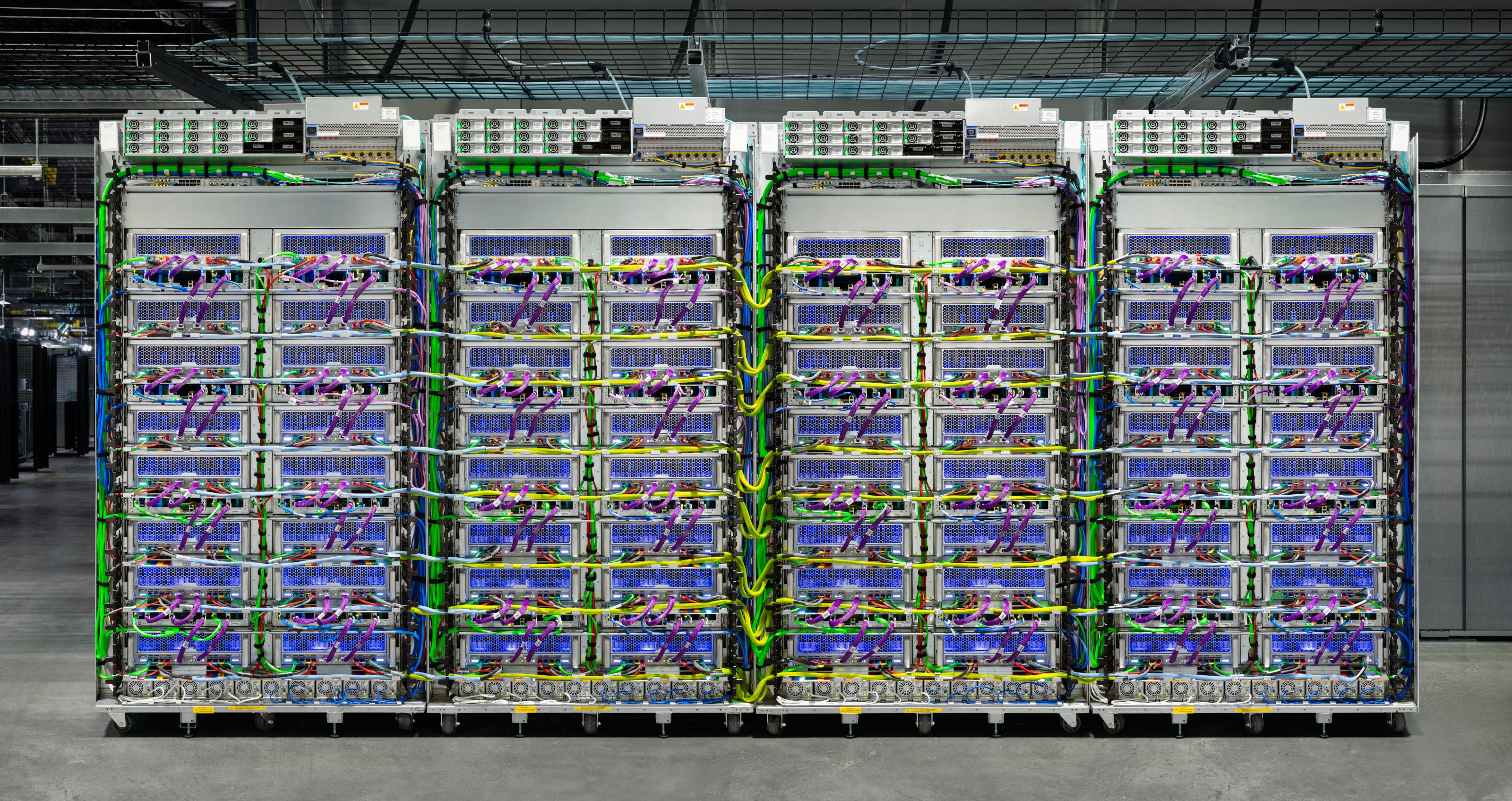
TPUs: Google’s Most Underappreciated Advantage
One thing I love about Google’s TPU story is how understated it is.
In 2013, the company ran a forecast that basically said:
“If Android users talk to their phone for three minutes a day, we’ll run out of compute capacity.”
Not because of video.
Not because of storage.
Just because voice + AI was so expensive on conventional chips.
So they built their own processor.
By the time anyone outside Google even heard the term “TPU,” the chips were already running Maps, Photos, and Translate. That’s a decade-long head start in purpose-built AI silicon.
A few things make TPUs special:
They’re built for AI and nothing else: no gaming baggage, no extra overhead.
They’re cheaper to run.
They use less energy.
And Google controls the whole stack: hardware, compiler, software, cloud.
That kind of vertical integration is rare. It’s the kind of thing that quietly compounds over time.
Even Jensen Huang tips his hat to the TPU program, which tells you a lot.

AI Traffic Share Is Shifting Faster Than People Realize
One of the more eye-opening charts this year has been the Similarweb traffic breakdown.
In the last 12 months:
Google’s AI traffic share jumped from 5% to 14%
And that happened before Gemini 3 even rolled out
OpenAI still dominates, but it’s losing ground
Perplexity, Claude, Grok, and DeepSeek are carving out real mindshare
Microsoft’s Copilot barely registers
For the first time since late 2022, the AI model landscape actually feels competitive, and Google is the one gaining the most from that shift.
When model quality goes up and cost per token goes down, user behavior follows. It’s that simple.

The OpenAI Compute Math Isn’t Adding Up
HSBC tried to answer a straightforward question:
“Can OpenAI actually afford the compute it’s committed to?”
Their model suggests the answer is… not really.
Compute costs through 2030: up to $792B
Rising to $1.4T by 2033
Estimated free cash flow + liquidity: ~$349B
Even with generous assumptions, the gap is enormous.
And here’s the part that doesn’t get enough attention:
Nearly $100B of debt is being taken on by OpenAI’s partners: Oracle, CoreWeave, Blue Owl, SoftBank.
OpenAI itself holds almost none of it.
It’s an unusual setup. It works when capital is cheap and everyone is optimistic. It’s trickier in a world where money actually costs something again.
This doesn’t mean OpenAI fails, not at all.
It just means the economics of AI training are expensive enough that companies with their own silicon (like Google) are positioned very differently for the long haul.

Macro Is Quietly Pushing the Industry Toward Efficiency
Here’s a stat that’s hard to ignore:
24 cents of every U.S. tax dollar now goes to interest payments.
That’s a big deal. Not because of the number itself, but because it shows how expensive capital has become and how selective investors are becoming in response.
When money isn’t free:
Efficiency matters
Owning your silicon matters
Cloud margin pressure matters
Energy cost matters
Vertical integration really matters
Google sits on the right side of all of those.

So What’s Actually Being Repriced?
This isn’t about who “wins AI.”
It’s about how markets reward different business models over time.
Here’s what’s being priced into GOOGL today:
TPU economics are improving
Google’s AI share is rising
Cloud margins look healthier
Search + YouTube benefit from AI, not the other way around
Nvidia’s customers, not Nvidia, absorb the margin squeeze
And the most important piece: efficiency is becoming a competitive moat
We’re moving from a “GPU scarcity” narrative to a “cost-efficient scale” narrative.
That’s a huge shift, and Google is built for it.
A Quick Closing Thought
This isn’t the full Google deep dive. That’s coming next, and it’ll go deeper into the fundamentals, the AI roadmap, and all of the technical analysis behind the setup.
Think of this note as the warm-up lap, the context you need to understand why the deeper story matters.
And honestly? It’s one of the most interesting storylines in markets right now.
This content is for educational purposes only and isn’t investment advice or a recommendation to buy or sell any security.