


There are two kinds of investors who live through a market crash.
The ones who had a plan, and rebalanced into falling prices.
And the ones who didn’t, sold near the bottom, then spent two years waiting for the right moment to get back in.
The difference between them is mostly structure, patience, and intent.

Key Takeaways
Recessions don’t destroy portfolios, forced selling does. The structural goal is to never be compelled to sell equities at the wrong time.
The four pillars of recession resistance are true diversification, defensive equity positioning, liquidity management, and systematic rebalancing.
Asset class behavior varies dramatically across recessions. Short-term treasuries and gold held or gained in 2008 and 2020 while equities fell.
The sequence of returns matters more than average return, especially within ten years of retirement. A 30% drawdown at 62 is categorically different from one at 32.
The bucket strategy eliminates forced selling by ensuring you never need to touch long-term growth assets during a downturn.
Selling at the trough and re-entering late is not a minor mistake. The data shows it creates a permanent, unrecoverable wealth gap measured in hundreds of thousands of dollars.
What Recessions Actually Do to Markets
The word recession carries emotional weight that often distorts how investors respond to it. In practice, recessions are periods of two or more consecutive quarters of negative GDP growth, and while they’re unpleasant in economic terms, their effect on different asset classes varies enormously depending on the recession’s cause, depth, and duration.
The 2008 financial crisis was severe and prolonged, with U.S. equities falling over 50% from peak to trough.
The 2020 COVID recession was equally severe in its initial shock, a 34% drawdown in 33 days but recovered in roughly five months. The 2001 recession was moderate in GDP terms but brutal for technology stocks specifically. Each recession punishes different parts of a portfolio in different ways, which is exactly why diversification across uncorrelated assets is the first and most important structural defense.
Your portfolio can’t avoid recessions. But it can be structured in a way that allows you to survive one without making permanent mistakes.
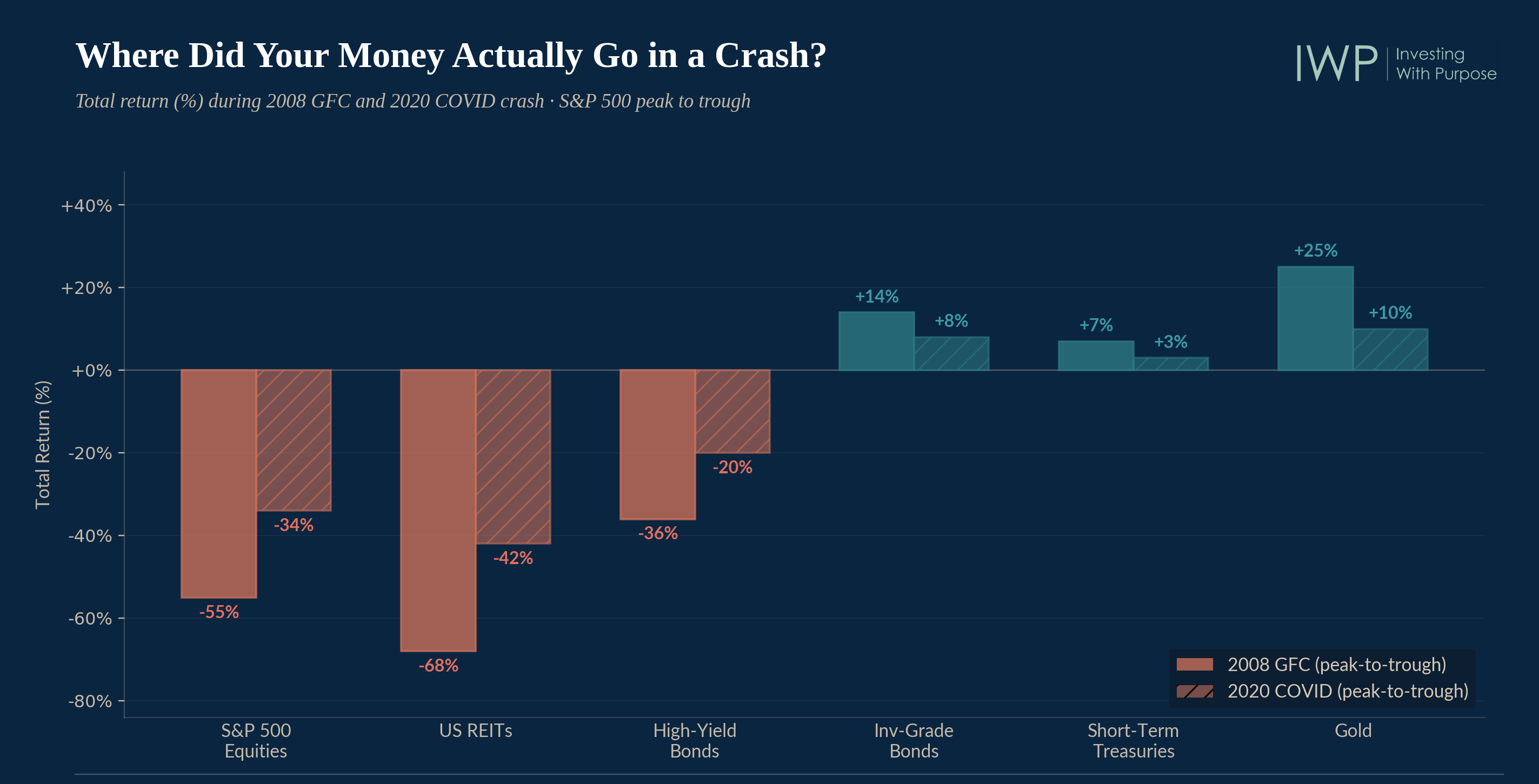
Short-term treasuries and gold provided genuine protection in every major recession. Equities and REITs are the growth engine, not the shock absorber.
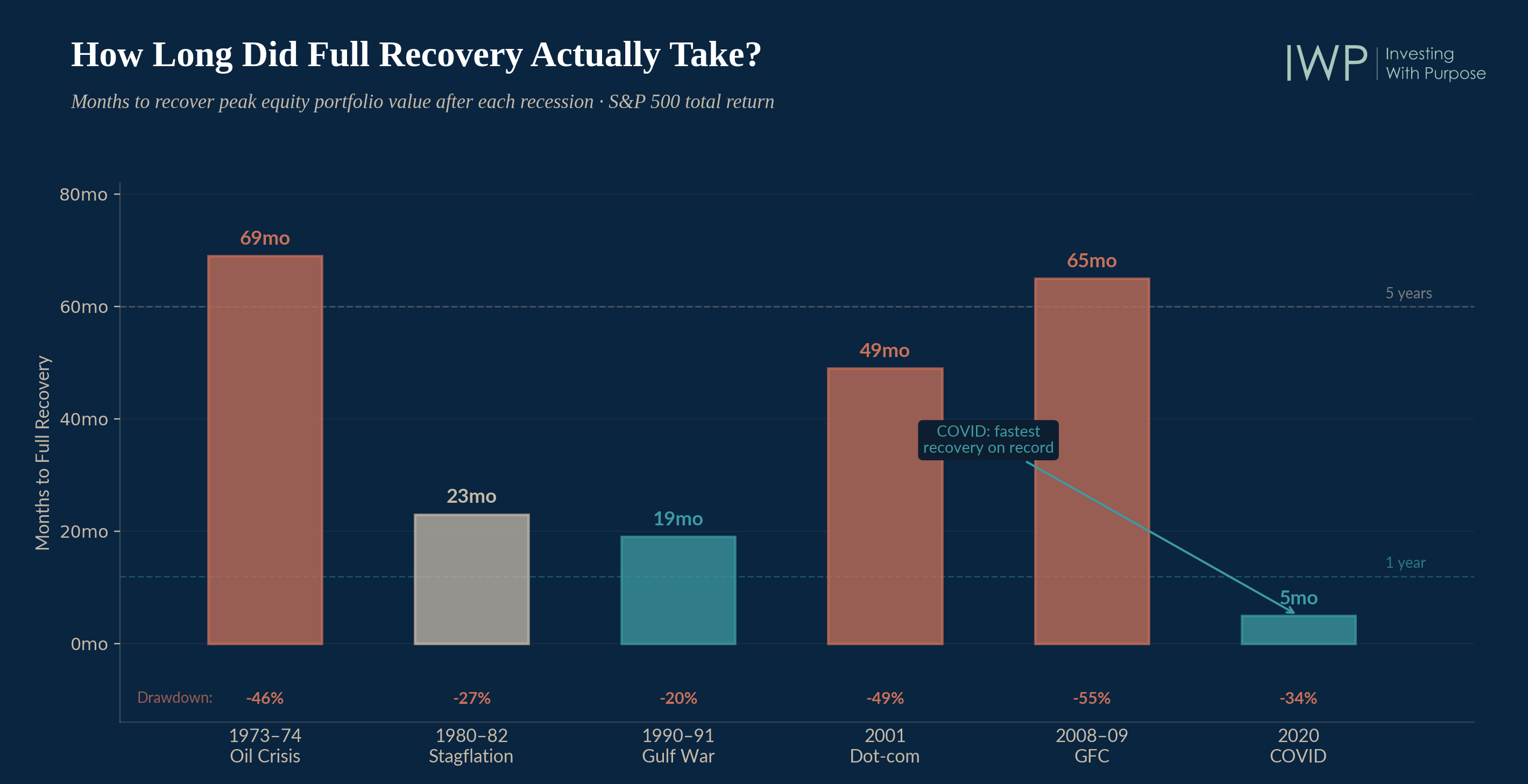
The GFC took 65 months to fully recover. An investor who sold near the bottom and waited for clarity missed the entire thing. Structure, not timing, is the answer.
The True Cost of Panic Selling
Recovery timelines are one dimension of the problem. The other is the compounding cost of the decisions investors make during a downturn. Selling at the trough isn’t just a bad decision in the moment, it permanently restructures your long-term wealth trajectory in ways that cannot be undone, even if you eventually re-enter the market.
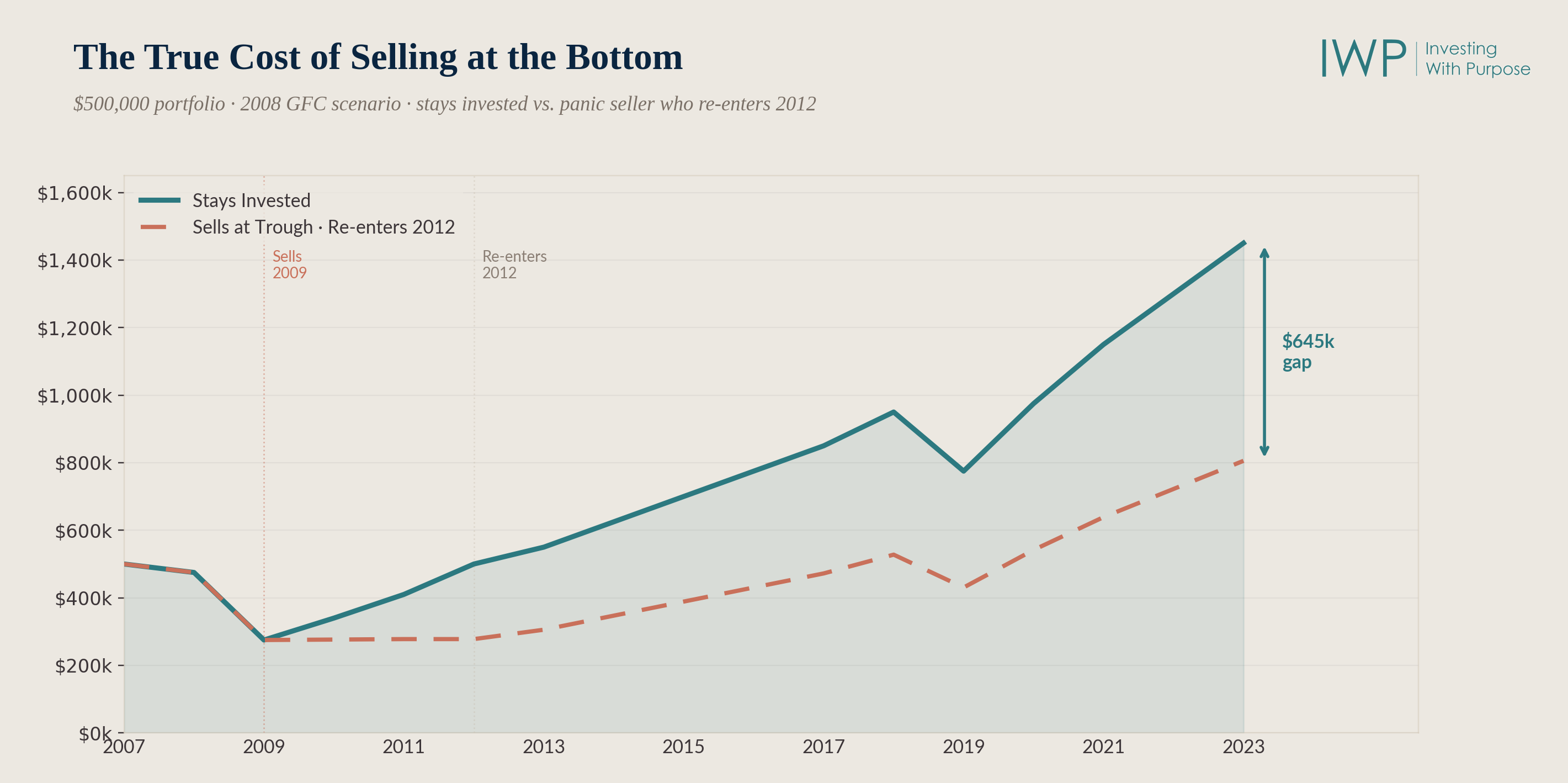
Selling at the 2009 trough and re-entering in 2012 created a $645k gap by 2023, permanent and unrecoverable. Missing the recovery is the real risk, not the drawdown itself.
The Sequence of Returns Problem
For investors still accumulating (i.e., adding money every month) a bear market is almost a gift. Contributions buy more shares at lower prices, and the eventual recovery amplifies those gains. The math works in your favor.
For investors near or in retirement, the math reverses completely. If you’re drawing down a portfolio while it’s also falling, you’re selling shares at depressed prices to fund living expenses. Those shares are gone permanently. They don’t participate in the recovery. A 30% portfolio decline at 62, combined with ongoing withdrawals, can reduce a retirement portfolio’s longevity by a decade or more.
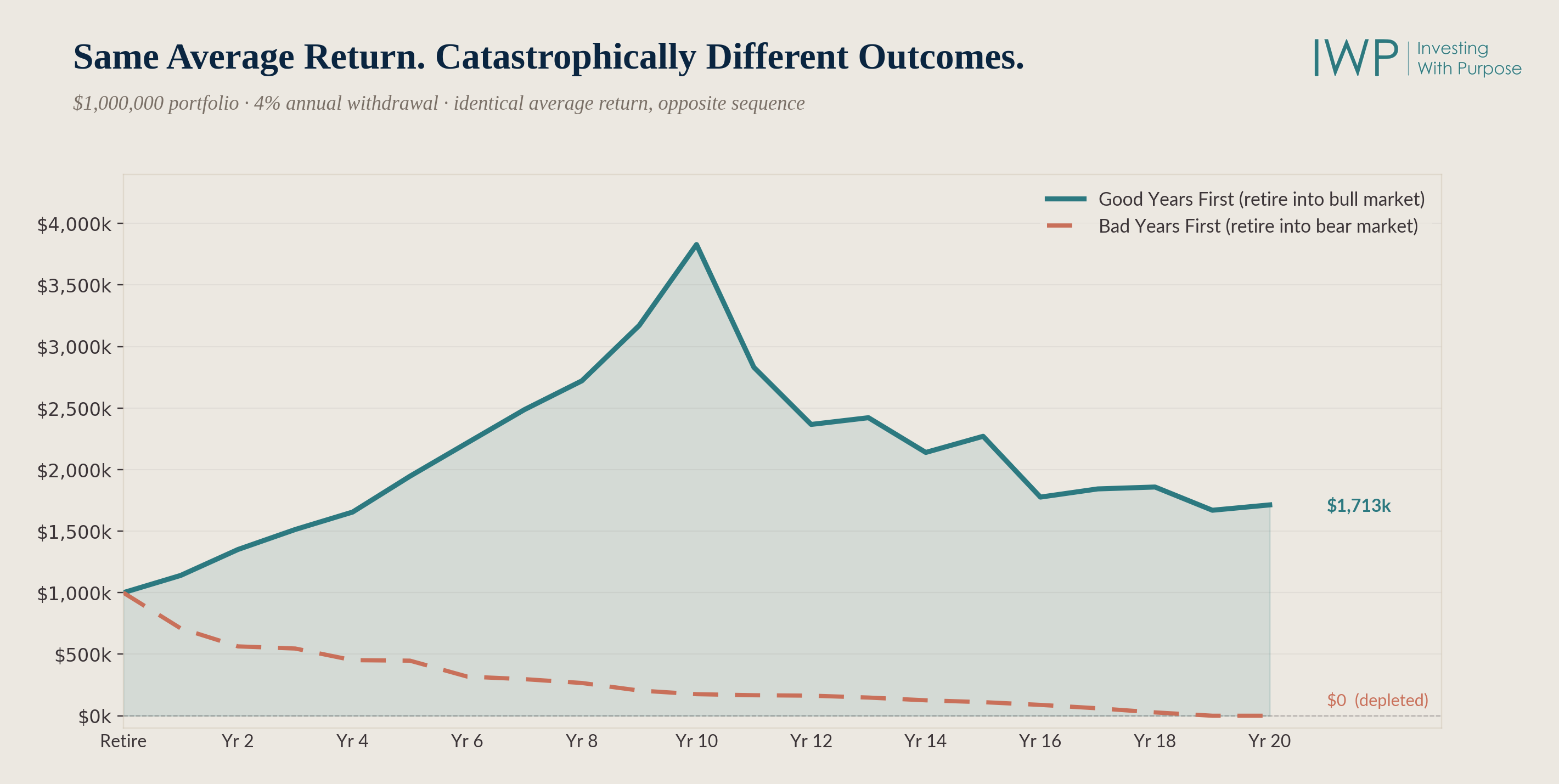
Two investors with identical average returns but arriving in reverse order face dramatically different retirement outcomes. Sequence risk is the hidden variable most investors never model.
The Four Pillars of a Recession-Resistant Portfolio
No portfolio can avoid the impact of a recession entirely. The goal is narrower and more achievable: ensure that no single event forces you into permanent capital loss. The four pillars below are designed to make that outcome structurally impossible.
Pillar 1: True Diversification Across Uncorrelated Assets
Not more funds, but different asset classes that genuinely move independently. Short-term treasuries, TIPS, gold, and international equities as distinct return streams.
Pillar 2: Defensive Equity Positioning Within Equities
Consumer staples, healthcare, utilities, and quality-factor stocks hold up better in downturns. Dividend aristocrats provide income without forced selling.
Pillar 3: Liquidity Management via the Bucket Strategy
12–24 months of expenses in cash or short bonds. This single structural choice is what prevents forced selling of equities at depressed prices.
Pillar 4: Systematic Rebalancing as an Offensive Tool
A pre-committed rebalancing trigger turns a recession into a buying opportunity, mechanically forcing you to add equities when prices are lowest.
The Bucket Strategy in Detail
Bucket 1 holds 12–24 months of living expenses in cash or short-term bonds — it never touches equities, never needs to be sold in a downturn. Bucket 2 holds 3–7 years in a balanced income allocation. Bucket 3 holds everything else in long-term growth equities. In a recession, you draw from Bucket 1. The structure eliminates panic because the math already proves you can survive without touching equities.
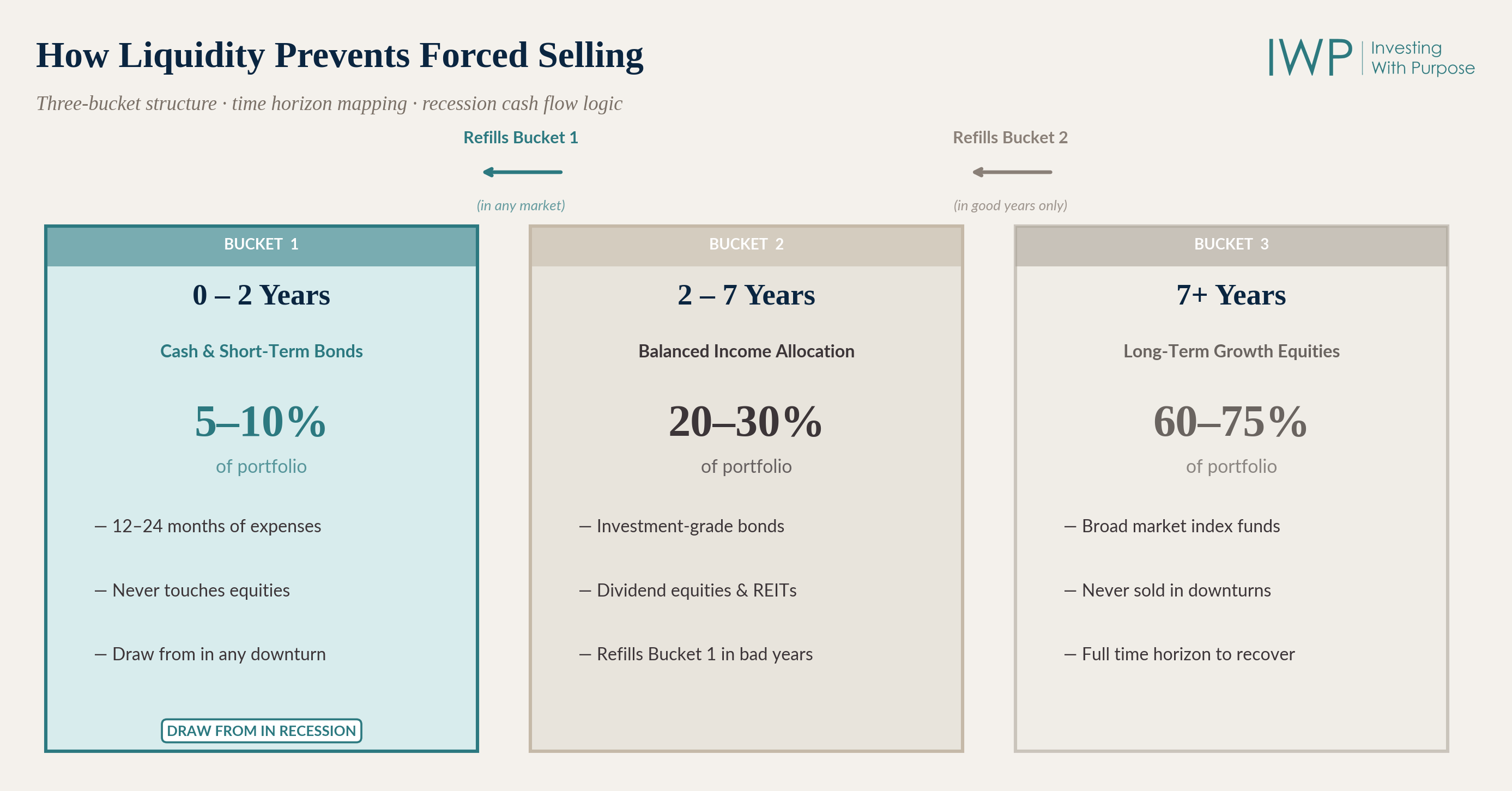
Having 12–24 months in Bucket 1 means you never sell equities in a downturn. It’s not lazy cash, it’s the structural guarantee that protects Bucket 3 from panic.
What Most People Believe About Recessions, And What the Data Says
Investors carry a set of deeply held beliefs about recessions that shape every decision they make during downturns. Most of those beliefs are wrong. Here’s where conventional wisdom diverges most sharply from the data.
Myth
“I’ll move to cash now and buy back in when things stabilize.”
Reality
Stabilization is only visible in hindsight. By the time it feels safe to re-enter, 40–50% of the recovery has already happened. The cost of waiting is permanent.
Myth
“100% equities is the most aggressive and therefore the best long-term allocation.”
Reality
Historical Monte Carlo analysis shows 60/40 to 70/30 portfolios have higher 30-year survival rates than 100% equity because sequence risk destroys all-equity portfolios at the worst moments.
Myth
“Gold is a speculative asset. I don’t own it.”
Reality
Gold gained +73% during the 1973–74 oil crisis and +25% during the 2008 GFC while equities fell 46–55%. A 5–10% gold allocation isn’t speculation, it’s non-correlated insurance.
Myth
“My diversified portfolio will hold up, I own stocks in ten different sectors.”
Reality
In credit-driven recessions like 2008, correlations across sectors spike toward 1.0. Diversification within equities provides very little protection when the entire market is repricing risk simultaneously.
Portfolio Templates by Life Stage
There is no single recession-resistant allocation. The right structure depends entirely on where you are in your investment lifecycle.
A 32-year-old with a 30-year runway should welcome volatility.
A 62-year-old with a 3-year runway to retirement should not.
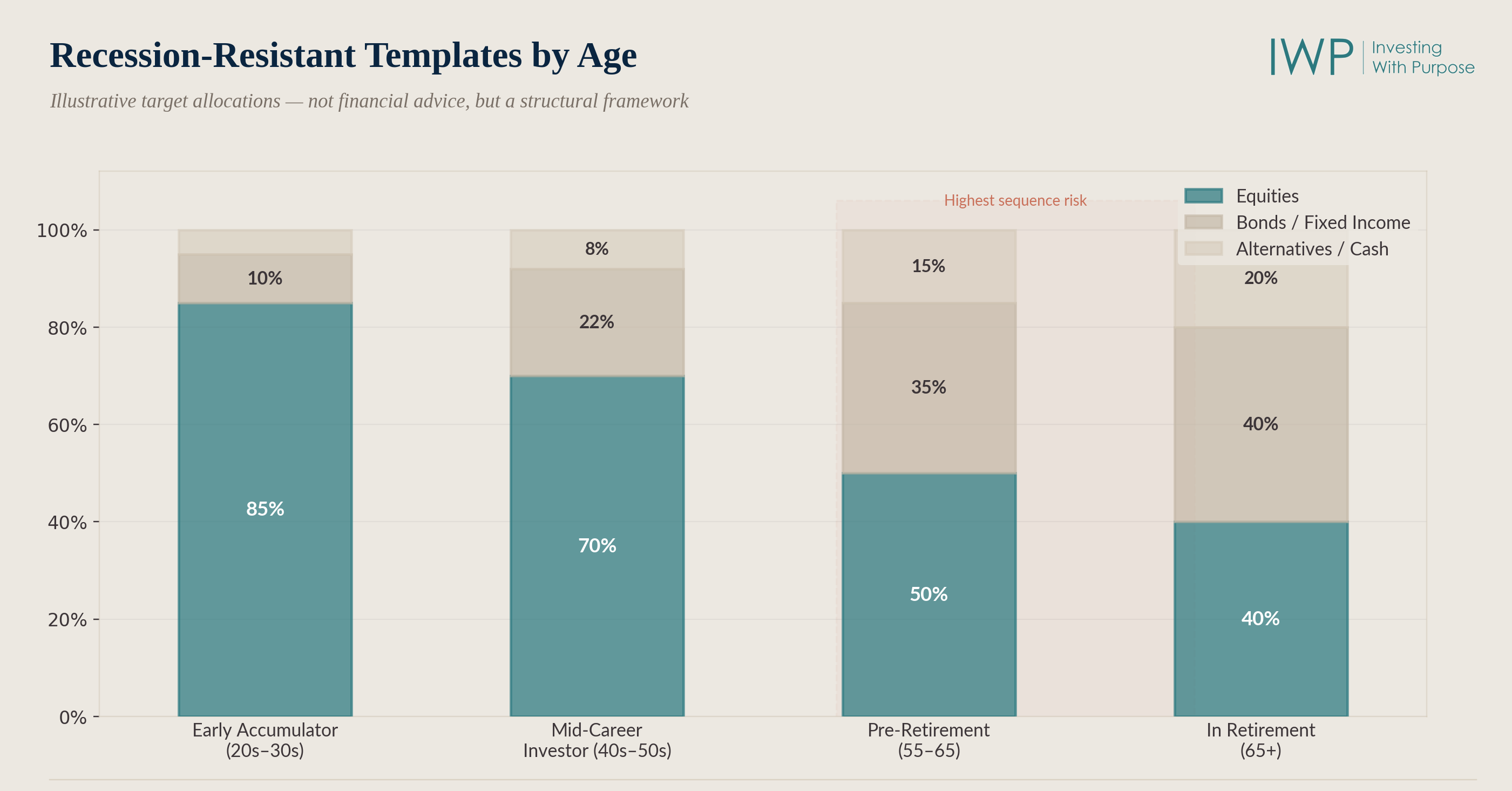
The pre-retirement window (55–65) is the highest-risk phase. Sequence risk peaks here. Defensive positioning in this window protects everything you’ve built.
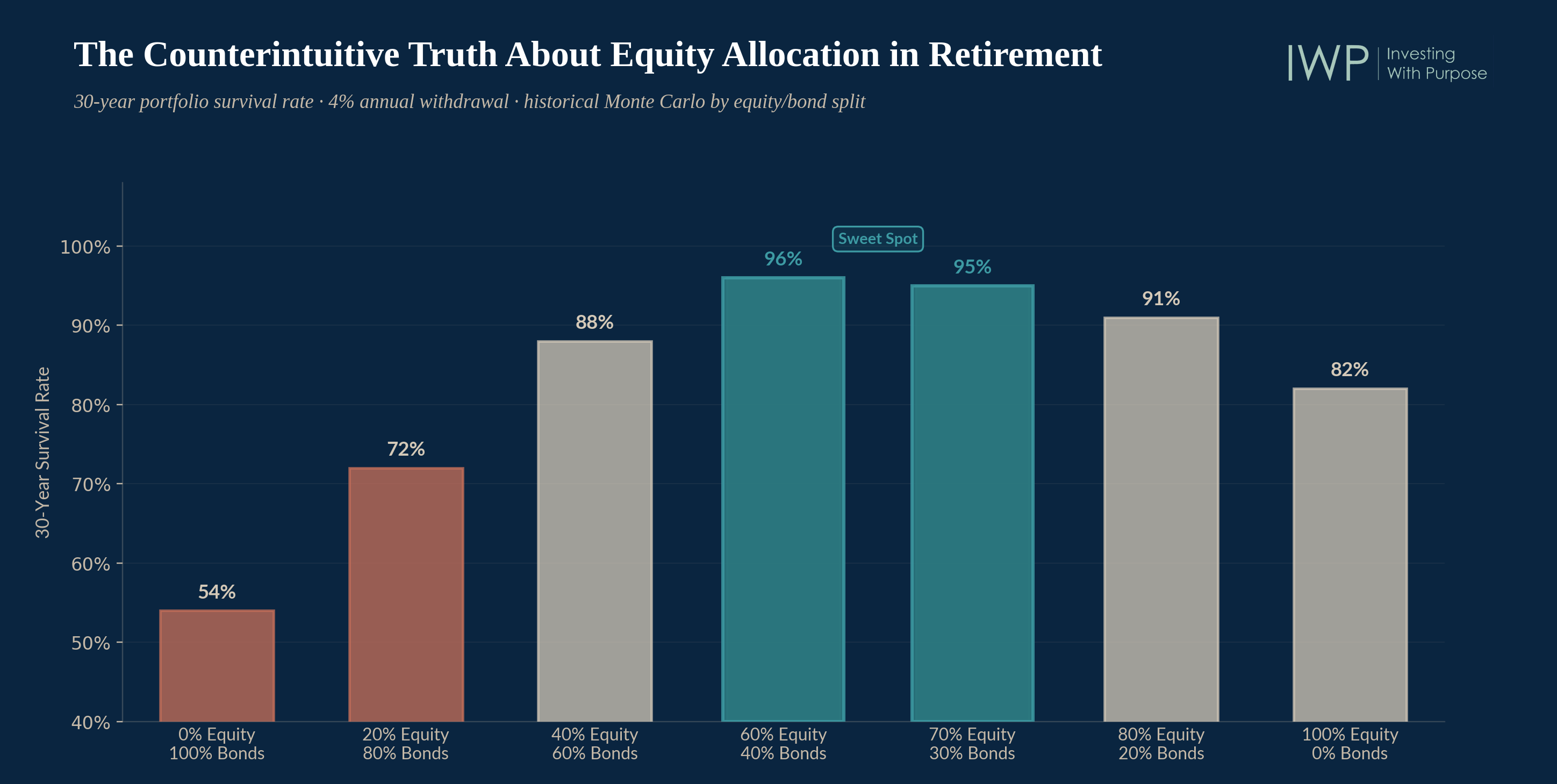
100% equity is not the safest retirement allocation. Sequence risk makes it vulnerable to early downturns. The 60/40 to 70/30 range consistently shows the highest 30-year survival rates.
Your Recession Readiness Checklist
Run through this before the next recession, not during it. This checklist is designed to be completed in a single afternoon.
Diversification audit complete. Verify that your “diversification” includes genuinely uncorrelated asset classes, not just multiple funds holding the same underlying securities.
Correlation matrix reviewed. Know which parts of your portfolio held up in 2008 and 2020. If everything fell together, you’re not diversified across stress conditions.
Liquidity check complete. You have 12–24 months of expenses in cash or short-term bonds without selling a single equity position.
Rebalancing rules written down. Your ±5% drift trigger is documented. It exists as a rule, not a future decision to be made under pressure.
Investment Policy Statement updated. Target allocation, drift bands, rebalancing rules, and behavioral guidelines are in a document you can refer to when every instinct screams to act.
Sequence risk assessed for your timeline. If you’re within 10 years of retirement, your allocation reflects the heightened vulnerability of that window.
Asset location optimized. Bonds and high-dividend equities in tax-advantaged accounts. Growth equities in taxable. Free performance, no cost.
The Recession Is Coming. That’s the Only Certainty.
The timing of the next recession is unknowable. Its cause, depth, and duration are unknowable. The specific assets it will hit hardest are unknowable. None of this matters if your portfolio is built to withstand an unknown stress rather than to predict a specific one.
Recession-proofing is not a strategy for pessimists. It’s a strategy for realists, investors who accept that markets will periodically fall 30–50%, that the timing will always be a surprise, and that the only reliable preparation is structural. A bucket of liquidity. A rebalancing rule. A diversification check. An Investment Policy Statement.
None of it is complicated. All of it requires being done before the drawdown begins, which is the only moment the preparation still matters.
Thank you.