


Netflix has done two things in the past few months that matter.
First, it completed a full technical reset. The stock fell from the 130 area to the mid 70s in a clean, impulsive decline. That move flushed excess optimism and repriced expectations.
Second, it reminded the market what it is becoming. Not a content arms race participant. Not a subscriber growth story at any cost. But a margin expanding, cash generating global platform.
The failed licensing talks with Warner Bros. Discovery were a subtle but important signal. The market’s reaction was even more important.
Price did not fall. It rose.
That tells you what investors care about now.
Let’s walk through the business, the numbers, and the structure of price. Then we’ll build a clear framework for medium to long term investors.

Key Takeaways
Netflix is being valued on operating margin expansion and free cash flow durability, not just subscriber growth.
The failed Warner Bros. Discovery licensing deal reinforced capital discipline rather than weakening the story.
Revenue growth remains healthy in the low to mid teens %, with operating leverage driving faster earnings growth.
Technically, the 75 low completed a full corrective cycle. The rally is impulsive, not weak.
99 to 101 is a structural inflection zone tied to the long term trend.
Above 101, probabilities shift toward a medium term reversal. Below 91, the rally loses structural integrity.
Pipeline, Business Model, and Latest Earnings
Netflix today operates with a different rhythm than it did 5 years ago.
The company is no longer chasing subscriber growth at the expense of profitability. It is monetizing scale.
Revenue continues to grow in the low to mid teens %, driven by:
• Global subscription pricing power
• Expansion of the ad supported tier
• Ongoing international penetration
• Deep engagement with owned content franchises
The ad tier in particular is strategically important. It allows Netflix to capture price sensitive users without diluting premium pricing. Over time, advertising introduces a higher margin revenue stream layered on top of the subscription base.
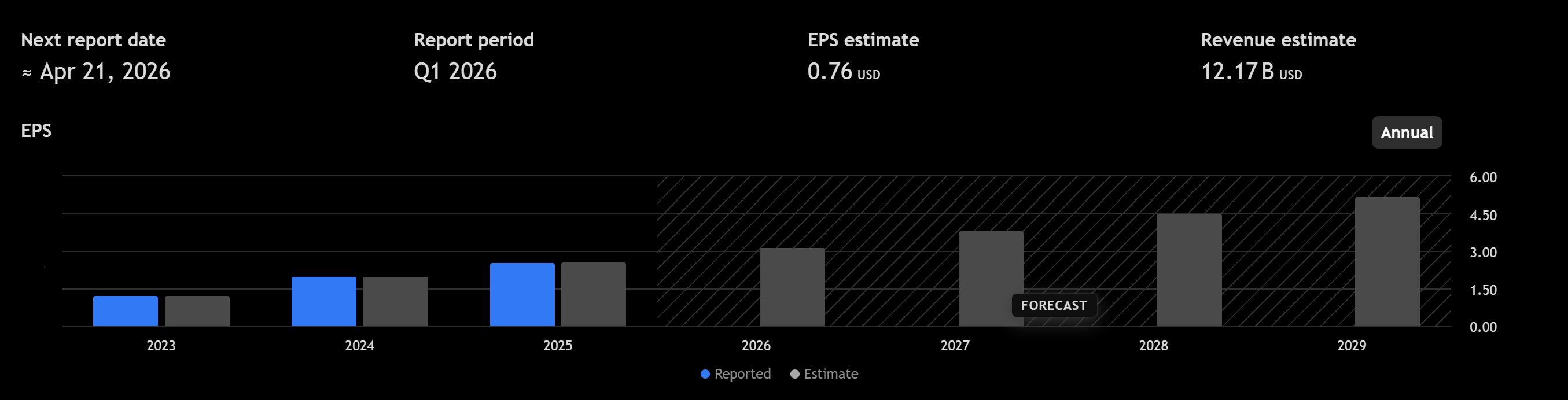
The latest earnings cycle reinforced this shift.
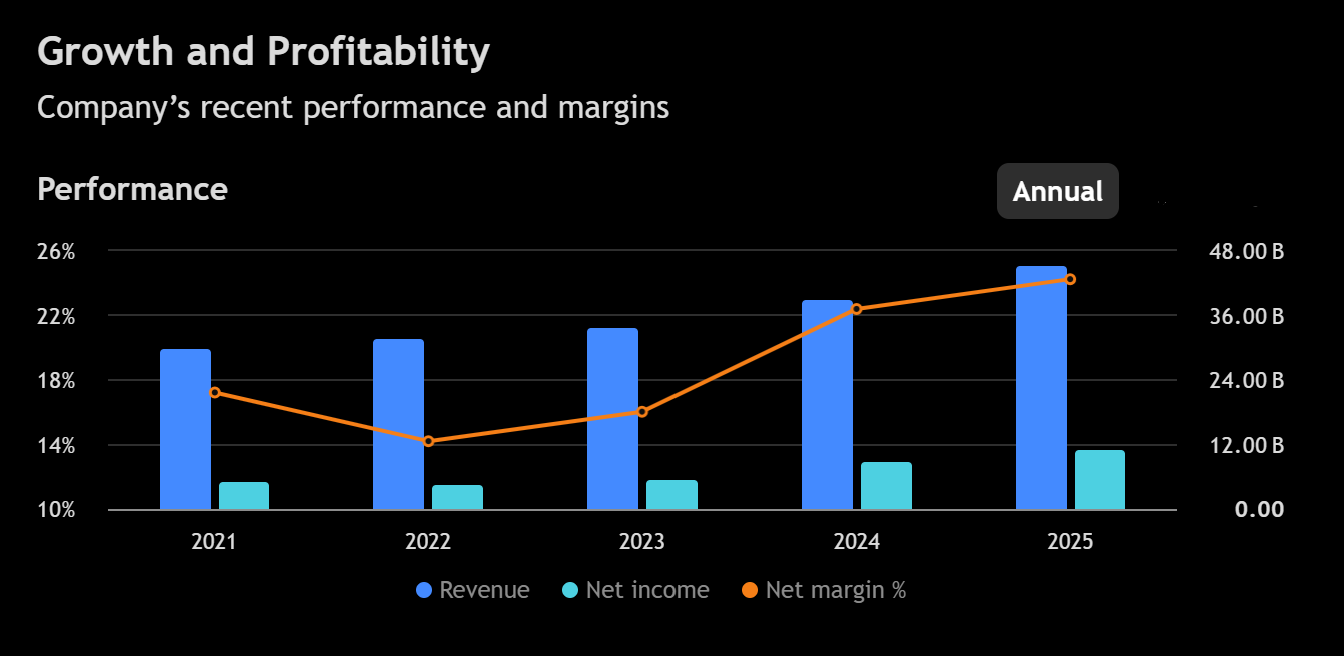
Operating margins expanded meaningfully. Free cash flow remained firmly positive. Net leverage improved. The balance sheet looks increasingly stable.
Then came the licensing talks with Warner Bros. Discovery.
A large scale licensing agreement would have increased content depth but likely at the cost of higher fixed expenses. In this stage of Netflix’s evolution, the market is rewarding cost discipline and margin durability. Walking away signaled confidence in the internal pipeline and reinforced the narrative of controlled capital allocation.
The stock rising after the deal did not materialize was not irrational. It was consistent with the new valuation framework.
Fundamental Analysis
The financial story is increasingly clean.
Revenue growth: low to mid teens %
Operating margin: expanding year over year
Free cash flow: structurally positive and sustainable
Net debt to EBITDA: trending lower
Interest coverage: solid and improving
The most important shift is operating leverage.
Revenue is growing steadily, but operating income is growing faster. That means fixed costs are being absorbed more efficiently and content amortization is aligned with monetization.

Free cash flow is no longer episodic. It is a core feature of the model. That changes the risk profile of the company dramatically compared to prior cycles.

Capital allocation now has options:
Balance sheet strengthening
Share repurchases
Selective reinvestment in high return content
The failed Warner discussions reinforced this discipline. Rather than layering in potentially margin compressive licensing costs, management preserved operating leverage.
This matters because valuation multiples expand when earnings are predictable and balance sheets are stable.
Fundamentally, Netflix is not in a speculative phase. It is in an optimization phase.
Expectations have shifted toward earnings quality and cash flow durability. The business backdrop supports medium term compounding, provided growth remains steady.
Technical Analysis
Now we examine structure.
The decline from 130 to 75 unfolded in a clear 5 wave impulsive pattern. In market logic, that typically signals the completion of a corrective cycle rather than random volatility.
The 75 region was significant for several reasons:
It aligned with a measured 2.618 extension of the prior corrective leg.
Weekly momentum reached oversold extremes.
Volatility expanded sharply and then began to stabilize.
The level coincided with a prior structural pivot zone.
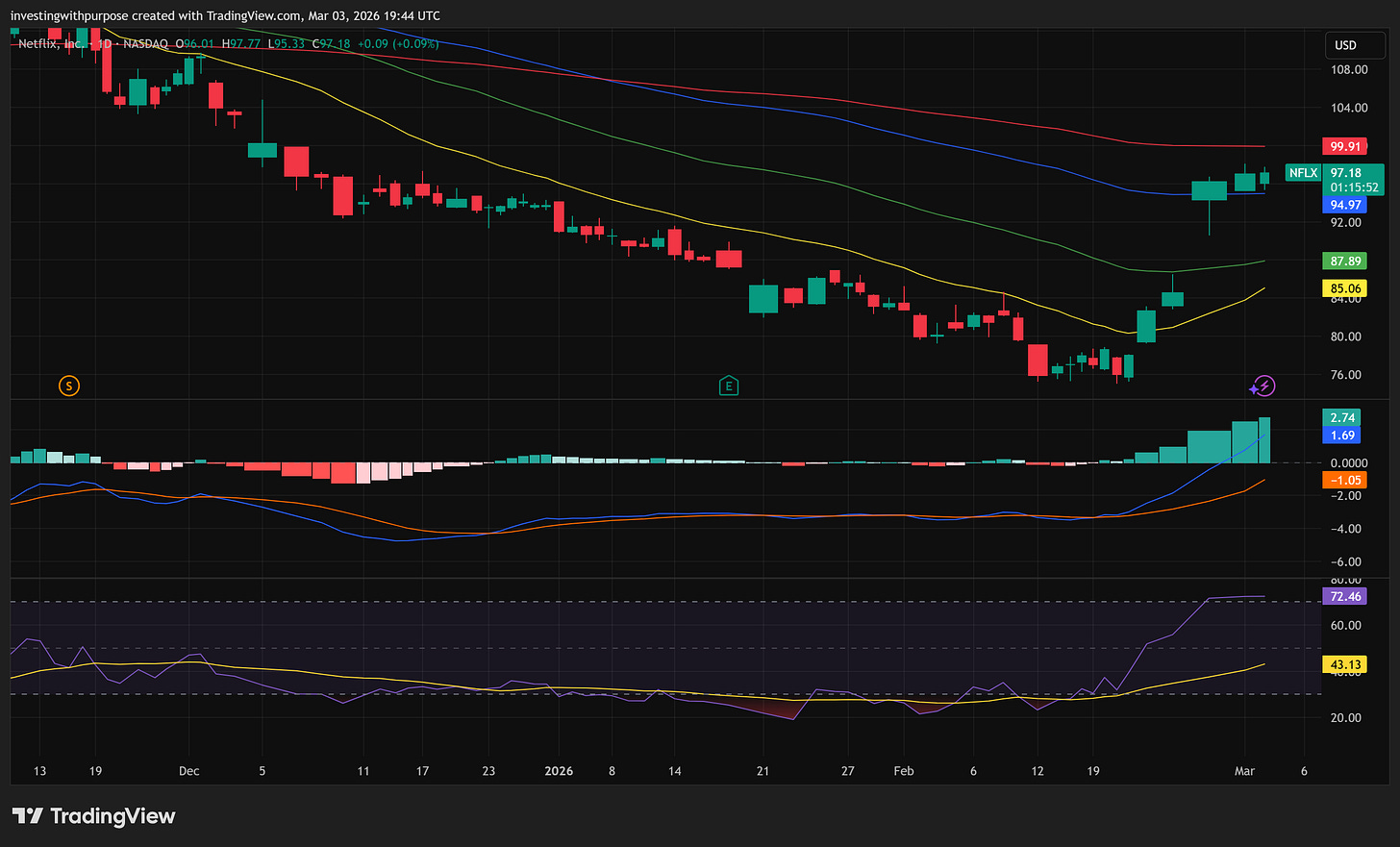
The rebound from 75 has been decisive.
Short term structure has flipped:
Higher highs and higher lows on intraday and daily timeframes.
Reclaim of the 20, 50, and 100 day moving averages.
Strong momentum thrust from oversold to overbought territory.
Volume expanding alongside price.
This is not the profile of a weak bounce.
However, price is now pressing into 99 to 101. That zone matters.
It represents:
The declining 200 day moving average.
A prior breakdown shelf where supply overwhelmed demand.
Psychological resistance at 100.
Long term trend filters often sit around the 200 day average. When price reclaims and holds above it, the character of the trend shifts. When it rejects, rallies often fade.
Momentum across timeframes tells a nuanced story:
Short term: Overextended but strong.
Medium term: Bullish impulse intact.
Long term: Still in corrective transition until 110 to 115 is reclaimed.
If price closes decisively above 101 and holds, the next structural targets sit near 105 and then 114 to 115, which marks the prior consolidation shelf. A break above that zone opens a path back toward 122 and potentially 130 over time.
If price fails at 100 and breaks back below 91, the rally likely remains corrective within a broader downtrend.
The stock is at decision territory. 99 to 101 determines whether this becomes a multi quarter advance or a high quality bear market rally.
Our Trade Plan
For medium to long term investors, clarity matters more than activity.
Pullback entries
91 to 92: This was the recent breakout zone and aligns with short term support. A controlled retracement here that holds confirms higher low structure.
85: Deeper support near prior consolidation and rising short term averages. A hold here preserves the broader reversal thesis.
Breakout entry: Daily close above 101: This confirms reclaim of the 200 day average and signals absorption of overhead supply.
True invalidation: 75. If price breaks below 75, the completed cycle thesis is invalid. That level represents the exhaustion low.
Targets
105:First logical magnet above resistance.
114 to 115: Major prior supply shelf.
122 to 130: Longer term objective if a full trend reversal develops.
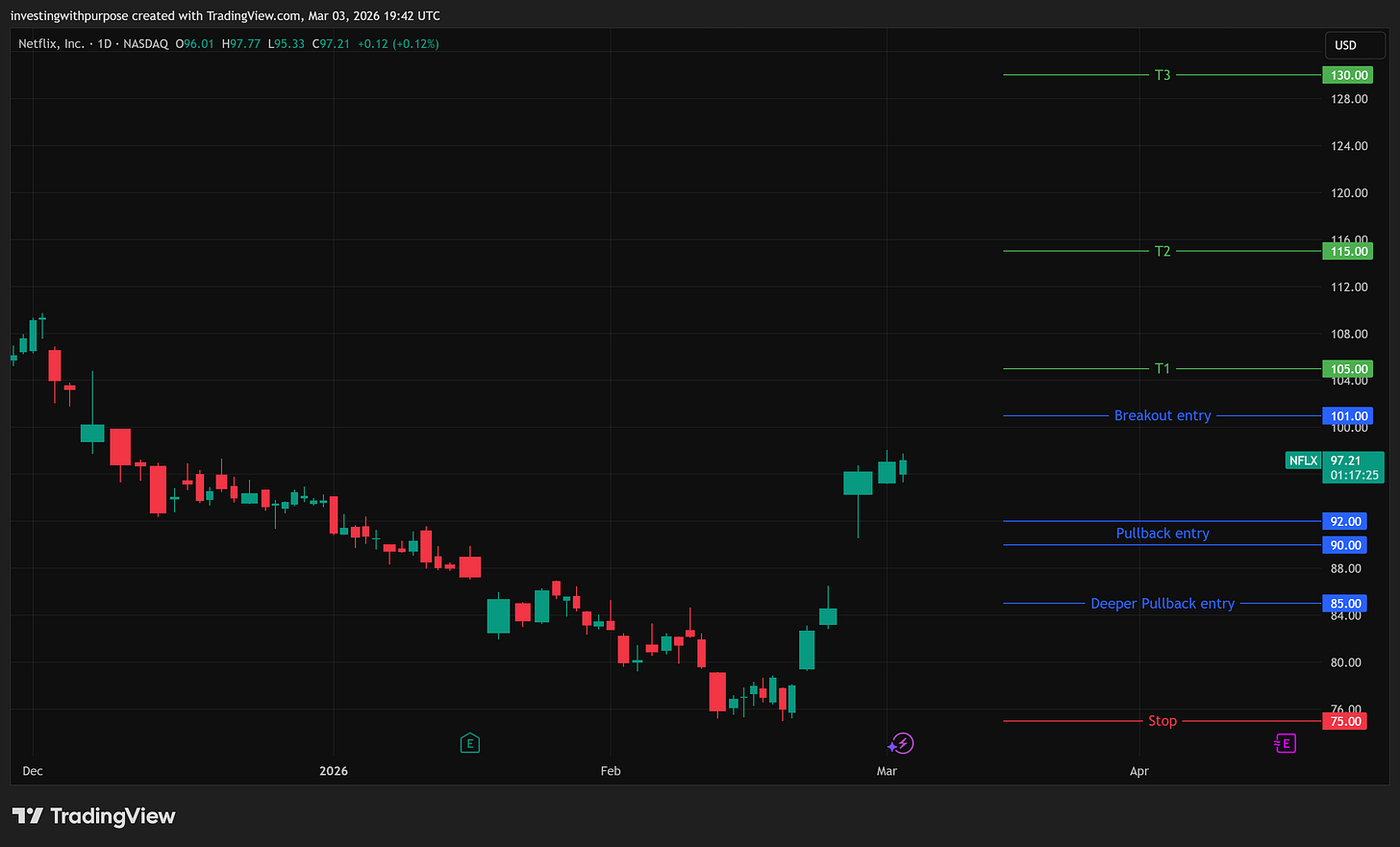
Rolling stop logic: Once above 101, stops can trail beneath each successive higher low on the daily timeframe. The trend remains intact as long as higher lows continue to print.
Risk based position sizing
Define risk per trade as a fixed % of portfolio capital.
Position size = acceptable dollar risk divided by stop distance.A tighter stop near 91 allows larger size.
A wider stop below 75 requires smaller allocation.Consistency in risk sizing protects capital across cycles.
Bottom Line
Netflix is not being repriced on hype. It is being repriced on discipline.
The failed Warner Bros. Discovery licensing deal did not weaken the story. It strengthened the margin narrative. The market’s response confirms that investors are prioritizing earnings durability over content escalation.
Technically, the stock has completed a major reset and is testing long term resistance near 101.
Above 101, the risk to reward profile improves materially toward 114 and beyond.
Below 91, patience becomes necessary.
The single most important invalidation level is 75.
For medium to long term investors, this is not about chasing momentum. It is about letting structure confirm the transition from corrective bounce to durable uptrend.
The market is asking a simple question.
Has Netflix truly changed?
The next few weekly closes will provide the answer.
This publication is for informational and educational purposes only and reflects personal opinions at the time of writing. It is not investment advice, a recommendation to buy or sell any security, or a solicitation to engage in any investment strategy. All investments involve risk, including the possible loss of principal. Past performance does not guarantee future results. Market conditions, company fundamentals, and technical structures can change quickly and without notice. Any price levels, scenarios, or trade frameworks discussed are illustrative examples of how one might think about risk and structure. They are not tailored to any individual’s financial situation, objectives, or risk tolerance.
Great analysis. Netflix’s transition from prioritizing subscriber volume to maximizing free cash flow and operating margins is a classic example of a growth company maturing into a high-efficiency compounder. The success of the ad-tier and password-sharing crackdown proves they still have significant pricing power in a crowded market.
As Netflix leans further into live sports and events to scale its ad business, do you see this shift as a fundamental change to their business model, or simply a secondary tool to reduce churn?