


Geopolitical shocks feel dramatic. Markets, however, are clinical.
They do not trade emotion. They trade probability, duration, and transmission.
With Israel and the United States striking Iran, Monday’s open will reflect a repricing of risk. The more important question is not how markets react initially, but whether that reaction persists.
This is not about headlines. It is about whether energy markets convert geopolitics into macro pressure.
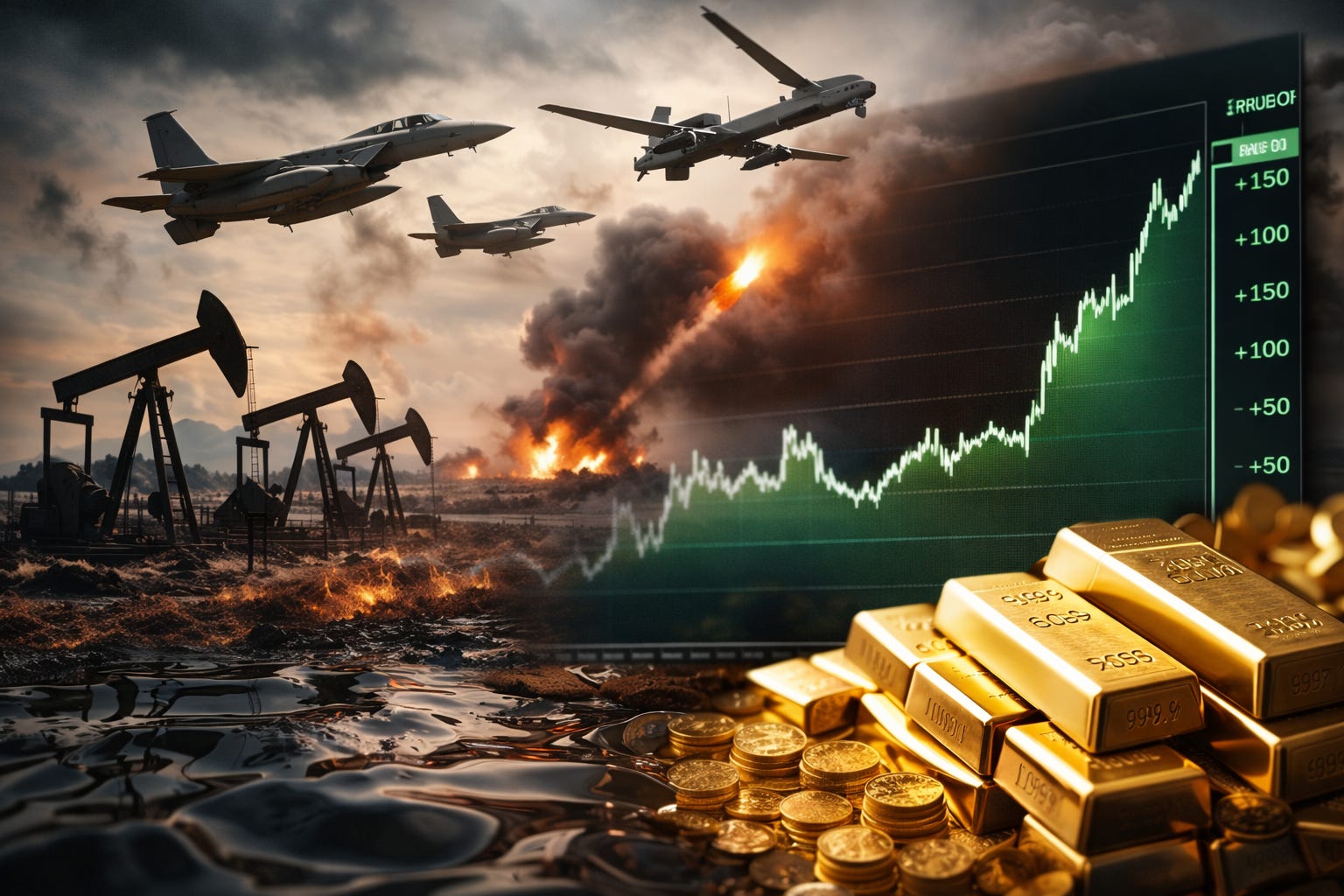
The First Move: Repricing Risk Premium
The likely Monday playbook is mechanical:
Oil higher | Volatility higher | Equities lower |Rotation into defensives
When geopolitical uncertainty rises, investors demand a higher equity risk premium. That repricing typically hits high-beta and high-multiple areas first.
But the initial move tells you very little about the path from there.
Continuation depends on whether this remains a contained event or evolves into an energy-driven macro shock.
Oil Is the Deciding Variable
Oil is the transmission mechanism between conflict and global markets.
If crude rises modestly, markets absorb the shock.
If crude spikes aggressively on supply disruption fears, the narrative changes entirely.
Why? Because oil feeds directly into:
Inflation expectation
Real yields
Consumer margins
Central bank path assumptions
A 3–5% oil move is volatility.
A sustained 10%+ move becomes macro.
The Strait of Hormuz is the pressure point. Any threat to shipping flows changes the equation from “regional flare-up” to “global supply risk.”
If oil stabilizes quickly, equities can recover just as quickly.
If oil remains bid, equity pressure broadens.
Sector Rotation: Where Capital Likely Flows
Likely Outperformers
Energy – XLE, VDE, XOP: Energy is direct operating leverage to higher crude. E&P names reprice rapidly when spot oil moves because free cash flow sensitivity is immediate. In an escalation scenario, energy becomes the liquidity magnet.

Defense & Aerospace – ITA, XAR: Defense is policy-sensitive, not cycle-sensitive. Increased military engagement raises the probability of higher defense spending and backlog expansion. This sector benefits from duration risk.
Gold & Precious Metals – GLD, IAU, GDX: If uncertainty persists and real yields soften on safe-haven bond flows, gold benefits. If volatility stays elevated, miners can amplify the move.
Utilities & Staples – XLU, XLP: Classic defensive rotation if volatility remains elevated and investors de-risk.
Likely Laggards
Airlines & Travel – JETS: Higher jet fuel costs combined with demand uncertainty compress margins quickly. This is one of the cleanest negative transmission channels.
Transports – IYT: Fuel sensitivity and growth concerns create dual pressure.
Consumer Discretionary – XLY: Energy acts as a tax on the consumer. Higher gasoline prices weaken discretionary spending power.
High-Multiple Growth / Tech – QQQ, XLK: Technology is not operationally impaired by geopolitical conflict. It is valuation-sensitive. If oil drives inflation expectations higher and pushes real yields up, long-duration equities compress.
The key driver here is rates, not war.
Tech: A Yield Story, Not a Conflict Story
The tech reaction hinges on one variable: real yields.
If oil spikes and breakevens rise, real yields can move higher. That pressures growth multiples.
If instead Treasuries catch a strong safety bid and real yields fall, tech may stabilize quickly after an initial dip.
Semiconductors and high-beta AI names are particularly sensitive to volatility expansion. Cybersecurity may show relative resilience as security spending narratives strengthen.
Tech’s fate is macro-linked, not geopolitically linked.
What Determines Whether This Continues
There are four structural variables that will decide if Monday is a one-day shock or the start of a broader move.
1. Duration Signaling: If rhetoric suggests limited, contained action, risk premium fades. If additional strikes are telegraphed, markets extend the move.
2. Strait of Hormuz Stability: Shipping uninterrupted means oil premium decays. Disruption means structural repricing.
3. Regional Spillover: If additional actors enter the conflict, duration risk rises and equity pressure broadens.
4. Inflation Expectations: Watch breakevens and crude together. If inflation expectations spike, equity weakness extends. If they remain stable, dip buyers likely re-emerge.
Historical Context
Markets historically treat geopolitical shocks as volatility events unless they:
• Disrupt supply chains
• Alter energy pricing structurally
• Force central bank recalibration
Without those conditions, shocks fade. With them, they trend. The difference is energy persistence.
The Core Framework for Monday
If oil spikes modestly and stabilizes
→ Energy and defense lead
→ Broad indices dip
→ Volatility fades within days
If oil surges and remains elevated
→ Inflation reprices
→ Growth underperforms
→ Defensive rotation persists
→ Indices face multi-session pressure
This is not a war trade. It is an oil and inflation trade.
Markets are not pricing conflict. They are pricing duration and supply risk.
Monday will show us the first move. Oil will tell us whether it becomes a trend.
This publication is for informational and educational purposes only and reflects the author’s opinions at the time of writing. It is not investment advice, a recommendation, or an offer to buy or sell any securities or financial instruments. All market views expressed are conditional and subject to change without notice. Financial markets involve risk, including the potential loss of principal. Past performance does not guarantee future results. Any forward-looking statements are inherently uncertain and based on current assumptions.
I like to read the cause and it's consequences and this post is exactly doing that. Great.
This post provides a great breakdown of the Geopolitical Risk Premium, illustrating how markets don't just react to current events, but "price in" the probability of future supply shocks. It’s a vital reminder that in energy markets, perceived risk is often as influential as physical supply and demand.
As global economies gradually diversify their energy sources, do you believe the "oil risk premium" still holds the same power over the broader stock market as it did during previous conflicts, or is its influence beginning to wane?