



The energy sector is buzzing with speculation about Shell’s (SHEL 0.00%↑) potential acquisition of BP (BP 0.00%↑) , creating a textbook example of merger market dynamics. When acquisition rumors surface, we see the same pattern across industries and decades: target stocks surge while acquirer stocks face skepticism.
Shell, valued around $200 billion, continues evaluating a potential bid for its $77 billion UK rival, though sources suggest the M&A math could look more favorable in the second half of 2026. Currently, Shell is working with advisers but waiting for further stock and oil price declines before deciding whether to pursue a bid.
TL;DR
Shell's potential acquisition of BP perfectly demonstrates a classic M&A pattern: target stocks (BP) surge on takeover rumors while acquirer stocks (Shell) face pressure from integration concerns. Academic research shows targets gain 20-35% on announcement while acquirers often decline 1-3%. BP shareholders should expect continued premium trading short-term, while Shell faces scrutiny over execution. Long-term success depends on synergy realization and energy transition positioning. The $275 billion potential combination would reshape the energy sector, but Shell is waiting for better market conditions before deciding to bid.
Why This Happens: The Psychology Behind the Pattern
Target Stock Dynamics (BP):
Markets expect a 20-40% takeover premium above current market value
Arbitrage activity creates price floors near expected offer levels
Immediate value creation for shareholders through premium capture
Acquirer Stock Dynamics (Shell):
Investors worry about overpaying and integration challenges
The "winner's curse" - if someone's willing to sell, what problems exist?
Historical data shows over 70 of large mergers fail to create acquirer value
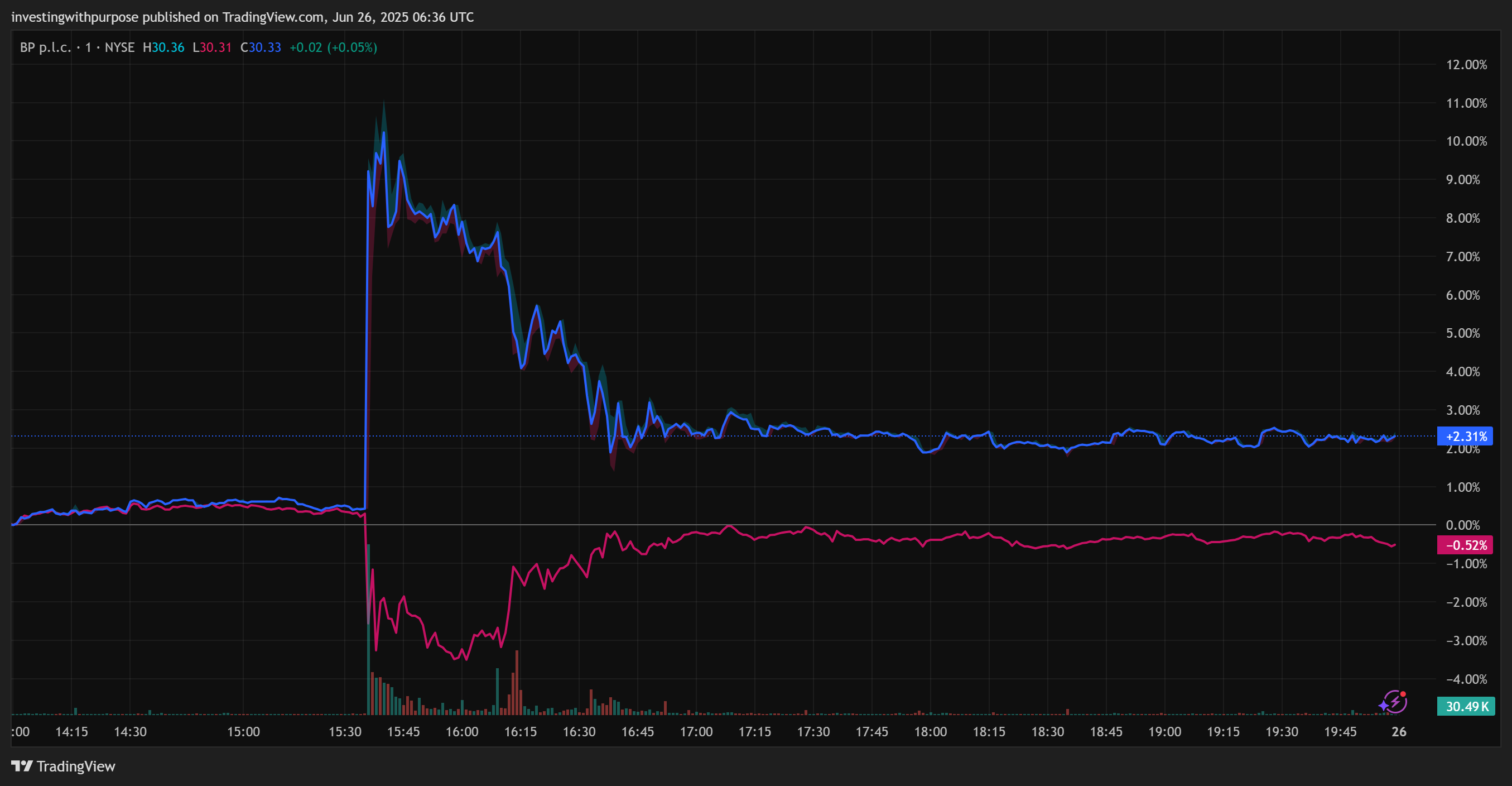
The trading charts reveal this pattern perfectly: BP showed sharp spikes and increased volatility following merger speculation, while Shell's response was more muted, reflecting integration risk concerns.
The Strategic Context: Why This Deal Makes Sense
A Shell-BP combination would create an energy supermajor with unprecedented advantages:
Scale Benefits:
Combined market capitalization of ~$275 billion
Enhanced negotiating power with suppliers and customers
More efficient capital allocation across larger asset base
Energy Transition Positioning:
Combined R&D capabilities for renewable technology development
Better positioning for large-scale transition investments
Geographic diversification reducing single-market exposure
Industry Consolidation: This deal would likely trigger broader energy sector consolidation, pressuring competitors like ExxonMobil and Total Energies to consider their own strategic moves.
Timeline Expectations: What Happens Next
Short-Term (0-6 Months)
BP Stock:
Continued premium trading on deal speculation
Volatility based on changing deal probability assessments
Support levels near pre-rumor ranges if deal falls through
Shell Stock:
Pressure until deal clarity emerges
Sensitivity to management commentary on acquisition strategy
Market focus on CEO Wael Sawan's operational track record
Medium-Term (6 Months - 2 Years)
If Deal Proceeds:
BP shareholders capture premium upon completion
Shell faces intense scrutiny over integration execution
Synergy realization timeline becomes critical for Shell's stock performance
If Deal Fails:
BP likely declines toward fundamental valuation
Shell potentially recovers on reduced integration risk
Market focus returns to standalone business performance
Long-Term (2-5 Years)
Success depends entirely on execution:
Value Creation Indicators:
Synergy realization exceeding projections
Combined entity outperforming energy sector benchmarks
Successful energy transition investment deployment
Failure Signals:
Integration costs exceeding savings
Combined entity underperforming standalone projections
Cultural integration challenges affecting operations
Investment Implications: M&A Arbitrage Opportunity
The Shell-BP situation presents a complex arbitrage opportunity that differs significantly from typical announced deals. Without a formal offer, traditional merger arbitrage becomes more speculative and nuanced.
Current Arbitrage Dynamics:
No Spread to Capture: Unlike announced deals with defined offer prices, there's no specific premium to arbitrage
Rumor-Based Premium: BP's current trading premium reflects speculation rather than concrete terms
Asymmetric Risk Profile: Upside limited to potential takeover premium, downside to fundamental valuation
Trading Strategy Considerations:
Long BP/Short Shell Pair Trade: Capturing the classic M&A pattern while hedging sector exposure
Volatility Play: High implied volatility in BP options creates potential for volatility arbitrage
Event-Driven Positioning: Trading news flow and management commentary rather than deal completion probability
Risk Factors for Arbitrageurs:
Deal Uncertainty: No formal offer means significant probability of no transaction
Timing Risk: Shell explicitly waiting for better conditions creates extended uncertainty period
Regulatory Overhang: Potential antitrust challenges could derail any eventual deal
Commodity Exposure: Oil price movements affecting both stocks independently of merger dynamics
For Energy Sector Investors: This potential deal could catalyze broader industry consolidation, creating opportunities in other energy stocks that might become acquisition targets.
The Bottom Line
The energy sector stands at a critical juncture, balancing traditional hydrocarbon businesses with energy transition investments. A combined Shell-BP entity would have the scale and resources to navigate this transition more effectively than either company alone - but only if they can overcome the substantial challenges that have derailed so many mega-mergers before them.
For investors, this case study reinforces a key lesson: M&A rumors create immediate opportunities, but sustainable value creation depends on operational excellence over years, not quarters.
The information in this post is for educational and informational purposes only. It reflects the author’s personal research and analysis, which may be subject to error or omission. This is not financial, investment, or trading advice. Always conduct your own due diligence and consult with a qualified financial advisor before making any investment or trading decisions.