


For years, one of the most common questions investors ask is surprisingly simple:
“How can I invest in SpaceX?”
The problem is that SpaceX is not publicly traded.
Despite being one of the most valuable private companies in the world, access to its shares has largely been limited to venture capital firms, sovereign wealth funds, and a narrow circle of institutional investors participating in private funding rounds.
For most investors, the answer has traditionally been frustrating:
You can’t.
At least not directly.
But something interesting has quietly emerged in the public markets that offers a different approach.
A listed investment vehicle now provides indirect exposure to SpaceX, alongside a portfolio of innovative public companies and a small group of high-profile private firms.
And most investors have never heard of it.

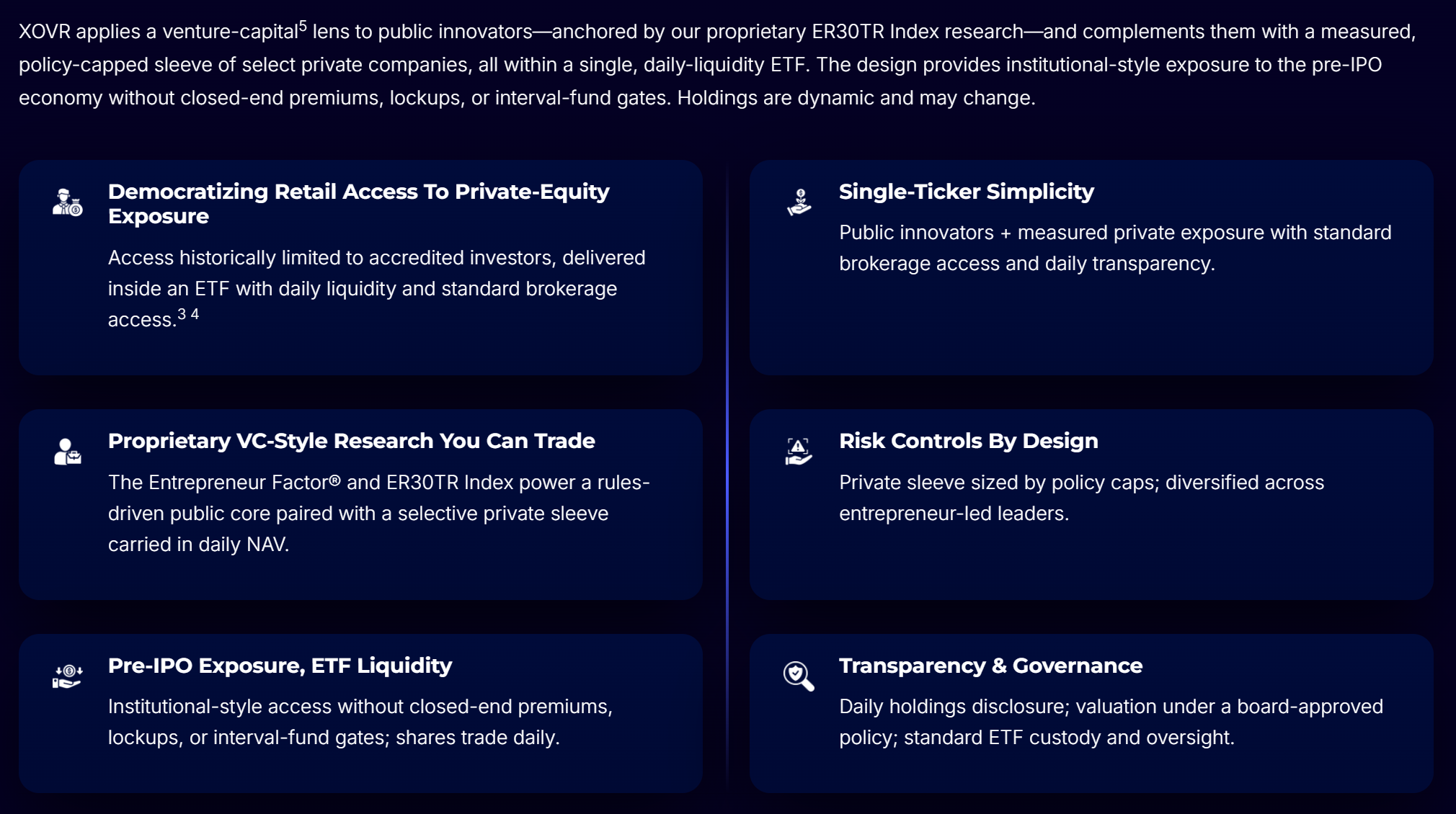
The ETF That Bridges Public and Private Markets
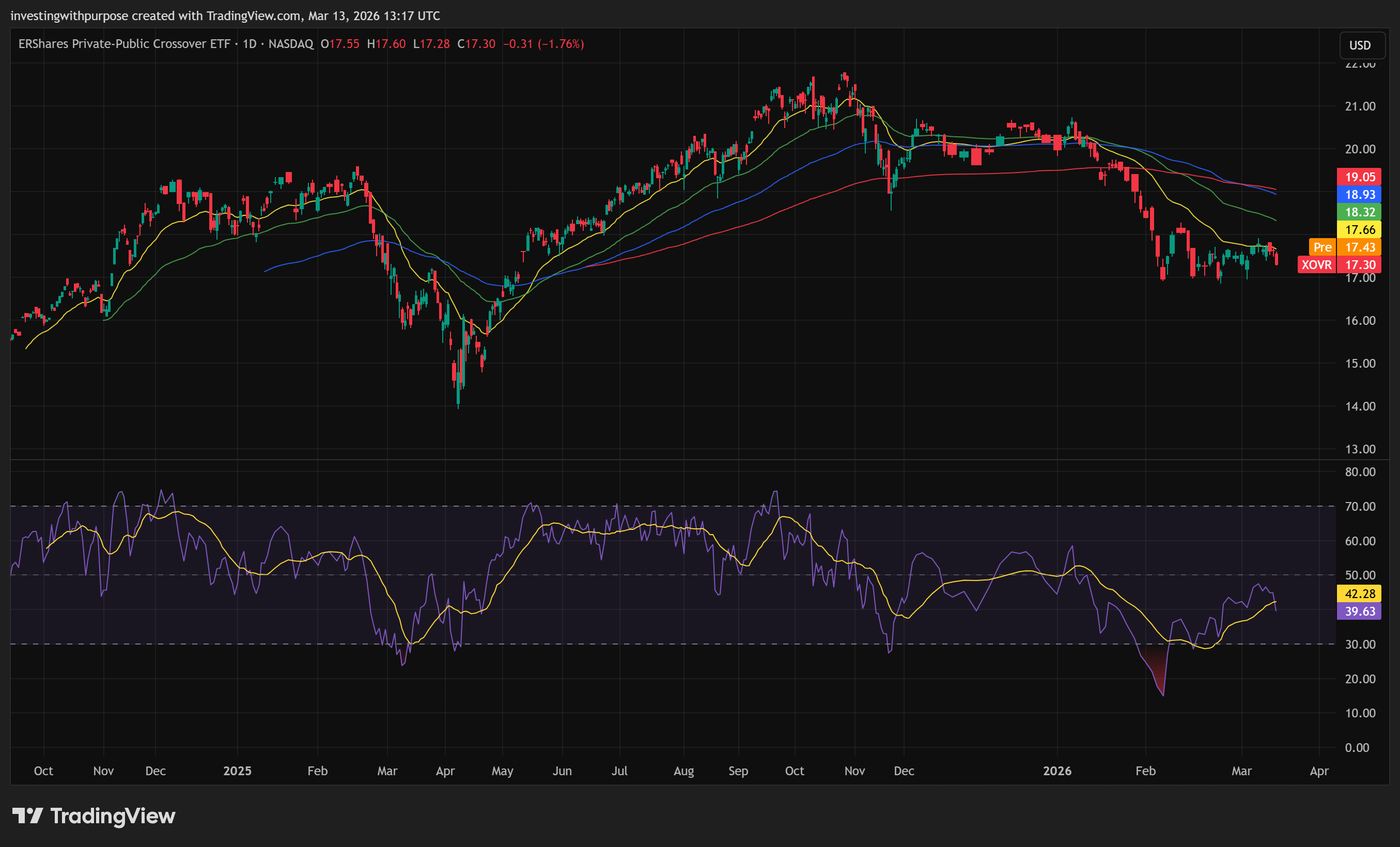
The vehicle is the ERShares Private‑Public Crossover ETF, trading under the ticker XOVR.
Its strategy sits somewhere between traditional public equity investing and venture capital.
Most ETFs invest only in publicly traded companies.
This one is different.
The fund primarily holds public companies driven by innovation and entrepreneurial leadership, but it also allocates a portion of the portfolio to late-stage private companies that are typically inaccessible to most investors.
In other words, it attempts to create a bridge between public and private markets.
The result is a portfolio that mixes well-known technology leaders with a handful of private companies shaping the next generation of industries.
Why SpaceX Is the Headline
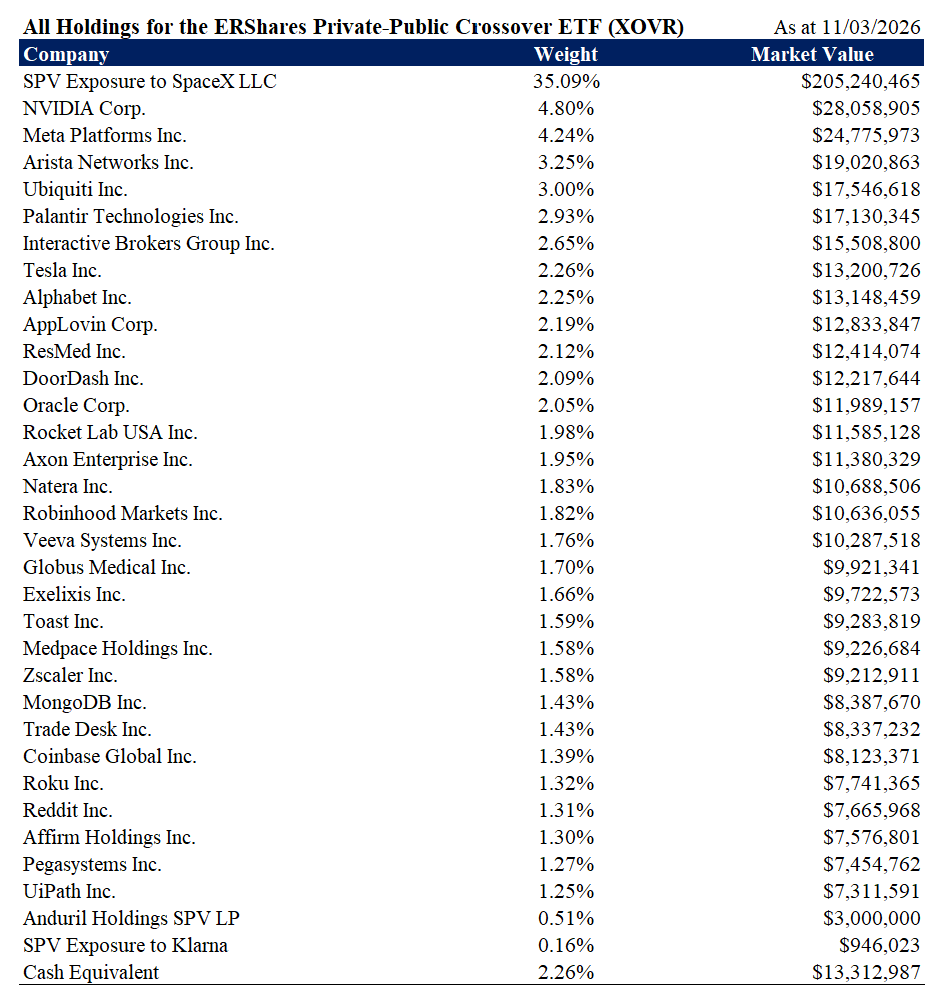
Among the private holdings, the most notable is SpaceX.
And it is not difficult to understand why.
The company has fundamentally reshaped the economics of space.
Reusable rockets have drastically lowered launch costs, enabling more frequent missions and expanding the commercial use of orbit.
At the same time, the company’s Starlink satellite network is becoming one of the largest global broadband infrastructures ever built.
Thousands of satellites are already in orbit, delivering internet connectivity across continents, oceans, and remote regions where traditional networks struggle to reach.
Few companies operate simultaneously at the intersection of:
Aerospace
Telecommunications
Infrastructure
Defense
Global connectivity
This combination has pushed SpaceX’s private valuation into the ranks of the world’s most valuable technology companies.
For investors interested in the future of the space economy, SpaceX sits right at the center.
The Other Private Companies in the Portfolio
SpaceX is not the only private company included in the strategy.
The fund also holds smaller allocations to two other high-profile private firms.
One is Anduril Industries, a rapidly growing defense technology company focused on autonomous systems, AI-driven surveillance, and next-generation military infrastructure.
Founded by Palmer Luckey, Anduril is building advanced defense platforms that combine software, artificial intelligence, and hardware to modernize national security capabilities.
In many ways, it represents a new generation of defense contractors designed for the age of AI and autonomous systems.
Another private holding is Klarna, one of the pioneers of the buy-now-pay-later financial model.
Klarna has become a major player in global consumer fintech, partnering with thousands of merchants and serving tens of millions of customers worldwide.
Together, these private holdings give the portfolio exposure to companies operating across space infrastructure, defense technology, and financial innovation.
The Public Companies Driving the Portfolio
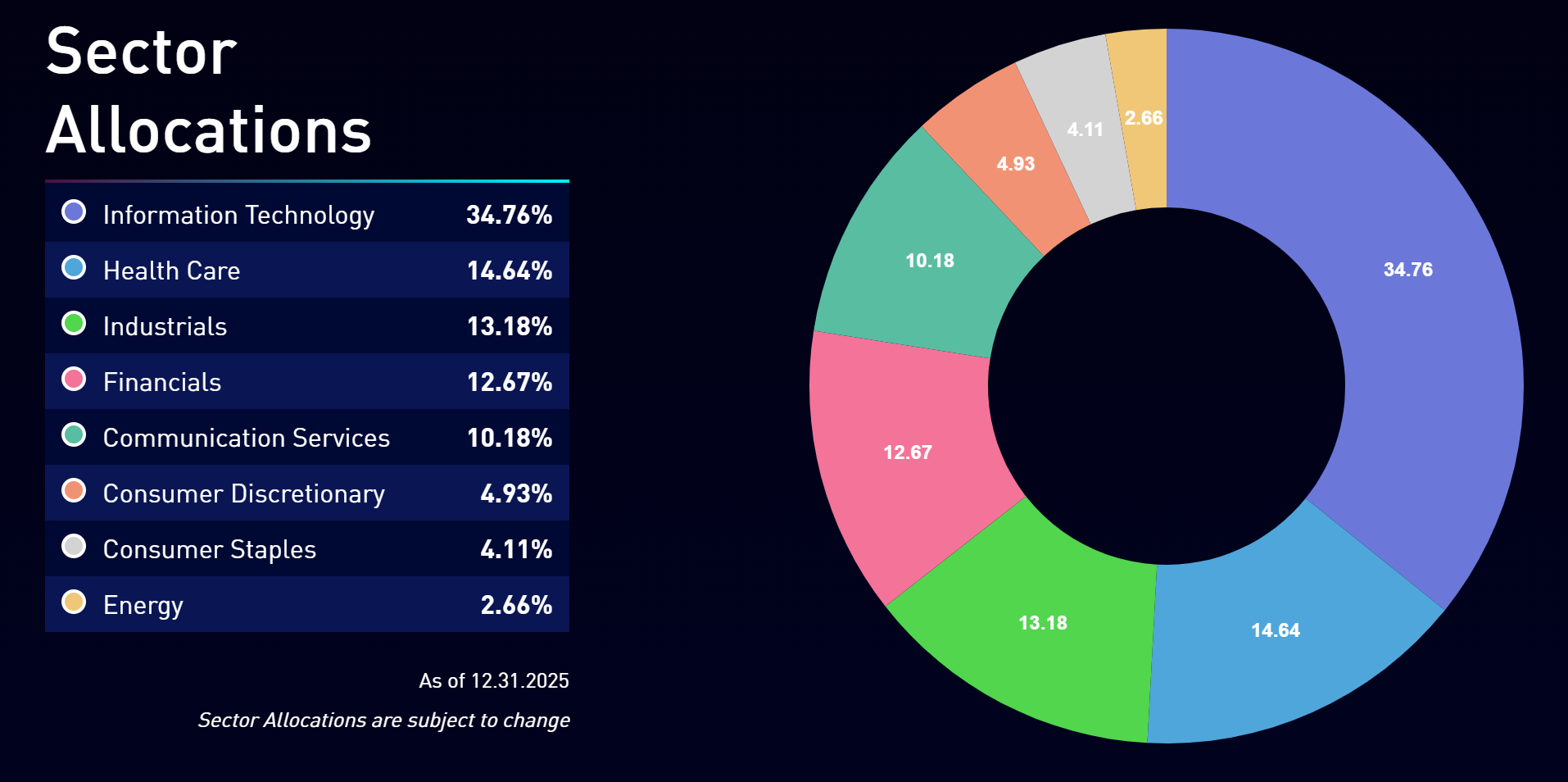
While the private holdings attract the most attention, the majority of the portfolio is invested in publicly traded companies leading innovation across multiple sectors.
Some of the most recognizable names typically include:
NVIDIA: The company powering the artificial intelligence revolution through its advanced GPUs and AI infrastructure.
Meta Platforms: A global digital platform investing heavily in artificial intelligence and next-generation computing infrastructure.
Palantir Technologies: A leader in data platforms used by governments, defense agencies, and large enterprises.
Affirm Holdings: One of the companies redefining consumer finance through flexible payment platforms.
This blend creates a portfolio focused on entrepreneurial companies pushing the boundaries of technology and innovation.
How the Private Exposure Works
Private companies cannot be purchased by an ETF in the same way as public stocks.
To obtain exposure, the fund invests through special purpose investment vehicles that hold shares of these private companies.
These structures allow the ETF to participate economically in the company while remaining compliant with public market regulations.
The key difference for investors is that the ETF itself trades daily on a public exchange.
That means investors can buy or sell shares in the vehicle just like any other listed security, even though some of the underlying assets remain private.
Why This Matters for Investors
Over the past two decades, the lifecycle of companies has changed.
In previous generations, many companies went public relatively early.
Today, some of the most valuable technology firms remain private for much longer.
As a result, a significant portion of value creation now happens before companies ever reach the stock market.
This has created a challenge for investors who rely only on public markets.
Vehicles that combine public equities with selective private exposure attempt to address that gap by offering a window into late-stage private innovation.
The Bottom Line
Direct investment in SpaceX remains extremely difficult for most investors.
But structures like this offer something new.
They provide:
Indirect exposure to SpaceX, one of the world’s most important private technology companies
Smaller allocations to companies like Anduril and Klarna
A broader portfolio of innovative public technology leaders
The liquidity of a listed investment vehicle
It is not the same as owning SpaceX shares directly.
But for investors interested in the intersection of space infrastructure, artificial intelligence, defense technology, and fintech, it represents one of the few public-market pathways into that ecosystem.
And sometimes, the most interesting opportunities in markets are the ones hiding quietly in plain sight.
This article is provided for informational purposes only and does not constitute investment advice, an offer, or a solicitation to buy or sell any financial instrument. The information presented reflects the author’s views at the time of writing and should not be relied upon as the sole basis for investment decisions.
Investing With Purpose (IWP) has no affiliation with the investment vehicle discussed in this article and was not compensated or incentivized in any way to write this content. The fund referenced is mentioned purely for educational and informational purposes and this article should not be interpreted as a promotion or advertisement.
Investments in equities and funds involve risks, including the potential loss of capital. Past performance does not guarantee future results.