


On November 30, 2025, we published a trade plan on three semiconductor heavyweights: Intel INTC 0.00%↑ , TSMC TSM 0.00%↑ & Samsung (SMSN LN), with one simple objective: asymmetric upside with controlled risk.
Six weeks later, the scoreboard is clear.
Intel: +19%
TSMC: +16%
Samsung: +35%
An equal-weight basket of the three delivered ~23% in just over a month, unlevered, during a period when many investors were still debating whether the semiconductor rally had “already happened.”
This outcome wasn’t driven by headlines or hindsight. It was the result of disciplined positioning around structure, patience through consolidation, and a clear understanding of where capital would flow as the AI, foundry, and memory cycles re-accelerated.

Now, the setup evolves.
All three companies are approaching earnings:
TSMC | January 15, 2026
Intel | January 22, 2026
Samsung Electronics | January 30, 2026
Price is higher. Expectations are elevated. Volatility is back on the table.
In this update, we’ll break down how the original trade plan played out, why these names outperformed, and how to navigate the next phase'; balancing continuation, pullbacks, and earnings risk, with the same process that got us here.
The thesis worked.
Now it’s about execution.
Key Takeaways
The November 30 trade plan delivered across all three names, validating a structure-first, risk-defined approach.
Semiconductors are being led by AI infrastructure, advanced nodes, and memory recovery, not consumer demand.
TSMC remains the structural leader, but is now in a mature phase where timing matters more than conviction.
Intel has transitioned from base to trend, introducing opportunity alongside higher short-term volatility.
Samsung has expressed the cycle most aggressively, making pullback discipline essential.
Earnings in January are the next major inflection point and will likely reset volatility and positioning.
From here, execution, position sizing, and respect for invalidation levels matter more than directional bias.
Macro Backdrop: Why Semiconductors Re-Rated (Again)
The rally across Intel, TSMC, and Samsung since late November didn’t happen in a vacuum. It was the result of multiple macro and industry forces finally aligning after a long digestion phase.
At the highest level, the semiconductor cycle has shifted from uncertainty to visibility.
Inflation has continued to decelerate across developed markets, easing pressure on long-term rates and stabilizing capital expenditure planning. At the same time, AI-driven compute demand has moved from experimentation to deployment, turning what was once a “future TAM” story into a near-term order and backlog story.

Source: Omdia by Informatechtarget
Crucially, this cycle is not being led by consumer electronics or PCs. It’s being led by data centers, accelerators, and advanced packaging, which is why foundry leaders and memory suppliers with AI exposure have outperformed.
That macro shift is the foundation beneath all three trades.
Taiwan Semiconductor Manufacturing Company | Foundry Visibility Meets AI Urgency
TSMC’s outperformance reflects one simple reality: it sits at the center of global AI compute demand.
Advanced nodes (3nm and progressing toward 2nm) are now fully booked by hyperscalers, accelerator designers, and system integrators racing to secure supply. Unlike previous cycles, customers are no longer optimizing for cost, they are optimizing for time-to-deployment.
That has translated into:
Strong order visibility extending multiple quarters forward
Improving confidence around capacity utilization
Continued pricing discipline at advanced nodes

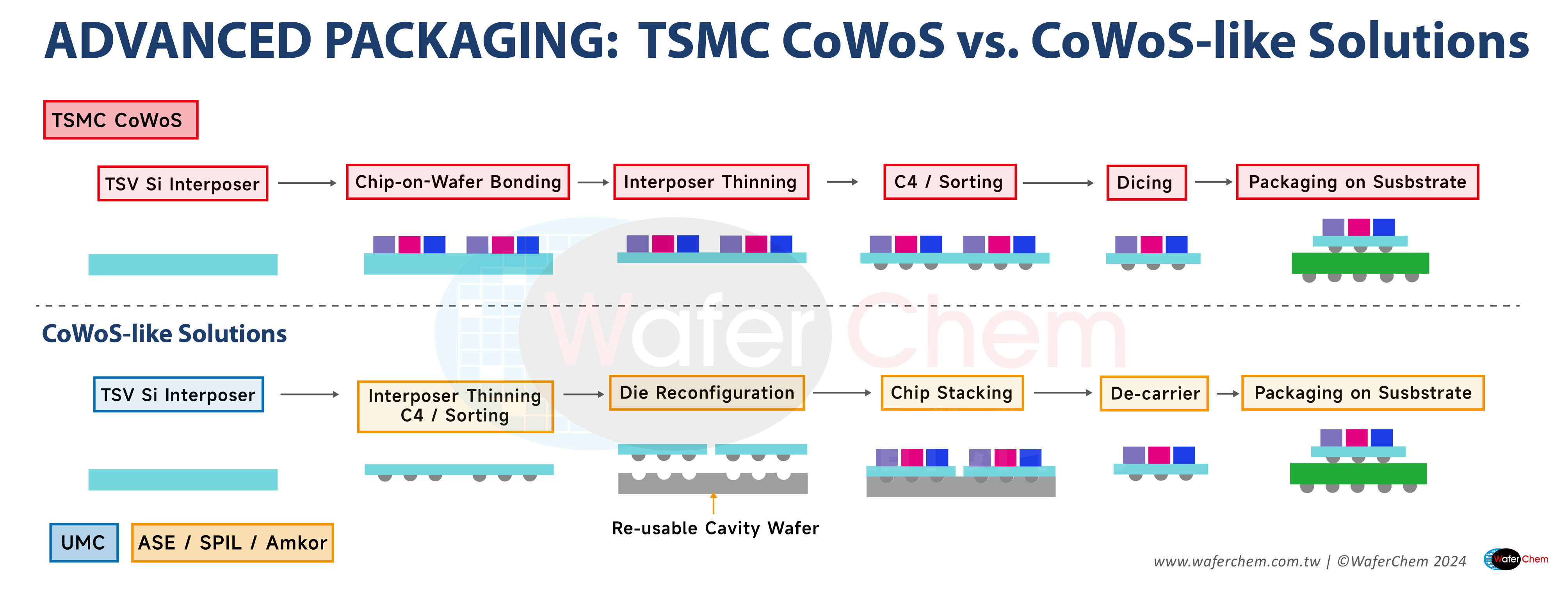
Recent commentary and industry checks point to tight CoWoS and advanced packaging availability, reinforcing the idea that the bottleneck in AI is no longer just chip design, it’s manufacturing scale. That dynamic disproportionately benefits TSMC.
The market recognized this in December. Price followed.
Intel Corporation | From Restructuring to Re-Rating
Intel’s move has been less about AI hype and more about credibility returning.
After several years of execution setbacks, the narrative shifted in Q4 toward foundry progress, cost discipline, and strategic clarity. Investors didn’t need perfection, they needed evidence that the downside was contained and the roadmap was no longer slipping.
Key drivers behind Intel’s rebound:
Growing confidence in foundry milestones and process cadence
A clearer separation between legacy margin pressure and future growth investments
Renewed interest in Intel’s role as a geopolitically strategic U.S. manufacturing asset


Intel’s backlog doesn’t look like TSMC’s, and it doesn’t need to. The stock re-rated because expectations were reset low, while progress became incremental but visible. That combination is powerful.
The result: a transition from “structural short” to “trend candidate.”
Samsung Electronics | Memory Cycles Matter Again
Samsung has been the highest-beta expression of this move, and that’s not an accident.
Memory pricing has turned. Inventory digestion is largely behind us. And demand for HBM (High Bandwidth Memory), a critical input for AI accelerators, has fundamentally changed the earnings power of leading memory suppliers.
Samsung’s strength reflects:
Improving DRAM and HBM pricing dynamics
Rising utilization expectations into 2026
Renewed confidence that the memory downturn was cyclical, not structural

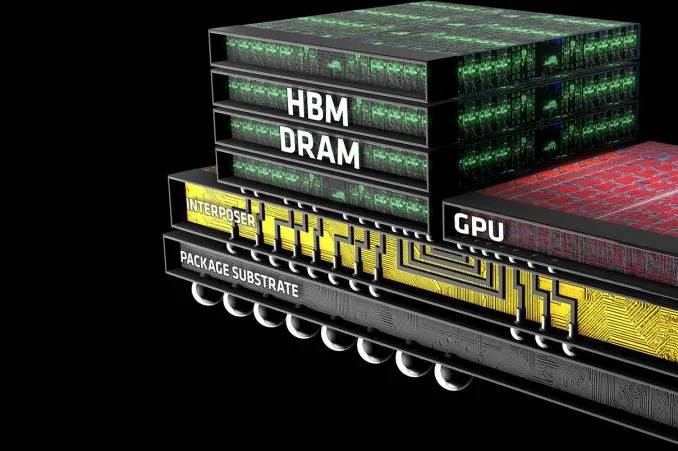
Unlike prior cycles, HBM demand is less elastic and more tied to long-term infrastructure buildouts. That gives Samsung better forward visibility than traditional memory recoveries, and the stock responded accordingly.
This is why Samsung didn’t just recover. It broke out.
Why These Three Together
What makes this trio compelling is how their businesses complement the same macro theme from different angles:
TSMC captures manufacturing scarcity
Intel represents strategic optionality and turnaround leverage
Samsung monetizes memory and AI infrastructure demand
Different business models. Different risk profiles. One shared tailwind.
And that’s exactly why the November trade plan worked, and why the next phase requires updated discipline heading into earnings.
Next, we’ll transition into the technical structure and updated trade plans, where price now has to justify the optimism.
Technical State of Play: What the Charts Are Telling Us Now
With the macro and business backdrop established, price becomes the final arbiter. The market has already voted on Intel, TSMC, and Samsung, and it has done so decisively. The question now is not whether these trends exist, but how mature they are and how they typically behave from here.
Each stock is in a different technical phase despite sharing the same sector tailwinds.
Taiwan Semiconductor Manufacturing Company (TSM)
TSMC remains the cleanest trend in the group, technically and structurally.
On the weekly timeframe, price is firmly above all major moving averages, with the EMA stack rising and well-ordered. This is the textbook definition of a sustained bull trend. Weekly momentum remains positive, but RSI is now elevated, which signals strength while also warning that upside may come in measured extensions rather than straight-line moves.
On the daily chart, TSM is extended above its short-term trend anchors. This does not mean the trend is broken. It means price has moved faster than its average pace and now needs either consolidation or a shallow pullback to reset momentum. Historically, this is where strong trends pause rather than reverse.
Fibonacci extensions and wave projections show price pressing into a known resistance and projection cluster. When multiple tools point to the same zone, it often acts as a decision area rather than a terminal top. Acceptance above it opens the door to higher extensions. Rejection typically leads to a controlled retracement into prior support.

What the numbers mean in plain terms: TSMC is strong, dominant, and trending, but no longer early. Risk is not directional, it is timing-based.
Intel Corporation (INTC)
Intel’s chart tells a very different story, and that is exactly why it has worked.
After spending years below declining long-term averages, Intel has decisively reclaimed them. On the weekly timeframe, price is now above the 20, 50, and 200-period averages, signaling a regime shift from base to trend. This is not something that happens quietly. It usually attracts both new longs and forced re-positioning.
Momentum on the daily chart accelerated rapidly, pushing RSI into overbought territory. This is typical during the first impulsive leg of a new trend. The key takeaway is that overbought conditions in a new regime do not signal failure. They signal that the market is repricing faster than normal.
Elliott structure on Intel suggests a completed impulsive leg followed by the likelihood of a corrective phase. That correction does not negate the trend. It defines where higher-probability demand may emerge next.

What the numbers mean in plain terms: Intel is no longer a turnaround hope. It is a confirmed trend that is now digesting its first major advance.
Samsung Electronics (SMSN LN)
Samsung is the most volatile of the three, and the charts reflect that.
On the weekly timeframe, Samsung has broken decisively above a multi-year resistance zone and held it. That level now acts as the structural floor of the entire move. As long as price remains above it, the long-term trend remains intact.
The daily and four-hour charts show a completed impulsive move into recent highs, followed by cooling momentum. RSI has rolled over from extreme readings, and MACD has softened, which is consistent with post-breakout digestion, not breakdown.
Fibonacci retracement levels on Samsung are especially important because of its historical tendency to overshoot both up and down. Shallow retracements suggest strong institutional sponsorship. Deeper retracements are still compatible with a bullish thesis as long as key structural levels hold.

What the numbers mean in plain terms: Samsung has already expressed the memory and HBM thesis in price. The market is now deciding how much of that move needs to be consolidated before continuation.
Putting It Together
Technically, all three stocks are bullish. But they are bullish in different ways.
TSMC represents trend maturity and leadership.
Intel represents early trend confirmation after a long base.
Samsung represents cyclical momentum with higher volatility.
Understanding these differences matters more than predicting direction. It determines how patience, sizing, and expectations should be handled going forward.
Next, we will translate these structures into clear, risk-defined trade plans tailored to each chart and to the upcoming earnings window.
Our Trade plans (simple, rules-based)
Position Sizing
All three names are approaching earnings, which means gap risk is elevated regardless of trend strength. Position size should reflect that.
For new entries ahead of earnings, smaller sizing is prudent, with capital reserved to add after confirmation. Larger positions are better built after earnings once volatility resets and structure is clearer.
For existing positions, risk should be defined by the invalidation levels, not by emotions or headlines. If a stop feels uncomfortably wide, the position is too large.
Size the trade so that a stop-out is a process outcome, not a portfolio event.
TSM
Pullback entry
Buy the first clean pullback that holds 329 to 326 on a daily close.
If that fails, next buy zone is 322 to 320 on a daily close.
Deep value zone is 310 to 302 only if the weekly trend still holds.
Breakout entry: Buy only if we get a daily close above 336.50 and the next session does not immediately dump back below it. That confirms a real break, not just a wick.
Stops (invalidation)
Tactical stop: daily close below 316.
Structural stop: weekly close below 301 (if you are running it as a weekly swing).
Targets: T1 345 | T2 352 | T3 362 | T4 374 | T5 385

If you already hold: Trail risk under 316 on a daily close (or 301 on a weekly close if you are longer-term). Take partial profits into 345 then 352, let the rest work toward 362 to 385.
INTC
Pullback entry
First buy zone is a retest that holds 46.25 to 44.50 on a daily close.
If it flushes lower, next buy zone is 43.05 to 41.10 on a daily close (this is the prior breakout structure).
Breakout entry: Buy only on a daily close above 47.75 to 48.00 (recent highs), ideally with follow-through the next session.
Stops (invalidation)
Tactical stop: daily close below 43.05.
Structural stop: weekly close below 41.10 (only if you are treating this as a larger multi-week swing).
Targets: T1 48.50 | T2 51.40 | T3 59.70

If you already hold: If you want to stay in the trend, your “line in the sand” is 43.05 on a daily close. If you are holding as a weekly position, allow volatility but do not ignore a weekly close below 41.10. Consider trimming into 48.50 then 51.40 and keep a runner for 59.70.
SMSN LN (Samsung GDR)
Pullback entry
First buy zone is a controlled pullback that holds 2274 on a daily close (that is the key near-term pivot).
If that breaks, next buy zone is 2172 to 2168 (daily close hold).
If momentum fully unwinds, deeper support is
2008 to 2006.
Breakout entry: Buy only on a daily close above 2434 to 2440 (same ceiling zone). That is the clear breakout trigger.
Stops (invalidation)
Tactical stop: daily close below 2274 for the pullback setup.
Structural stop: weekly close below 1952 if you are running it as a longer swing.
Targets: T1: 2434 to 2440 (retest / breakout level) | T2: 2498 | T3: 2792 | T4: 2974
If it breaks and holds above, the next objective is simply new highs and trend continuation, so manage via trailing stops rather than guessing a number.

If you already hold: The clean “stay long” rule is: hold while price stays above 2332 on a daily close. If you want wider room, use 2274 as the next line. Take some risk off into 2434 to 2440, then trail the rest under 2332 (or under 2274 if you prefer fewer stop-outs).

Bottom Line
The November trade plan delivered because it was built around structure, not forecasts. That edge still matters, but the environment is changing again.
All three names now approach earnings from a position of strength:
TSMC reports January 15
Intel reports January 22
Samsung reports January 30
That matters, because earnings change the rules of engagement.
TSMC enters earnings as a confirmed leader, with price extended but structure intact. Expectations are elevated, which increases the odds of consolidation or volatility even if the fundamental story remains strong.
Intel heads into earnings in the early stages of a new trend. That makes it more sensitive to guidance, tone, and execution commentary. Volatility here is not a risk to avoid, but something to plan for.
Samsung approaches earnings after the strongest move of the three. The memory and HBM cycle is now priced in to a greater degree, which raises the bar for upside surprises and reinforces the importance of respecting pullback levels.
The thesis across all three remains intact. What changes is timing and positioning. Into earnings, patience, sizing, and discipline matter more than directional bias.
This is no longer about identifying opportunity.
It’s about managing it.
This content is provided for educational and informational purposes only and does not constitute investment advice, a recommendation, or an offer to buy or sell any security. All analysis reflects opinions at the time of writing and is subject to change without notice. Markets involve risk, including the potential loss of capital. Past performance, including the performance discussed in this post, is not indicative of future results. Any trade plans, price levels, or scenarios presented are examples of a process, not guarantees of outcomes.
The US govt stake in INTC & the subsequent & frequent comments from the WH about it adds huge tailwinds…the added volatility via different option structures has been wonderful to trade …nice write up on all 3 👍