


In early January, I found myself explaining the same idea more than once.
Not where markets might go next quarter, and not what the next headline catalyst might be, but how capital tends to reposition once a dominant narrative begins to age. When enthusiasm peaks, dispersion quietly increases. That’s usually when the real work of investing begins.
The last two years were about proving artificial intelligence could exist in a commercially meaningful way.
2026, in my view, is about proving it can scale economically, sustainably, and profitably.
That distinction is subtle, but critical.
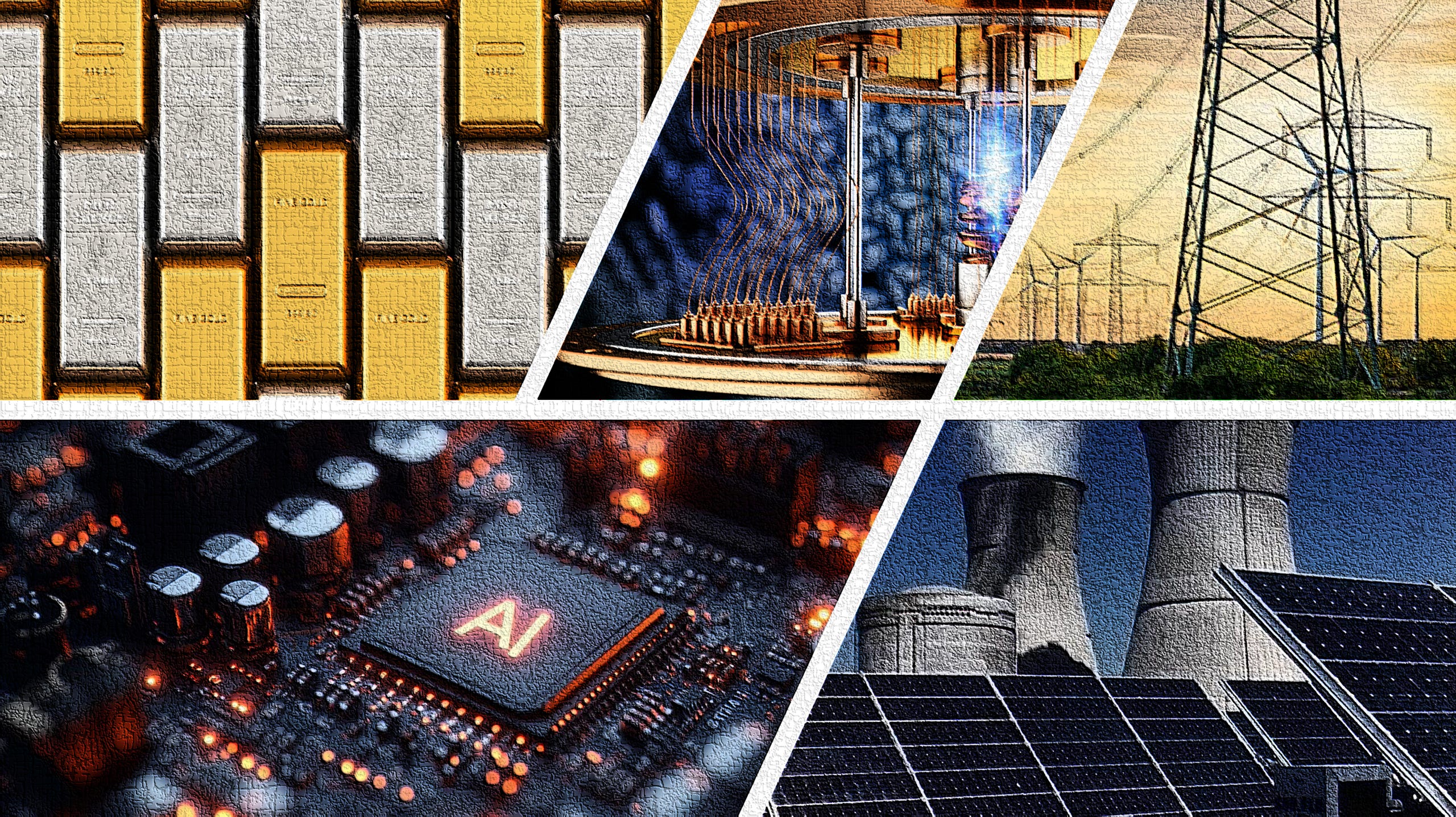
Markets are very good at rewarding possibility early. They are far less forgiving when reality introduces friction: costs, competition, power constraints, regulation, and diminishing marginal returns. As narratives mature, the question shifts from what’s possible to what must be built, funded, powered, and maintained to keep that possibility alive.
That’s where the opportunity set changes.
Key Takeaways
2026 shifts from AI narratives to real-world constraints: scale, power, cost, and infrastructure.
Hardware, energy, metals, and physical inputs matter more than slow-burn software monetization.
Quantum remains a small, long-term option after expectations reset.
Healthcare and other defensive sectors regain relevance as volatility rises.
Diversification matters: boring, durable businesses often outperform over time.
Investing shouldn’t be exciting, it should be intentional.
We regularly explore themes across AI infrastructure, energy and power systems, metals and strategic resources, healthcare, and other sectors that matter as markets evolve. The focus is on structure, incentives, and long-term positioning , not headlines or short-term noise. If this framework resonates, subscribe and follow for more insights and ongoing analysis.
AI Hardware
AI hardware sits at the center of this transition. Software captured attention because it scales quickly and tells a clean story, but monetization has proven uneven and slow. We’ve already seen how long it can take for large software platforms to translate usage into durable earnings growth. Hardware doesn’t operate on hope. It operates on procurement budgets, capex cycles, and real demand. Compute intensity is rising faster than efficiency gains, and that creates a non-negotiable need for chips, systems, networking, and physical infrastructure, regardless of whether end-user applications are perfectly monetized yet.
Illustrative examples include: TSM, NVDA, AMD, AVGO, MRVL, QCOM, ASML, AMAT, LRCX, KLAC, ANET, CSCO, DELL, SMCI, EQIX, DLR
Metals
That same shift brings Metals back into focus.
Copper, silver, and gold are the obvious names, but the logic extends to palladium, rhodium, and other industrial inputs that rarely trend on social media. AI infrastructure, electrification, grid upgrades, defense spending, and reshoring initiatives all draw from the same finite pool of physical resources. When multiple secular trends converge on the same inputs, scarcity stops being theoretical. Historically, periods of underinvestment followed by demand inflection tend to restore pricing power to assets many investors stopped modeling seriously.
Illustrative examples include: GLD, IAU, SLV, COPX, PALL, XRH0
Rare Earth Minerals
This also explains the renewed relevance of Rare Earth Minerals.
They are messy investments: cyclical, geopolitically sensitive, and operationally complex. But supply chains don’t optimize for elegance; they optimize for reliability. As global systems move from “just in time” toward “just in case,” control of inputs matters more than headline growth rates. The next cycle is less about abundance and more about access.
Illustrative examples include: MP, LYSCF, CCJ, UEC, URNM,URA, POWR
Quantum Computing
Quantum Computing belongs in a different category entirely.
Not a core allocation, not a timing call, but a long-duration option. Many names are down 50% or more from their highs, not because the underlying science collapsed, but because expectations ran far ahead of commercialization timelines. That reset is meaningful. Optionality only becomes investable once belief thins out and capital becomes selective. Position sizing matters more than conviction here.
Illustrative examples include: IONQ, RGTI, QBTS, IBM, MSFT, GOOGL/GOOG
Energy Ecosystem
Energy is another structural pillar that rarely gets framed correctly.
It’s not just about producers. It’s about the full ecosystem: generation, transmission, storage, services, and logistics. Data centers do not scale on narratives or software margins. They scale on power availability, cooling capacity, land, and reliability. Even optimistic efficiency assumptions don’t offset the absolute growth in consumption. Every layer of the AI stack ultimately resolves into energy demand.
Illustrative examples include: NEE, DUK, SO, AEP, XEL, ETN, HUBB, PWR, CARR
Healthcare
And then there is Healthcare, which tends to look uninteresting right up until it becomes indispensable. Demographics are not cyclical. Cash flows are not hypothetical. Pricing power, regulation, and demand stability matter more when growth leadership narrows and volatility rises. In environments where investors are forced to choose between hope and resilience, healthcare quietly earns its seat at the table.
Illustrative examples include: LLY, NVO, MOH, UNH, JNJ, ABBV, TMO, DHR
This is where diversification stops being a buzzword and starts being a discipline.
Why Boring Belongs in Every Portfolio
Not everything in a portfolio should be exciting. In fact, most of it shouldn’t be. Consumer staples, select discretionary businesses with durable demand, industrials tied to maintenance rather than expansion, and even parts of financials all play a role. Some stocks sound boring because their business models are mature, predictable, and well understood. That’s not a flaw, that’s often the point. Boring tends to be cash-generative. Boring tends to survive downturns. Boring allows you to take risk elsewhere without destabilizing the whole structure.
Illustrative examples include: PG, KO, COST, WMT, UNP, WM, JPM, BRK.B, HD, MCD, XEL

Bottom line
Investing, at its core, is not supposed to be thrilling. It’s supposed to be educated, calculated, and strategic.
Excitement belongs to narratives. Capital preservation and compounding belong to process.
This isn’t a prediction or a portfolio prescription. It’s a framework for thinking about where constraints emerge as stories age.
2026, in my view, is less about what sounds futuristic, and more about what has to exist for the future to function.
Those investments are rarely the loudest. But over time, they’re often the ones that matter most.
The views expressed are for informational and educational purposes only and reflect personal opinions. Nothing herein constitutes investment advice, a recommendation, or an offer to buy or sell any securities. Examples mentioned are illustrative only.