


Yesterday, my dad asked me a simple question: “What’s happening with the market? Why is it going down?”
I gave him the short answer. Oil prices are high. The Fed has raised rates, and investors are weighing the possibility of more hikes. The midterm elections are approaching. And when stocks have been trading near record highs, even a small change in expectations can make investors nervous.
But that answer bothered me. It explained why stocks might pull back. It did not explain why the market has held up so well despite those pressures, or what would turn a period of volatility into a more serious downturn.
That distinction is the story: are investors reconsidering what they will pay for future profits, or are the profits themselves beginning to weaken?

Why the Market Has Held Up
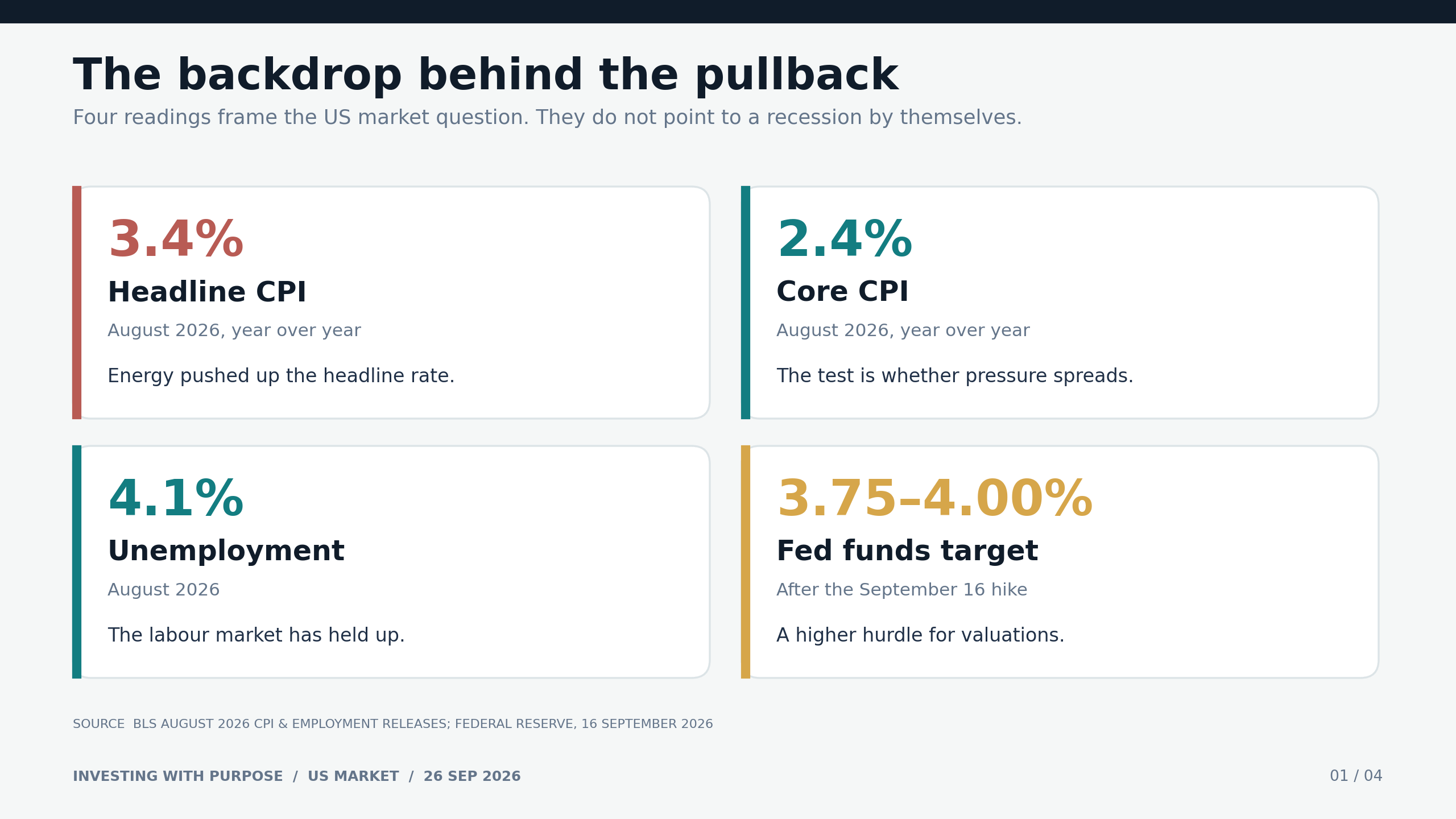
The US economy is still growing. Employment has remained steady, consumers are spending, and businesses are investing heavily. When the Fed raised rates in September, it described economic activity as solid. Higher rates put pressure on share prices, but there is still business growth for investors to value.
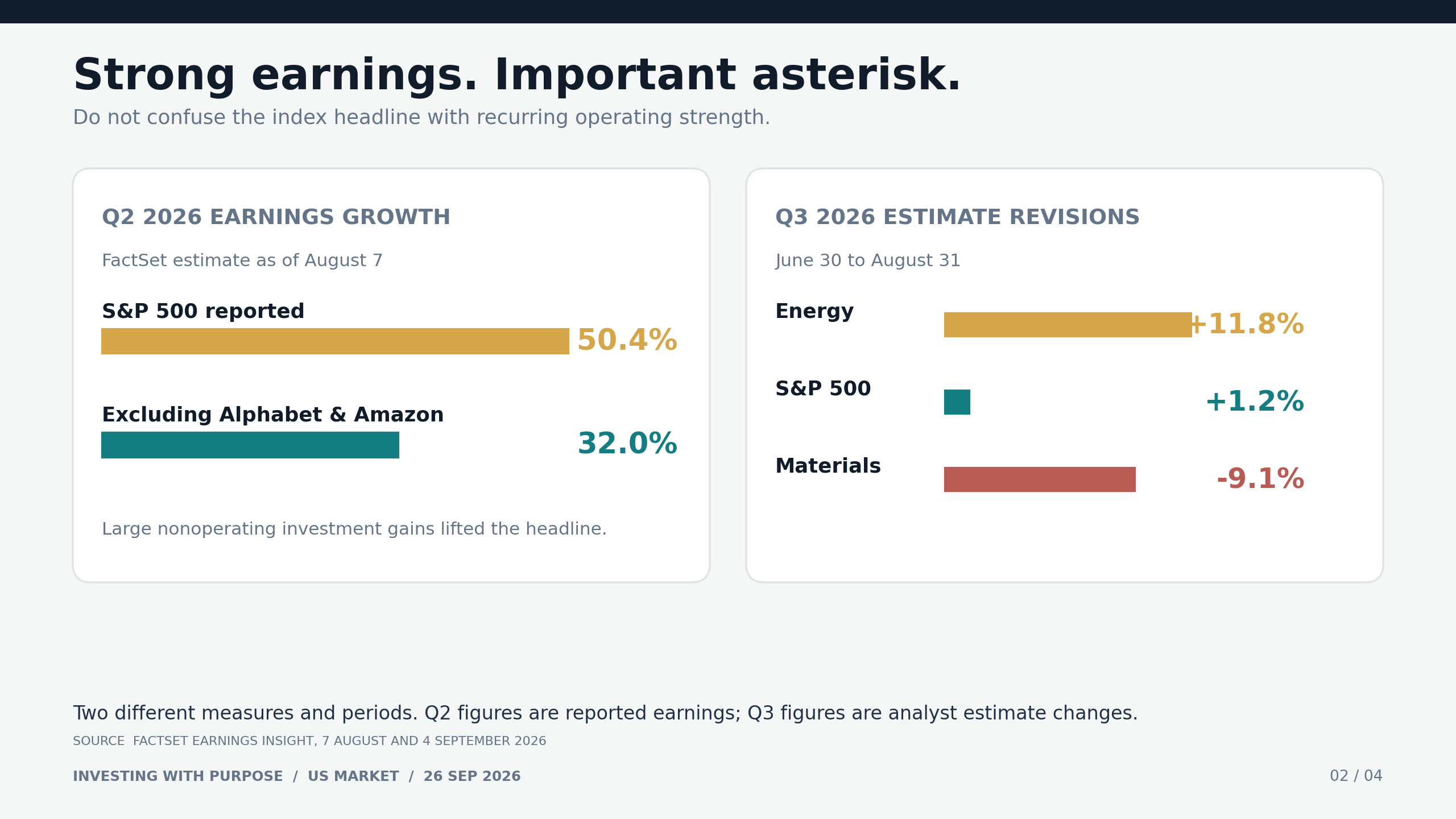
Earnings estimates have offered some support, too. From the end of June through August, analysts raised their aggregate third-quarter S&P 500 estimate by 1.2%. Estimates usually fall during the first two months of a quarter. Energy led the upward revisions, however, while estimates fell in most other sectors. It was an encouraging August reading, not proof that earnings strength has since spread across the market.
Reported profits require the same care. FactSet estimated second-quarter S&P 500 earnings growth at 50.4% in early August. Excluding Alphabet and Amazon, whose results included unusually large investment gains, growth was 32.0%. That is still impressive. But an investment gain is different from profit a company can reliably earn again by serving its customers.
Two Forces, Moving at Different Speeds
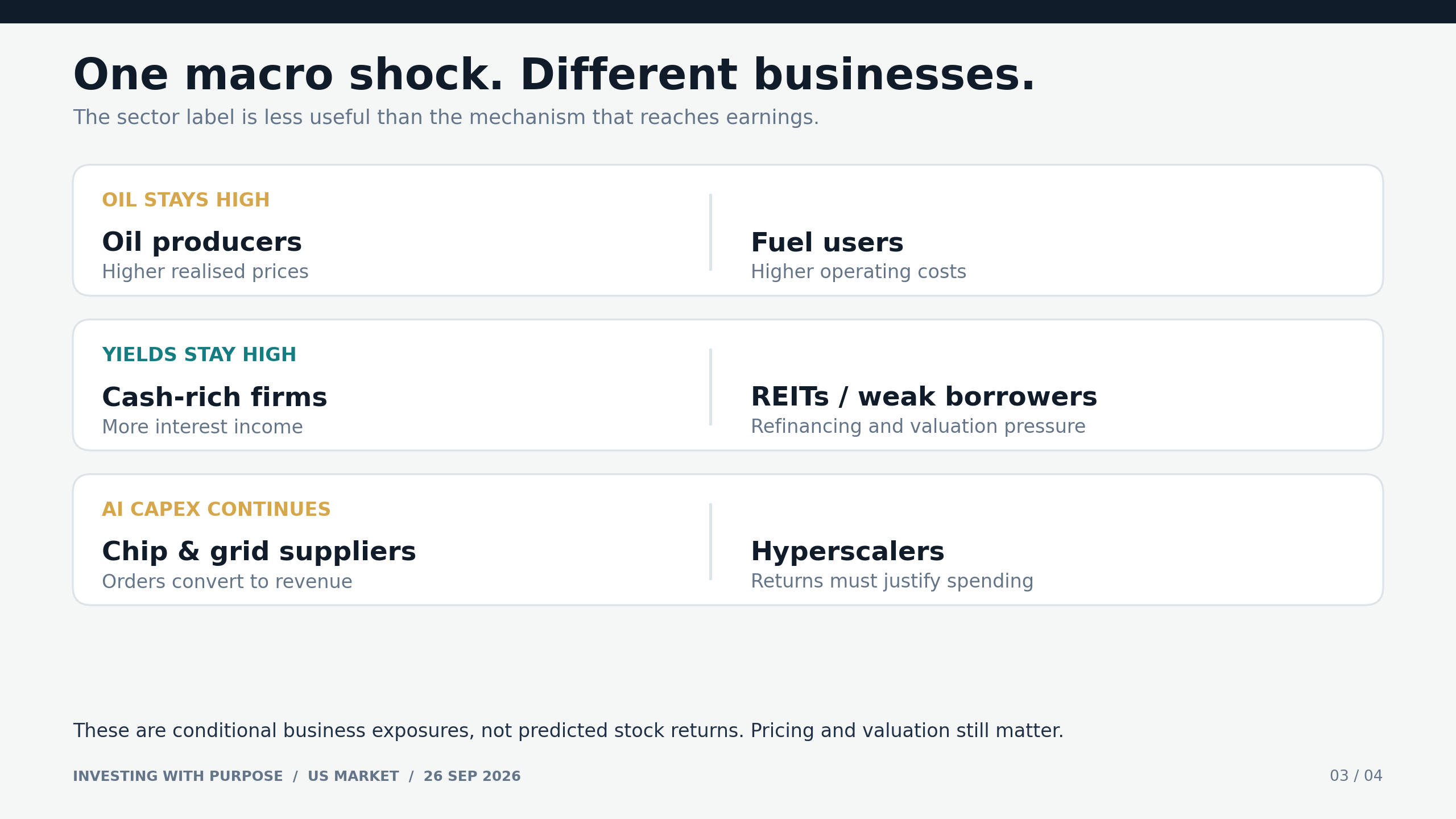
Higher oil prices are the immediate strain. They leave households with less to spend elsewhere and raise costs for fuel users. An airline may raise fares, absorb the cost in its margins, or face weaker demand. Which happens depends on customers and competition, not simply on the direction of oil.
AI is working on a different clock. Spending on chips, data centers, power equipment and construction creates revenue for suppliers today. The companies building and financing that infrastructure must earn a return over many years. Their customers, in turn, must find uses valuable enough to pay for it.
That gap in timing matters. A chip supplier can have a strong quarter while its largest customer sees free cash flow decline under the weight of construction spending. Both results can be true at once. BIS research finds that the scale of planned AI investment is increasing the role of debt in financing the boom, making the eventual return on that spending more consequential.
History offers context without giving us a script. Oil shocks have had different effects depending on their cause, duration and the central bank response. And major technologies have often required years of changes in skills and business processes before their broader productivity benefits became visible. Today’s energy costs arrive immediately; much of AI’s hoped-for payoff lies ahead.
That is why I would be careful with a 1970s comparison. The question is whether expensive energy remains mainly an energy problem or starts feeding persistent increases in other prices and wages. In August, headline US inflation was 3.4%, while inflation excluding food and energy was 2.4%. One gap cannot settle the question. Its evolution matters.
There Is More Than One Stock Market
The S&P 500 can appear calm while conditions change sharply beneath it.
An oil producer and an airline face opposite effects from higher crude prices. A bank may earn more on some loans while paying more for deposits or preparing for borrower losses. A chipmaker may report excellent sales and still see its stock fall if investors had expected even more. A good business result and a good stock return are not always the same thing.
Investors have shown some of that selectivity. During the period covered by its September review, the BIS found that smaller US companies and much of the S&P 500 outside the largest AI names outperformed hyperscalers and semiconductor manufacturers. Broad credit spreads remained contained, although issuance slowed among riskier borrowers. That was an earlier snapshot, not a claim that the rotation has continued every day since.
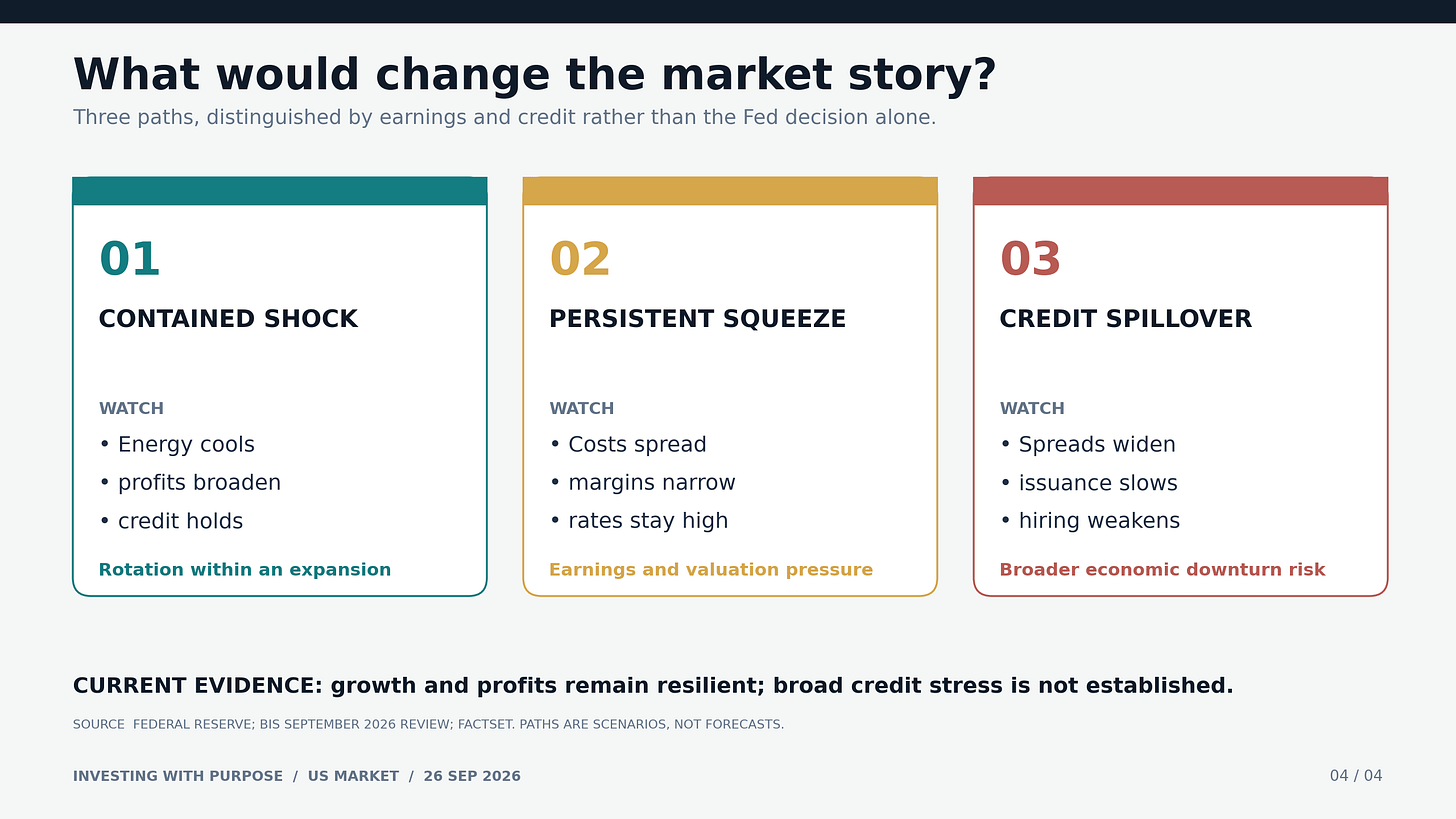
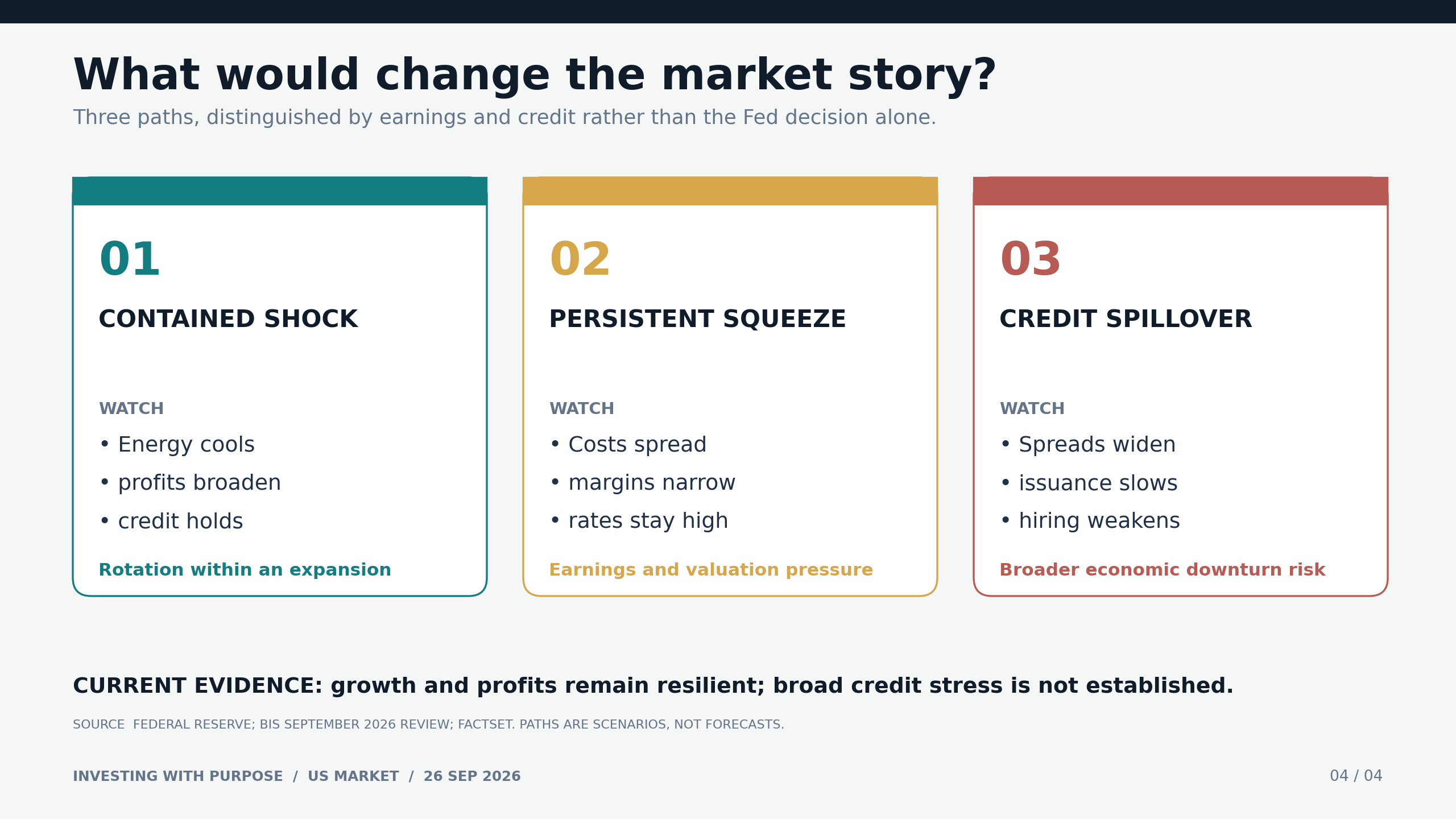
It does show why I would look beyond the index. Weakness concentrated in expensive stocks may mean investors have lowered their expectations. Weakness that spreads into company earnings and the availability of credit reaches much further.
What I’m Watching Next
The approaching midterms add another source of uncertainty, especially for businesses exposed to trade, tax and regulatory decisions. But “midterm year” is not, by itself, an explanation for a down day. The policies investors come to expect matter more than the date of the election. Research links policy uncertainty to greater stock volatility and weaker investment in exposed businesses.
I would watch three developments together:
Inflation: Does the energy shock ease, or spread into lasting price pressure that keeps the Fed restrictive?
Earnings: Do operating profits grow beyond energy and a few technology giants? Are customers buying more, or just paying more?
Credit: Can riskier businesses still borrow and refinance? Widening corporate credit spreads have historically carried useful information about future economic activity.
So, what should I have told my dad?
Oil, rates, the election and high share prices help explain the market’s nerves. But they do not yet tell us that the expansion is ending. The economy and corporate profits have shown genuine resilience, even as investors have become more demanding about the price they will pay for that strength.
If earnings keep broadening and credit holds, this can remain a pullback within a growing economy. If profits weaken and credit tightens together, the problem will have moved beyond share prices and into the economy itself.
This article is for informational purposes only and is not investment advice. The scenarios discussed are possibilities, not predictions. Markets and economic data can change quickly; consider your own circumstances and risks before making investment decisions.